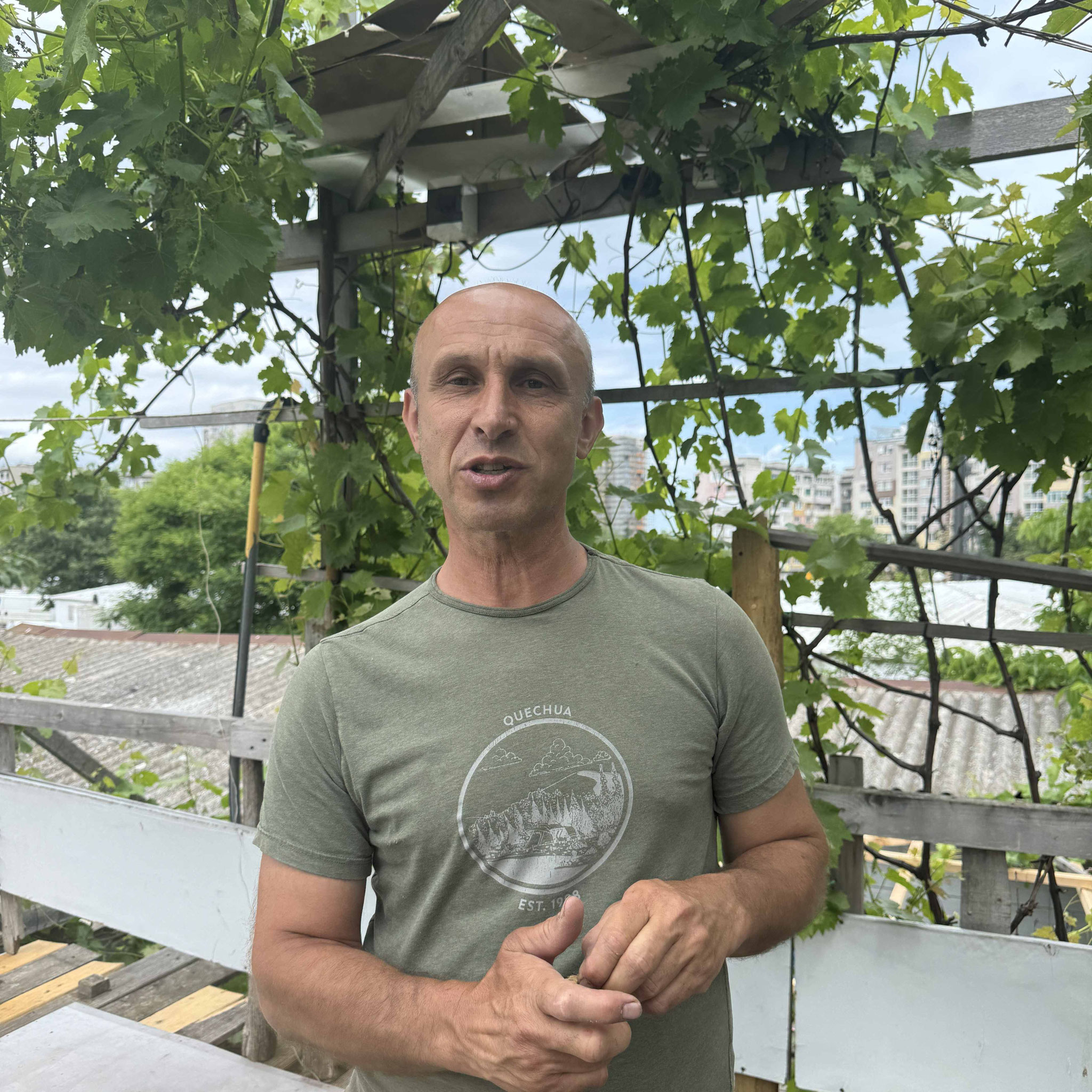
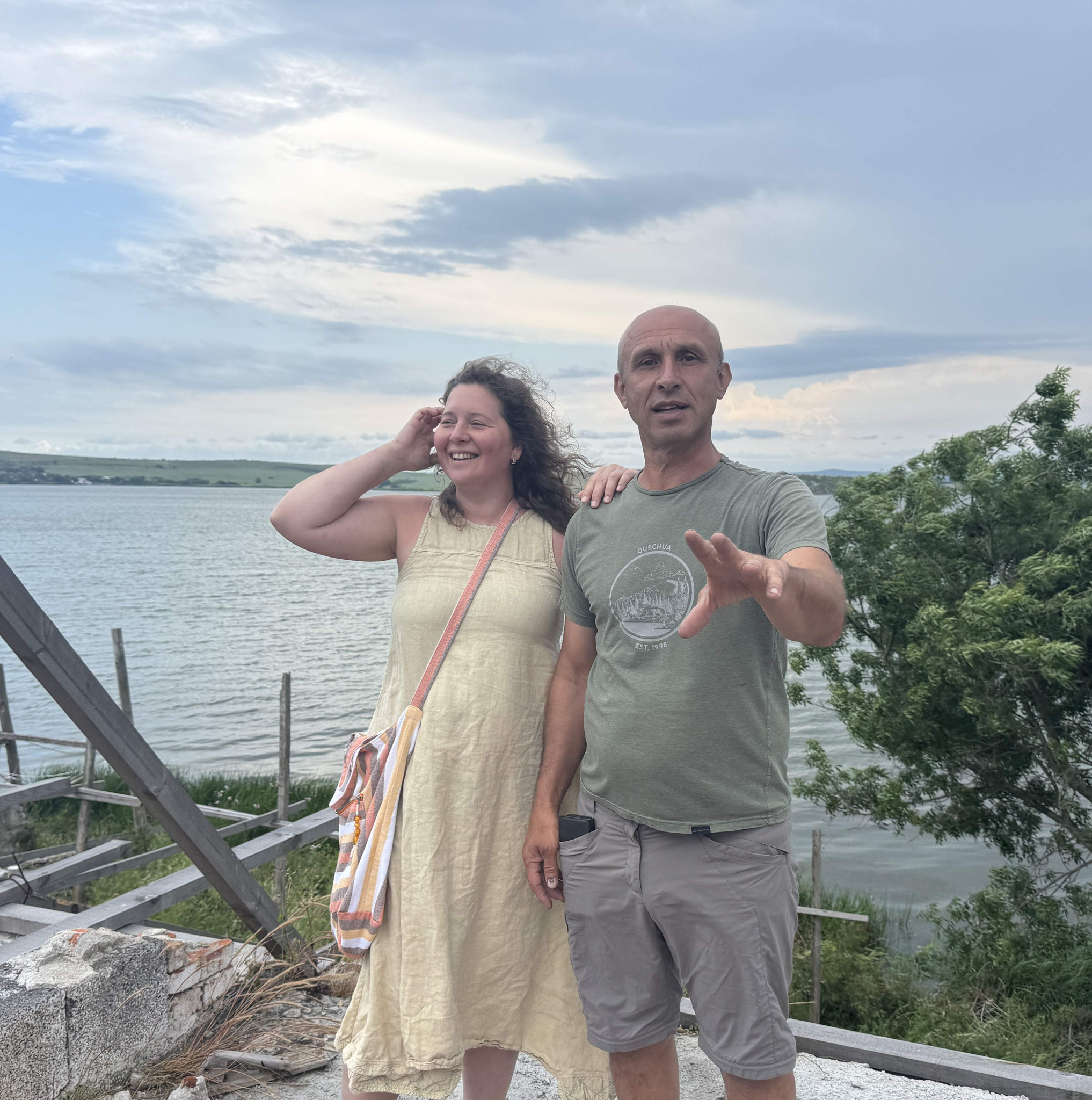
Can cycling make the world a little bit better? For Evgeny Apostolov, it is just one building block - but a crucial one. He is a driving force in the cycling community of Burgas. As a visionary, he has been campaigning for years for sustainable tourism, active mobility, and the development of a genuine cycling culture in this Bulgarian city on the Black Sea. He also played a major role in developing the Bulgarian section of the Iron Curtain Trail, also known as EuroVelo 13.
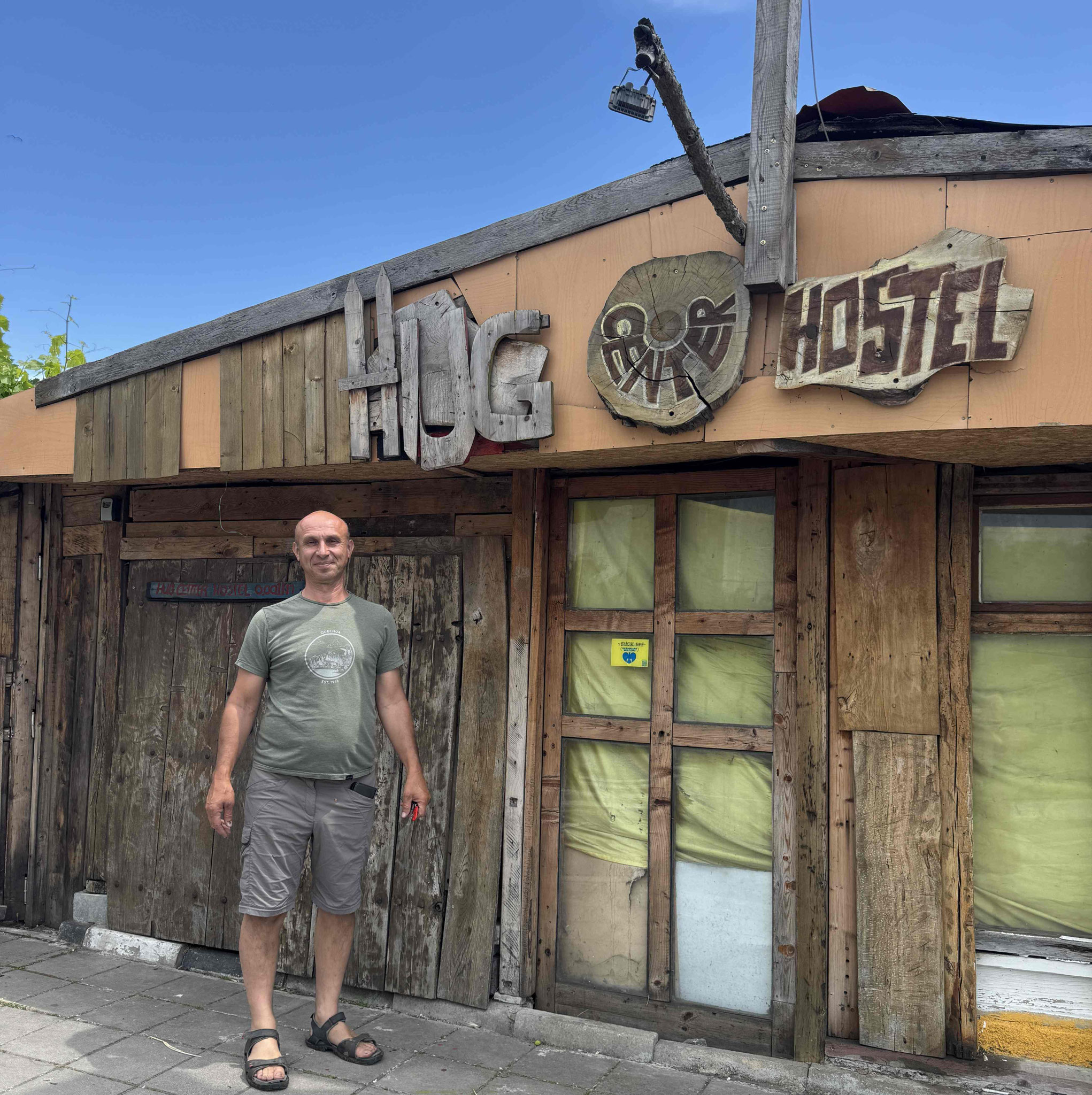
Right in the middle of residential complexes from the 1970s, he rescued the very last old house of the original village that has otherwise vanished into the modern city of Burgas. Here, he founded the Hug Center Hostel for the global cycling community. "Hug" is the ultimate motto. It is meant to be a place for everyone, where everyone feels comfortable and accepted.
Cyclists can spend the night here for free, in exchange for a donation if they can afford it. But today, the Hug Center Hostel is much more. "It is open to anyone who needs it. Some stay for one night, some intend to stay for two days and have been here for a few years now," Evgeny says. They can live in the hostel for free and become part of the community. Taking on responsibility is also part of the deal. Like ??name?? from Scotland, who has been living here for ??? years. "He is very skilled at crafts and is helping to continuously expand this place," Evgeny enthuses. ???name?? walks in with a plate of fresh donuts he has just baked and chimes in: "Since we want to offer food here in the near future, I’m already trying out a few things." Michelle from Germany and Irene from Holland came here through a volunteer project. The program ended a long time ago, yet they are still here. "The Hug Hostel attracts people who are looking for connection," Michelle says. "You always find someone to talk to here, and as a rule, you encounter tolerance. However, you always have to strike a balance between building the community and your individual needs. It’s not entirely conflict-free here."
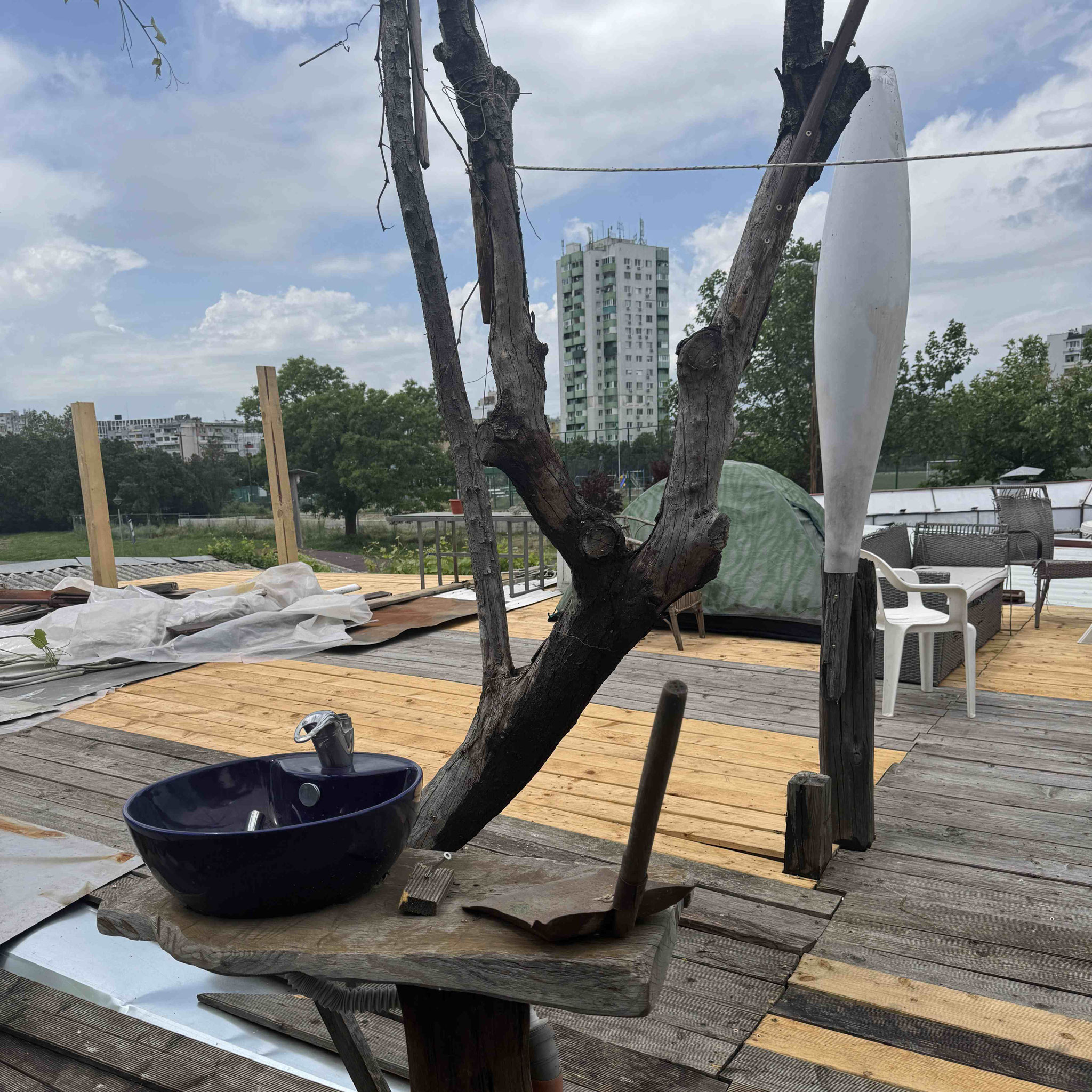
Yet, Evgeny didn't stop at the "Hug" concept. "We took it to the next level and expanded it into 'MaRCo.' The acronym stands for Mobility and Responsible Consumption." In 2019, he presented his visions to an international audience. "The way we think about mobility and responsible consumption go hand in hand. We want to demonstrate that right here in this Hug Hostel." Together with volunteers, he restored the premises according to sustainability principles, using primarily recycled and donated materials. "We are not a traditional accommodation; we see ourselves as a 'Social Regeneration Hub' and a hidden community oasis."
"We help people survive," is his credo. Therefore, it was a matter of course for him to welcome refugees from Ukraine following the start of Russia's full-scale war against Ukraine in 2022. "And what does a mother with a child and a dog need? A room with its own bathroom," Evgeny says, answering his own question. "We built a bathroom and used an old elevator shaft from a demolished house to do it."
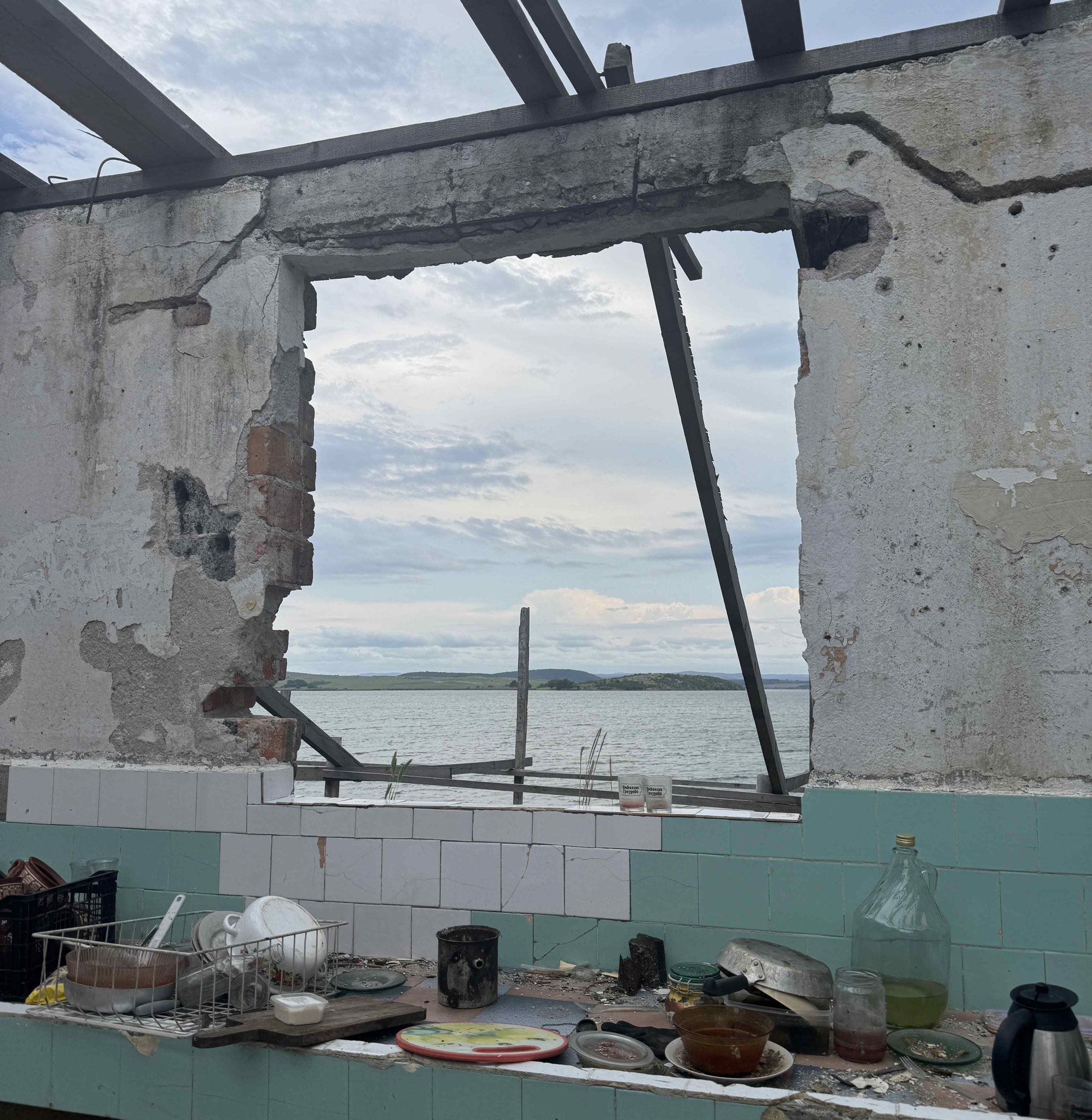
But the visions and ideas keep growing. Together with his partner Denitsa, he is revitalizing a plot of land by a lake outside the city that had lain fallow for decades, making it usable again for growing vegetables and figs. Denitsa has set up the first beehives here and hopes to produce her own honey soon. Inside dilapidated buildings that were used as stables during socialist times, hundreds of tomato and cucumber seedlings are waiting to be planted in the ground. The volunteers from the hostel are helping out. Meanwhile, Evgeny is laying water hoses for irrigation. "We want to grow organic vegetables for the hostel here," Denitsa explains.
And what’s next? The Hug idea is set to expand even further by adding a co-working and co-living community. "There are people who want to live here permanently and work from here. We want to adapt to those needs." Evgeny knows that this also includes families with children. "For them, we could become a 'World School Hub'." He emphasizes that it is not about making money. "It should be self-sustaining. But as for myself, I don't need the income. On the contrary, I personally subsidize certain things with my own money when necessary."
It sounds like a bustling life packed with ever-new projects. Yet, Evgeny tries to live by the exact opposite philosophy. "I try to teach people: no stress and no rush." Sometimes this leads to personal conflicts because things take longer than expected. "And sometimes I can't keep my promises."
Evgeny was strongly influenced by his parents. His mother was an actress, and his father was a writer and a ship captain. "I learned most things in the theater and on the ship, not at school. Choosing what to study after school was difficult for me. Even back then, my goal was to make people happy." He studied languages. "That fits perfectly, because everything I do today is all about communication."
There is one thing, however, he never learned in his life: "how to be German." He explains that this is a fixed expression in the Bulgarian language, standing for absolute order and cleanliness. "I have mostly lived without a plan and improvised a lot. Maybe I wasn't always efficient, but I am still trying to realize my visions - for a better world where people are at the center." A world with more "Hugs," indeed.