Anyone traveling through the Bulgarian-Turkish border region today will repeatedly come across weathered signs reading: "Border Region – Special Protected Area." Where untouched nature thrives today, the Iron Curtain once ran – one of the most heavily guarded and brutal outer borders of the socialist bloc. Yet, while this border system is firmly anchored in Germany’s collective culture of remembrance, a gap remains in Bulgaria. There is no state concept for coming to terms with the past, virtually no institutional will, and a deep-seated societal taboo.
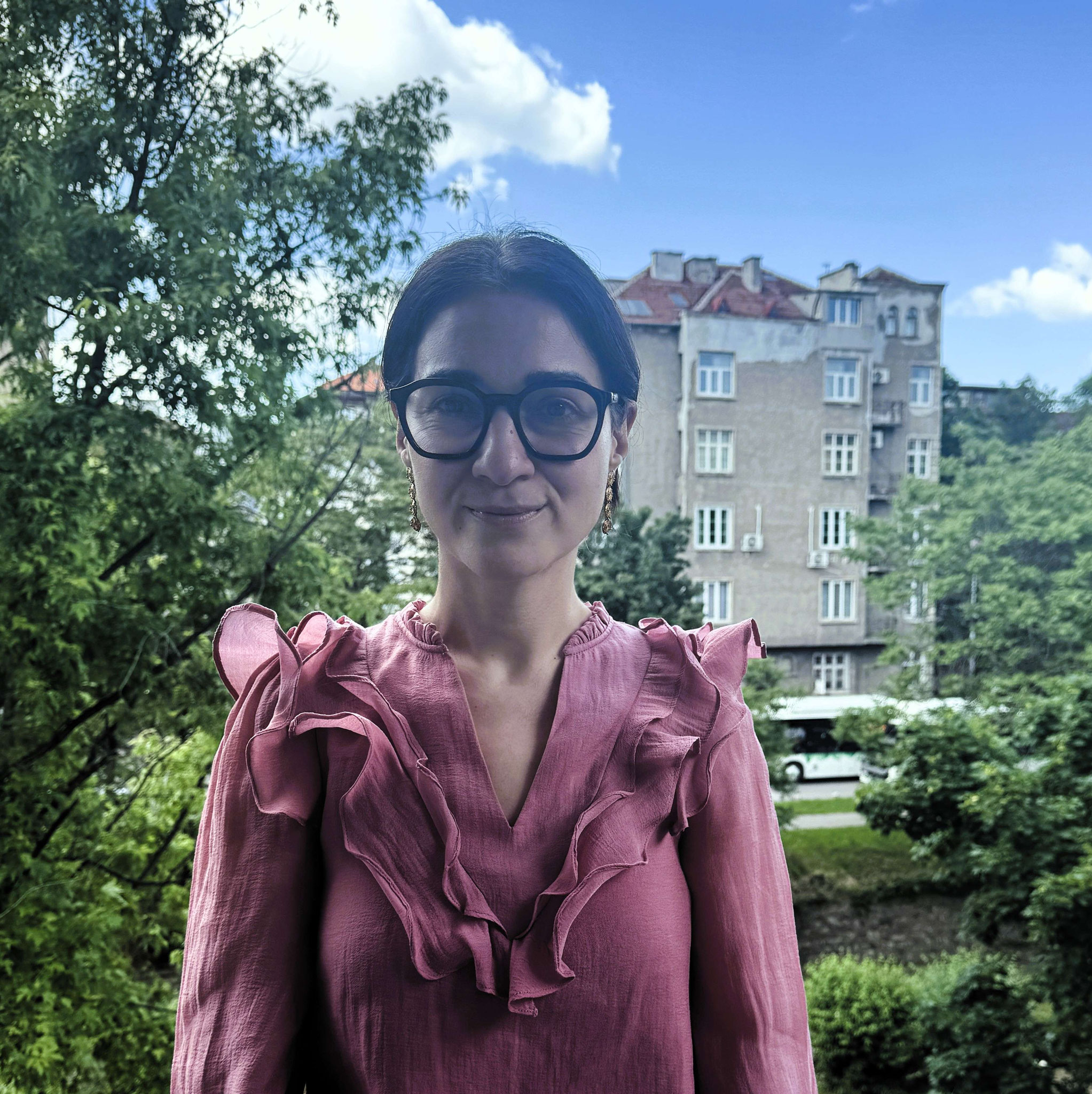
Louisa Slavkova is fighting against this silence. The 44-year-old political scientist studied and worked in Germany for ten years before returning to Bulgaria as an advisor to the Minister of Foreign Affairs. As the founder of the NGO Sofia Platform Foundation (sofiaplatform.org), she has made it her mission to bring the history of communism right into the heart of society. Her goal: to empower people to become resilient democrats. This is because Slavkova is convinced that democracy is not an automatic process.
"Practicing democracy is something you have to learn. We are not born as democrats. We become democrats when the effort is put in."
The Repressed Trauma of the Border
Slavkova’s work begins where official historiography leaves off: with human destinies and the traumas of the border. The Bulgarian-Turkish and Muslim populations, in particular, carry deep wounds to this day. In the 1980s, the weakened communist regime staged the cynically named "Revival Process"—a brutal campaign of assimilation. Muslim names were forcibly changed to Bulgarian ones, and traditional clothing was banned. When protests erupted, the regime opened the otherwise sealed border under the term "Big Excursion." Hundreds of thousands of people were expelled within a very short period of time.
Unimaginable tragedies unfolded at the border. Slavkova talks about an art installation in an abandoned border village centered around a traditional quilt from the Rhodope Mountains: a family had tried to hide their draft-age son, who was not allowed to leave the country, in the trunk under a blanket. In the summer heat, he did not survive the escape and had to be buried in an open field.
"Young people, in particular, completely lack the imagination to grasp what that world back then was like," Slavkova explains. For today's youth, who are growing up with absolute freedom of travel, the border regime is unimaginable. "I keep saying: going to a beach in Greece in the summer is not a human right. There were times when that was simply impossible." This makes creating symbols of remembrance all the more vital. Currently, a 12-meter-high concrete monument—the "Traveling Monument"—is being built on the border with Greece to commemorate those who lost their lives trying to cross the Iron Curtain.
Belene: From a Place of Taboo to a Place of Learning
The Sofia Platform’s largest project is located in the far north of Bulgaria, on the border with Romania, on an island in the Danube: Belene, the regime's notorious political forced labor and re-education camp. "We try to organize as many activities there as possible to break the taboo that Belene is too far away or too difficult to reach," says Slavkova. For her, confronting the past at the camp in the north is the logical counterpart to the tragedies on the southern border – as both stemmed from the same system of oppression.
Every three weeks, teachers from across the country travel to Belene for training sessions organized by the NGO. These certified professional development courses focus on civic education and handling controversial topics in the classroom. In these sessions, worlds often collide: the groups include descendants of camp inmates sitting alongside people whose families were on the side of the perpetrators. Slavkova's approach is deliberately non-dogmatic:
"If you hold rigid positions, they cannot be changed by countering with another rigid position. You first have to start a conversation and understand where those positions come from."
The NGO also organizes summer camps in Belene for young people, where they conduct research in the archives and speak with contemporary witnesses. Because the biological clock is ticking, Sofia Platform utilizes state-of-the-art technology: through the platform belene.camp, life-sized video recordings of survivors are made interactively accessible using artificial intelligence. Young people can ask the witnesses virtual questions. "Suddenly, history is standing right in front of you," Slavkova says, describing the emotional impact of the project.
Hope for the Civic Reflex
Louisa Slavkova has no personal family history connecting her to the camps. "It would be a pity if you only engaged in struggles that affect you personally," she emphasizes. Her drive stems from concern for the present. In Bulgaria, the subject of "Civic Education" was only introduced in 2021. For decades, the economic struggles for survival and the hyperinflation of the 1990s had sidelined the ideological reckoning with the past.
Today, this is taking its toll in a profound historical paradox. "As Bulgarians, we are schizophrenic on certain issues," Slavkova says, describing the societal mood. "You can hold two contradictory thoughts in your head at the same time: on the one hand, the majority is pro-European, but on the other hand, somehow pro-Russian or anti-Western." The Ottoman legacy is often labeled purely negatively in collective memory as the "Ottoman yoke," while the communist legacy is architecturally unavoidable but historically completely unexamined. This lack of coming to terms with the past feeds a widespread nostalgia for the East – and thus provides fertile ground for Russian propaganda. To counter this, Sofia Platform is currently planning to establish a private museum of communism and education.
What still gives her hope for Bulgaria's democratic path? It is the civic reflex. "We are not the most active or trusting civil society; we are often suspicious and slightly cynical," she openly admits. "But at key moments in our recent history, we have shown that we can take to the streets and defend ourselves against what doesn't suit us. The generations before us and the young people born in freedom display this reflex. This is not a sprint; it is a task for the rest of our lives."
From Sofia to Europe: THE CIVICS Innovation Hub
Slavkova experienced just how uncomfortable standing up for democracy can be during the pandemic, when a far-right party in Bulgaria filed a complaint against her NGO with the Prosecutor General. For Slavkova, this was the signal to internationalize her work.
Together with colleagues from Croatia and Germany, she founded the "THE CIVICS Innovation Hub." This pan-European organization aims to support civic educators in Europe, thereby strengthening European civil society and building bridges. By managing NECE (Networking European Civic Education), it now operates the largest network for civic education in Europe. "After all, the need is everywhere," Slavkova explains. "The stability of the European Union depends heavily on what narrative we spread about Europe and what history of Europe we believe." The hub even brings civic education directly into companies to anchor democratic skills in people's everyday working lives.
Her tireless dedication proves that today, the Green Belt is not only a biological corridor for nature conservation, but also a space for a living culture of remembrance. Louisa Slavkova ensures that the borders of yesterday are understood as a reminder and a place of learning for the democrats of tomorrow – in Bulgaria and across Europe.