On Monday, I had to set off early because I hadn’t moved my bike on Sunday due to the Nestinari ritual. Ahead of me lay 100 kilometers and 1,500 meters of elevation gain. Start time: 6:30 a.m. – without breakfast. After the first 500 meters of climbing, I was hoping for a coffee in the village of Balgari, dreaming of breakfast. However, someone merely pointed me toward a vending machine on the side of the road. I wasn't ready for that – not yet.
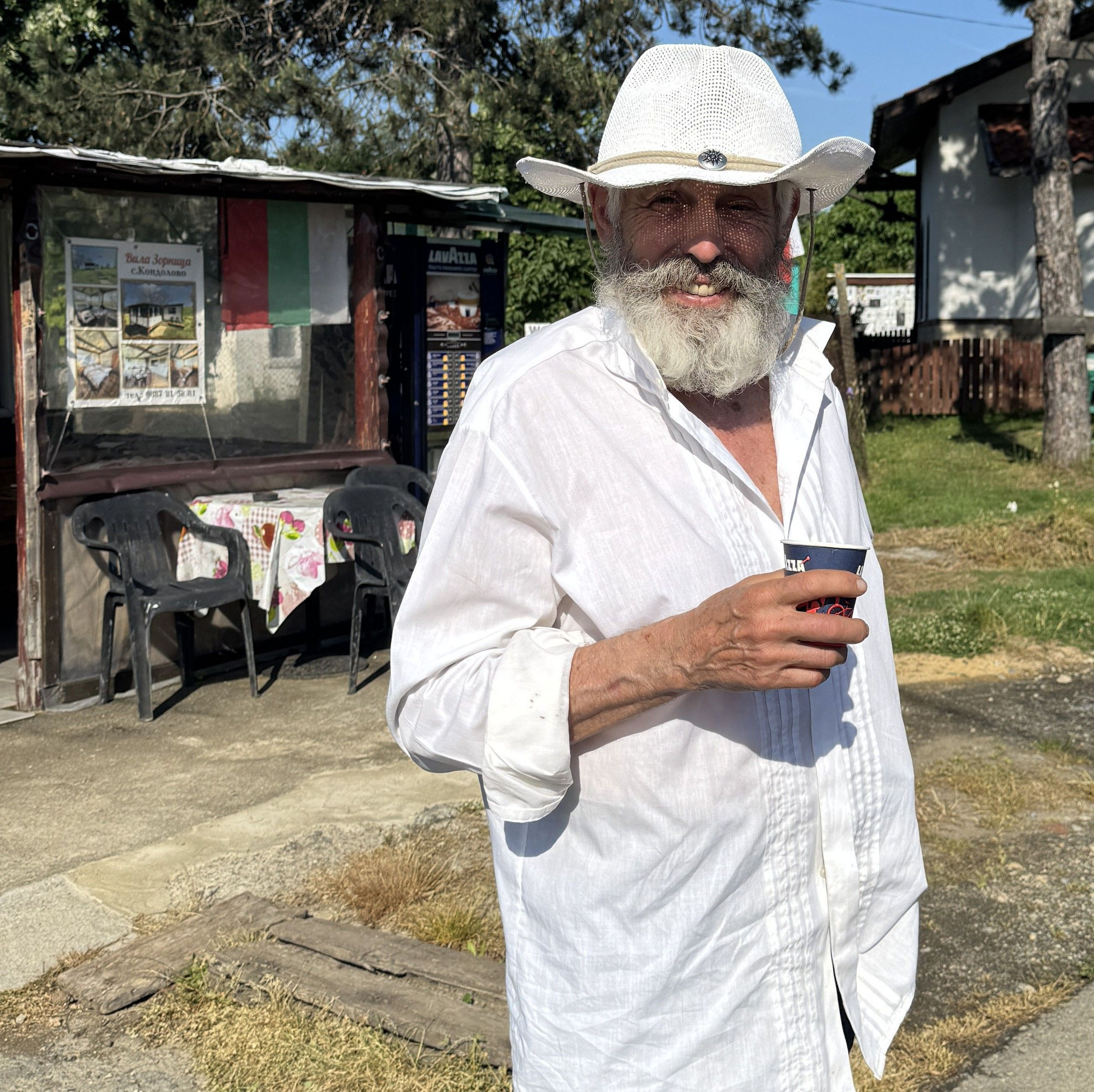
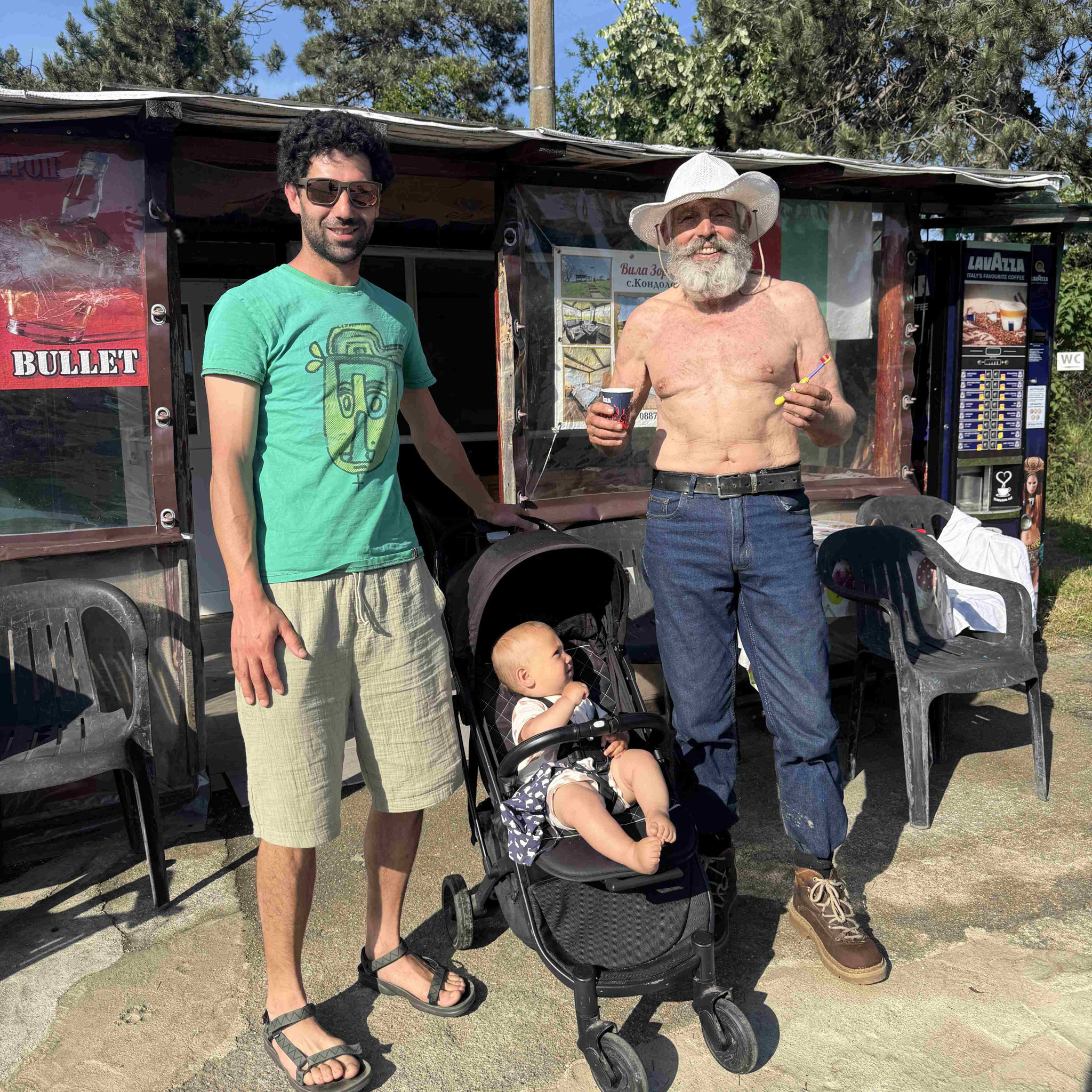
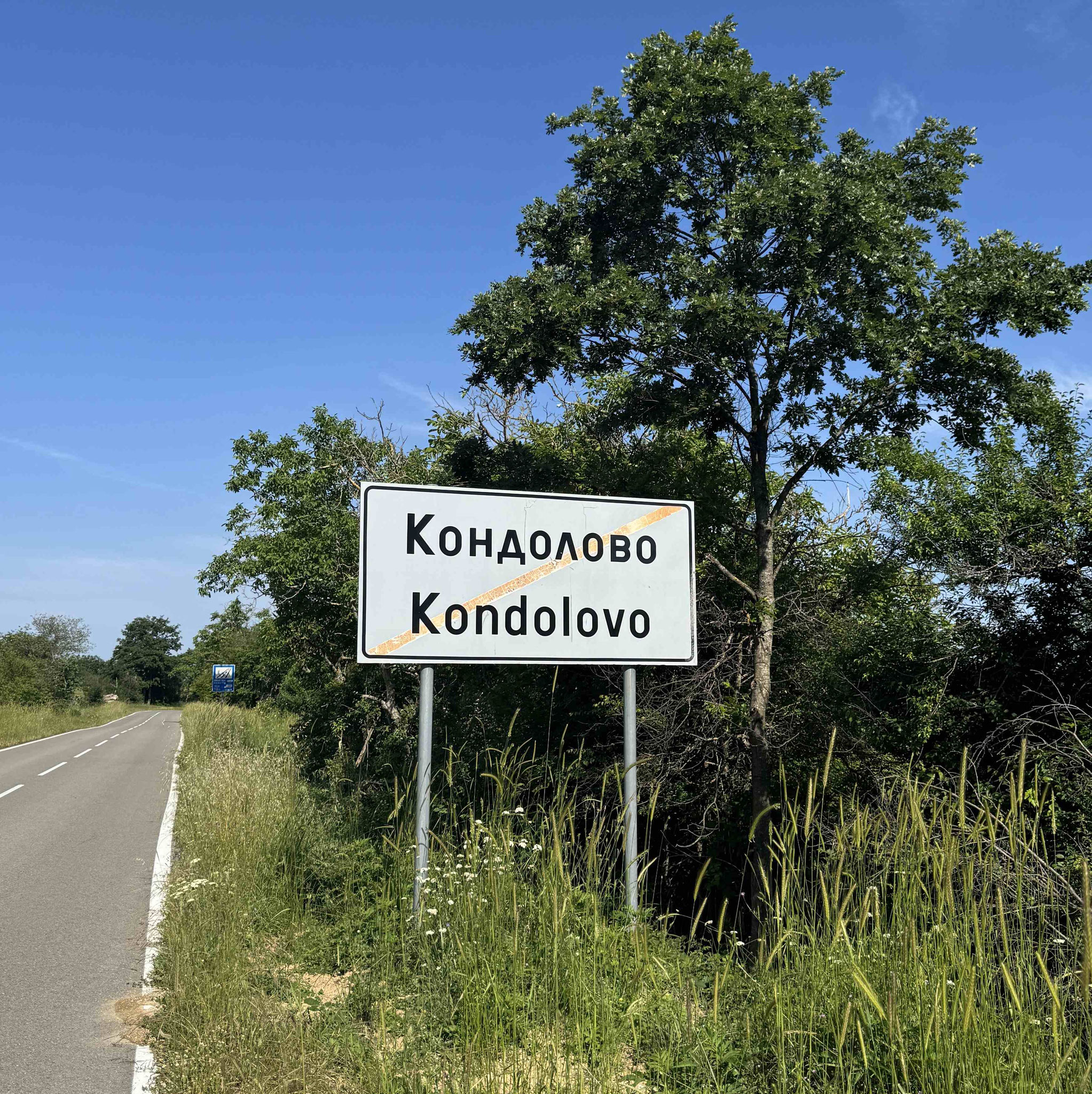
An hour later, the next village appeared: Kondolovo. Two men were sitting outside the small village tavern, a stroller with a child parked in front of them. But the tavern was closed. The men gestured toward the coffee vending machine, assuring me the coffee was actually alright. So, I tossed in some coins, grabbed a cappuccino, and dug some cookies out of my panniers.
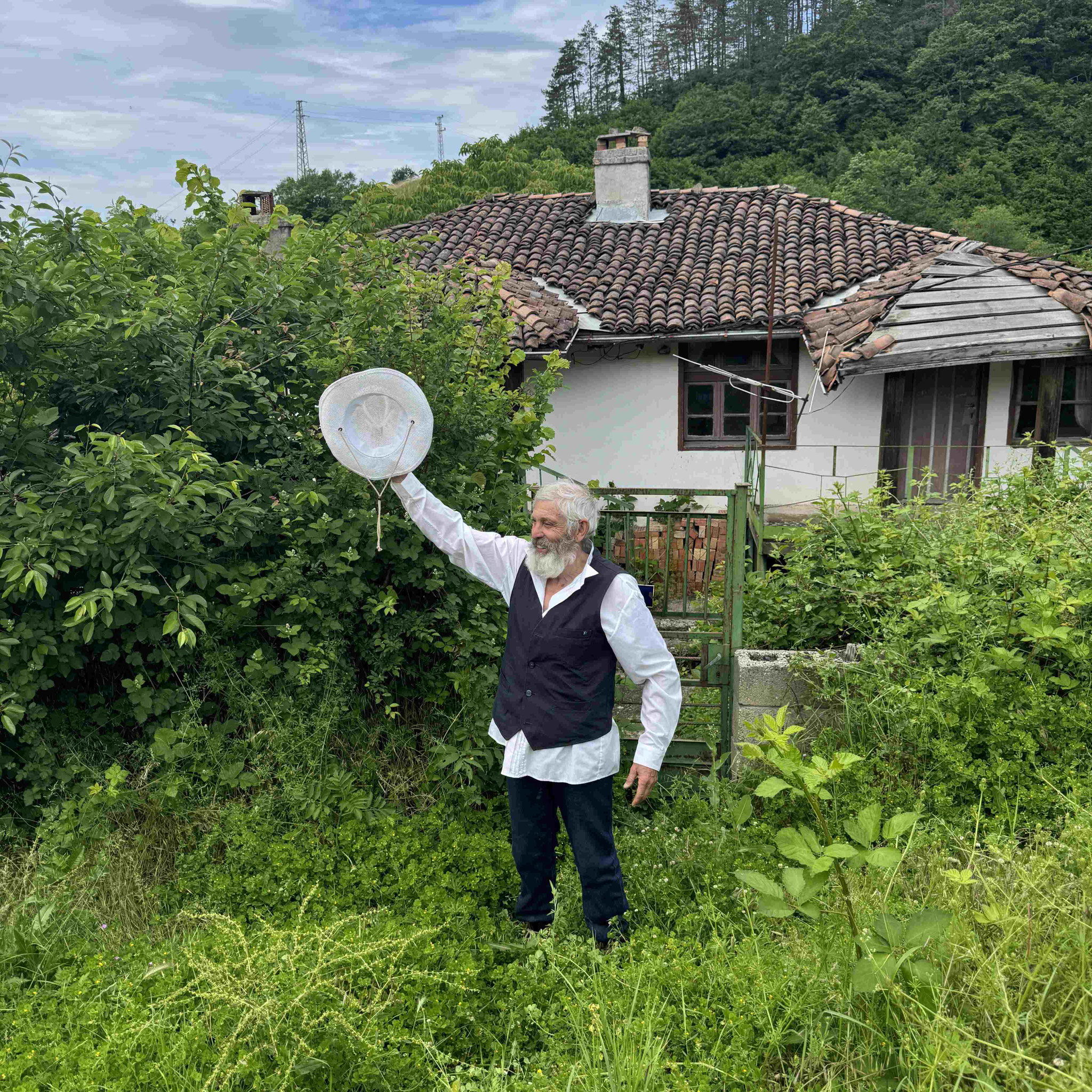
The older of the two men looked familiar. I asked him if he had been standing in his garden in Kosti yesterday, waving at the procession as they carried the icons out of the chapel (see my last post). It was him. We struck up a conversation, and it quickly grew more and more interesting. Finally, I asked if he had some time for an interview. He agreed.
The young man with the child said his goodbyes. And so, Yury Angelov and I sat outside the closed village tavern, sipping our vending-machine coffee. Yury Angelov is a well-known actor in Bulgaria. He worked for many years at the National Theatre in Sofia before retreating to the Strandzha Mountains.
Fleeing to the Mountains and Healing Through Herbs
Yet, behind Yury’s radical departure from civilization some 43 years ago – back during the socialist era – lay far more than just a search for peace and quiet: it was an attempt to reclaim his health and vitality. Before leaving the National Theatre, he had fallen seriously ill and was forced to take antibiotics over a long period. Plagued by exhaustion and the severe side effects of the medication, he made a life-changing decision. He turned his back on conventional medicine, survived at times on nothing but water, and sought refuge in the untouched nature of the Strandzha Mountains to radically detoxify his body.
To this day, he swears by wild mountain herbs recommended to him by the elderly locals of the region. Despite the initial lack of understanding from those around him, he felt magnetically drawn to this area. For a year, he searched for the ideal sanctuary, eventually finding the small village of Fasanovo, where he also raised his children. In the mountains, surrounded by nature's healing powers, he found the recovery he had longed for. Meeting the local herbs, which he describes as essential for the internal purification of his body, saved his life, by his own account.
However, he didn't break ties with acting entirely back then: for ten years, he commuted by train between the mountains and his commitments at the theatre in Sofia. Yury was a popular, highly sought-after performer throughout Bulgaria, playing both at the National Theatre and on stages in Burgas, as well as touring with various ensembles. One role that remained particularly close to his heart was in Shakespeare’s The Tempest – a play full of magic, which he continued to perform in the mountains over the years.
The Dream of Revitalizing the Villages
Today, Yury is 76 years old and looks back on a long-standing commitment to the region. When he first arrived in Fasanovo, the village lay nearly abandoned following waves of communist-era urbanization; hardly anyone lived there anymore. Out of deep gratitude for his own healing, Yury set out to breathe new life into the village. This was exactly where his nationwide fame came in handy: because he was such a prominent face in Bulgaria, he managed to bring national television to the remote location, launching a full-scale promotional campaign for rural life. His dream came true: the village filled with young people once again.
Eventually, the paths of his own family brought about another change. His sons, whose journeys temporarily took them abroad, had moved out. On the advice of his family, Yury finally sold his estate in Fasanovo. After staying in other villages across the region, he eventually purchased his current home in the neighboring village of Kosti – the very place where I had spotted him the day before. To strike the perfect balance between the mountains and the sea, he also owns a small apartment right on the coast.
A Legacy for the Youth
In another village, Brodilovo, Yury now dedicates his summers to a new passion project: during the holidays, he organizes regular art and theatre camps for children who come out of the city and into nature. This allows him to combine his love for acting with his love for the region. "The work brings me so much joy," he says. Yet, he modestly emphasizes that it is not he who teaches the children, but rather the children who teach him.
In collaboration with schools, he is also involved in a European project focused on cultivating the very medicinal plants that once saved his life. Through this project, he wants to show young people how to live in harmony with nature. For Yury, this serves as an important corrective to the past: communism stripped people of their land back then, leaving deep scars. He often views today’s older generation in Bulgaria as physically and mentally exhausted. His personal "experiment" of guiding the youth back to nature is, for him, a true life's work.
Suddenly, a car pulled up. Yury said goodbye, climbed in, and was gone. I still had so many questions and would have loved to hear more from him – even if he never really answered my questions directly but simply shared whatever he wanted to tell. But it was incredibly fascinating.
As I was packing up my things, I noticed a cell phone lying on the table. It had to be Yury’s… I rode my bike through the village, looking for the young man with the child. I finally found him, and he accepted the phone with a grin: "This happens all the time. He'll get it back somehow."
As for me, my journey continued – still without breakfast but energized by a good coffee and an unforgettable encounter.