Valeriya comes across as a walking encyclopedia; her wealth of knowledge seems inexhaustible. At the same time, she references the metaphor of the circle of knowledge: the more the circle of knowledge grows, the larger its perimeter with the unknown becomes – very much in the spirit of Socrates. A life full of questions. She seems to have been inquisitive even as a child. She grew up surrounded by education, books, foreign languages, literature, and philosophy. Before she reached school age, her mother taught Bulgarian and Russian at various schools in small border villages around Svilengrad. Valeriya remembers moving to a different village with her mother and grandmother for each school year. "As a child, I thoroughly enjoyed this freedom in the villages," she recalls today. However, she also remembers a rule that was constantly drilled into the children: under no circumstances were they to touch the fence – meaning the security fence leading to the border with Greece and Turkey, which was located several kilometers ahead of the actual border. "But back then, that meant nothing to me."
Today, the 59-year-old Valeriya praises the excellent school education during the communist era. She lists the languages she learned at the German-language high school in Haskovo, and later during her university studies and career: German, English, Russian, Greek, and French. "Today, I speak all of these languages, except for French, which I only understand." She comments: "That was normal back then. Anyone who wanted an education could get one, though it required a great deal of diligence and hard work."
During her time at high school, from the age of 13, she lived in a boarding school. "We had to study hard and work diligently, but in return, we were given every opportunity." She speaks of weekly school trips across Bulgaria to learn about the country's history and its various regions. At twelve years old, she went abroad for the first time: to a summer camp in Hungary by Lake Balaton. "Children from many socialist countries came together there." This was followed by several trips to Germany, including visits to Leipzig, Dresden, East Berlin, and the Baltic Sea.
"We may have lived behind the Iron Curtain, but traveling was definitely possible." She remembers gifts her mother brought back from a trip to Greece, and others her uncle brought from a trip to France.
After graduating from high school, years of learning, searching, and intellectual growth in a wide variety of specialized fields followed. She engaged deeply with questions of faith and studied the teachings of various religions – for instance, those in India or of the indigenous peoples of South America. "I was curious and wanted to understand the world and human existence." She admits that while she received many answers, there is always more to learn and experience.
In her search for a "theory of everything," she immersed herself in the world of quantum physics. Officially, she studied the then newly established program of "Political Science." In total, there were only 14 spots available. Due to her excellent exam results, she was admitted. She assumes that her extensive language skills were also viewed favorably, as the program was intended to prepare students for the diplomatic service.
The university environment in Sofia offered every opportunity for this. "The library held all the works of all the great thinkers and philosophers from both East and West. I read many of them in their original language." Engaging with politics and psychology also shaped her worldview.
In the middle of her university years – specifically, when she was in her third semester—the socialist system began to crumble. "For me, however, die Wende (the political turning point in 1989) did not mean that much. I already had access to all the books I wanted to read and was surrounded by people who thought and taught openly and freely." Nevertheless, she mentions that as a student, she participated in protests in 1989. "Not for myself, but for the country," she notes. Expectations for democracy and, above all, the market economy were high. "However, many developments turned out to be detrimental to Bulgaria."
She shares an anecdote about being invited to a political science congress in Munich right after the fall of the regime, which brought together political science students from all over the world. "And that was when I realized that the students from Western countries were much more limited in their thinking than I was, coming from Bulgaria." The reason: they only knew the literature of Western philosophers and thinkers. "But I had read everything. If you don't look at the world as a whole, you cannot draw the right conclusions," she explains.
Valeriya completed her studies but wanted nothing more to do with politics afterward. "Politics is dishonest. It was before the turning point, and it remained exactly the same after." Through her studies, she also earned a qualification to teach philosophy, ethics, and law. But simply passing on knowledge as a teacher was not enough for her. She began studying human cognitive abilities and pursued the question of how children can learn more easily – not just languages, but anything.
Why didn't Valeriya end up at an elite international university? Why isn't she a professor in Sofia? "I chose a different path," she says simply. "My roots, my family, and the people I know are important to me."
Today, Valeriya keeps very busy: she cares for her mother, who suffers from dementia (the former teacher of Russian and Bulgarian, and journalist), looks after her grandchildren, and earns her living working for a Greek trading company. "It's not a passion, just a job to make money," she admits. "But it works without much stress, so it’s fine."
As a private tutor, she helps children learn languages. "Children need to feel the words they are learning, to feel them with every cell of their body." She is in her element as she pronounces the German word „Krähe“ (crow) – loudly, clearly, with exaggerated emphasis and vivid facial expressions. "The word itself describes the bird's behavior, after all." The same applies to „Wasser“ (water). She pronounces it in such a way that you can almost hear the water and visually picture a mountain stream rushing down into the valley. "Once they understand the method, children can learn more sustainably on their own. The method can easily be applied to history or other subjects as well."
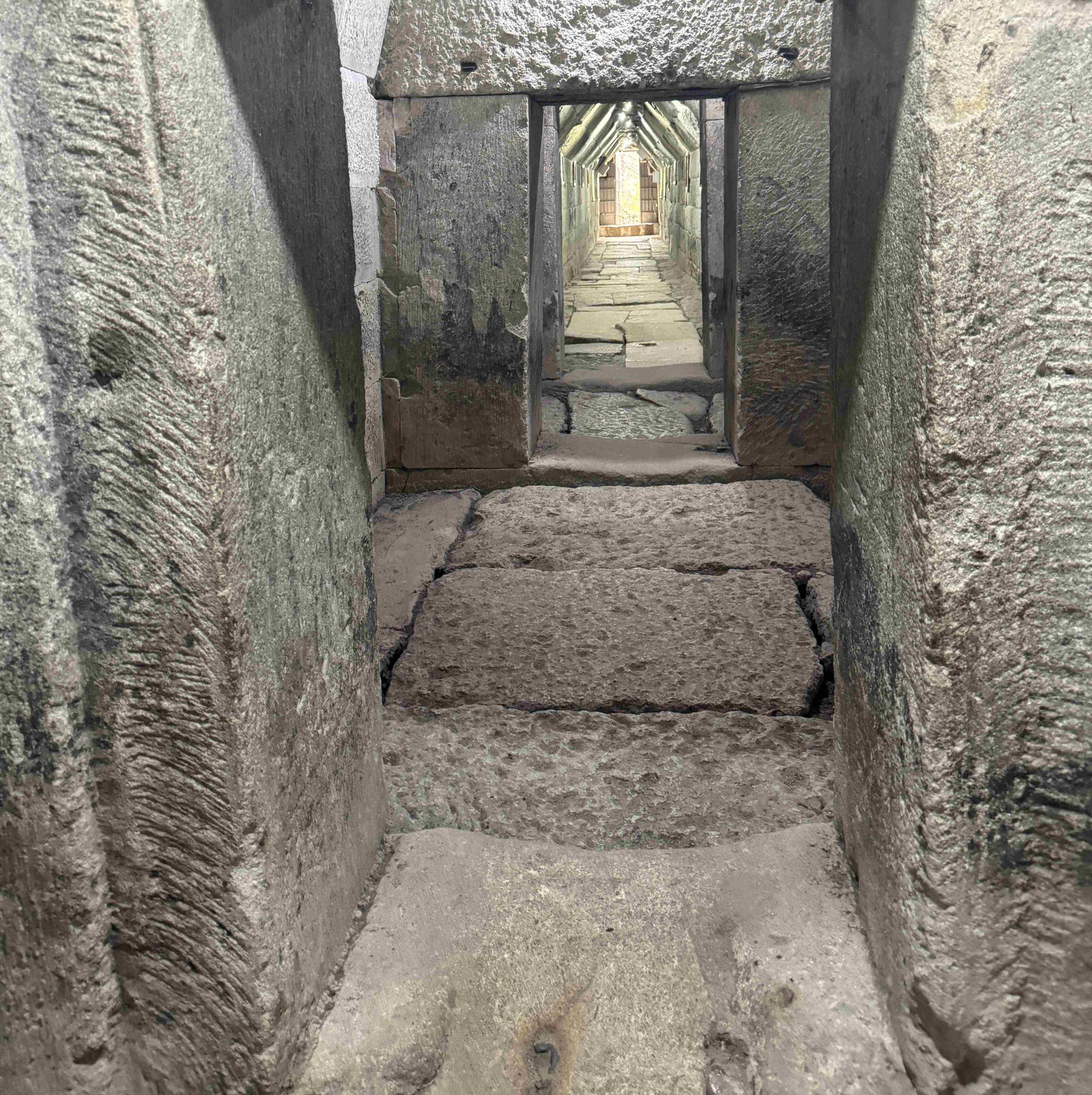
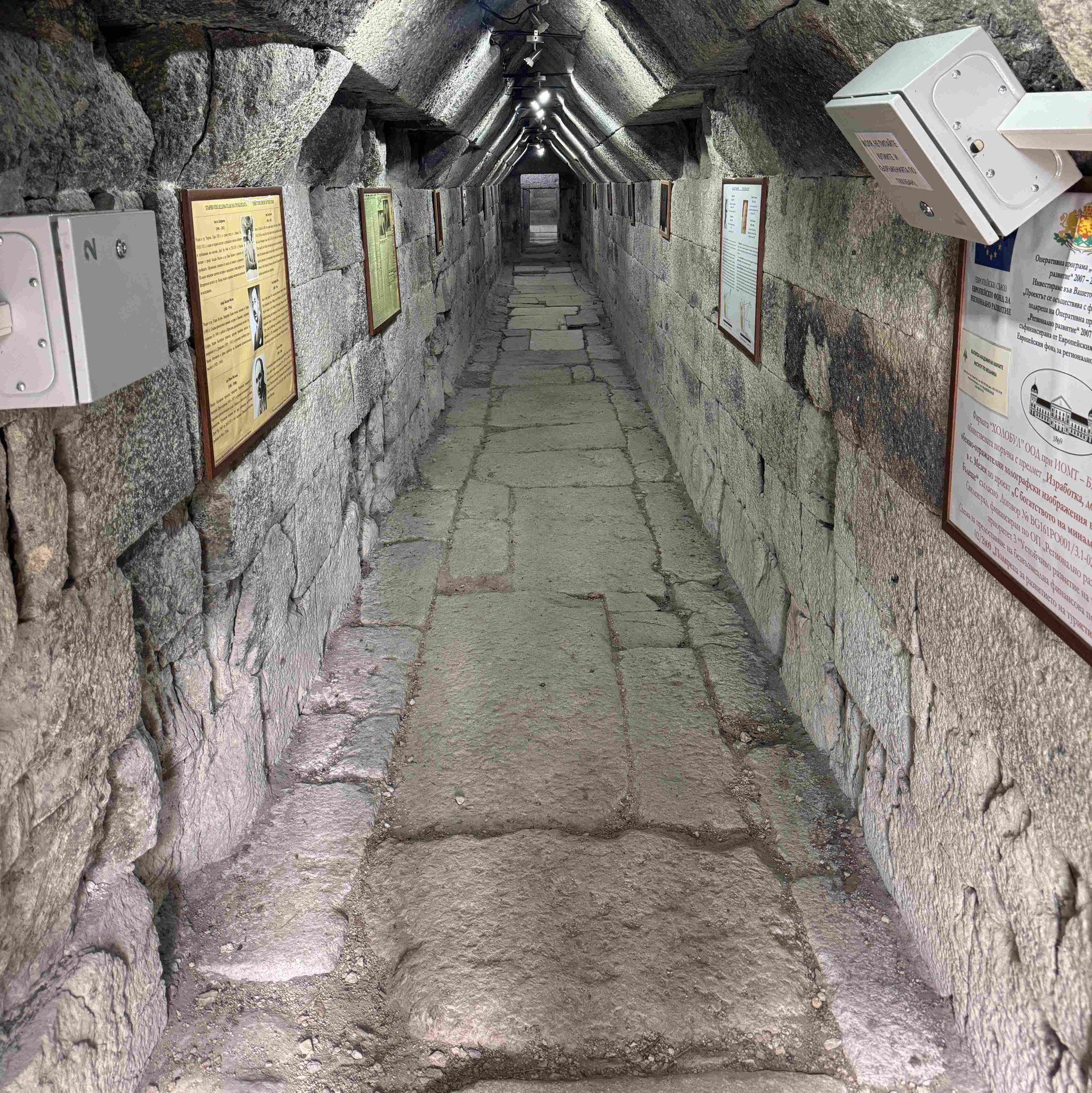
A central, almost mystical aspect of Valeriya’s identity is her connection to the ancient Thracians. "I assume that I am descended from the Thracians, as all my ancestors come from the territory of the Odrysians, the most influential and powerful of the Thracian tribes." For her, further proof lies in the fact that she had red hair until she was 13 years old. While the red hair of the Thracians is mentioned in ancient Greek sources, it has not been scientifically proven that they had a higher prevalence of red hair. Nonetheless, it prompted Valeriya to study Thracian history intensely. However, she doubts mainstream archaeology: Valeriya does not believe that the famous Thracian tomb of Mezek – located in the border triangle of Bulgaria, Greece, and Turkey – was actually a burial site. She bases her theory on the fact that the stepping stones in the entrance area are visibly worn down from frequent use. "Why would people enter a tomb so frequently?" In official descriptions of Mezek, the site, discovered in 1931, is classified as a tomb. "There are many theories about what it really could have been, and many questions have yet to be answered," Valeriya explains. She knows of many archaeologists who also doubt the "tomb theory." "But it is easier to stick to the tomb theory than to conduct further research and change the information boards and brochures," she remarks critically.
Valeriya speaks fondly of her life before the fall of communism almost continuously. When asked if she benefited from the political transition, she answers without hesitation that she was able to buy a car and travel more easily without having to apply for long-term visas. Just as quickly as she lists the disadvantages: "Crime and the cost of healthcare have risen, and our politicians ruined the country after the transition." She likes the founding idea of the EU but considers its current policies entirely wrong. As an example, she points to the vast amounts of money the EU spends on supporting Ukraine with weapons against Russia's war of aggression. "Meanwhile, here in Bulgaria, we don't have enough hospital beds for premature babies," she says, striking a polarizing tone. She believes the war could and should be ended through negotiations. She also expresses understanding as to why Russia started the war against Ukraine. "It is understandable that Russia does not want NATO directly on its border." Furthermore, she speaks of Russian friends who suffered at the hands of Ukrainians before the war. And then her humanistic side resurfaces: "People must live together on this earth. And everyone must be allowed to keep their name, their language, their customs, their traditions, and their religion."
"Democracy is not the best, but we have nothing better," she says, freely quoting Winston Churchill. And then she lists her favorite German-language philosophers and authors: Immanuel Kant, Georg Wilhelm Friedrich Hegel, Hannah Arendt, Carl Jung, Erich Maria Remarque, Hermann Hesse, and Johann Wolfgang von Goethe. "I feel very close to his poetry. My heart starts to beat faster when I think of his words. You can only truly feel it when you read it in German."