
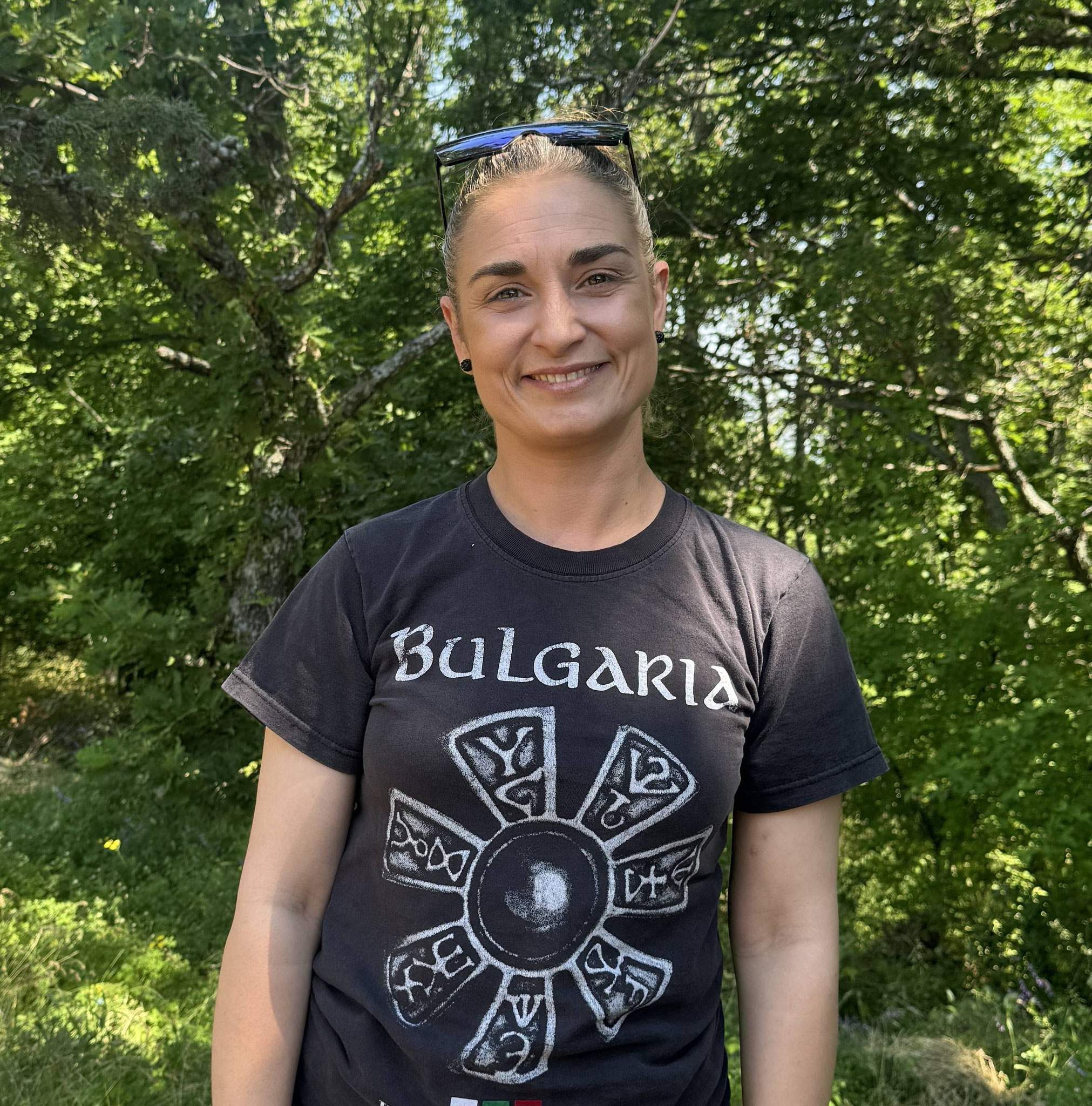
Mariya Koleva is a 40-year-old musician and singer. Her story is shaped by a hard but passionate path that took her from Bulgaria to the USA and back again. Today, she looks at her country with a mixture of deep love for her homeland, bitter realism, and an unwavering desire for social change.
Mariya grew up in modest circumstances with her single mother and her grandparents. Music is in her blood: her father is a drummer, her mother a singer, and her grandparents played traditional Bulgarian folk music. The fact that she was able to receive music lessons as a child borders on a miracle for her: “My mother was a single mother. We had a hard life, but fate has its own way of showing that nothing is impossible.”
Her talent opened doors for her early on: after winning the Bulgarian version of American Idol at the age of 23, she received a music scholarship. A fortunate coincidence brought her together with the mayor of the US sister city, Elkhart, for whom she was working as an interpreter. She seized the opportunity and went to study in the USA - an experience that permanently shaped her mindset and showed her what it means to live in a supportive environment.
The Challenges in Bulgaria: Corruption and Mentality
After her return to Bulgaria – which was involuntarily sealed by a tightening of US immigration policies during a presidential election period – the reality of the Bulgarian music market caught up with her. Because it is extremely difficult to make a living solely from music in her homeland, Mariya now also works as a journalist and a sound technician. Together with her best friend, she manages the sound at various events, building a second foothold, as surviving purely as a professional musician without the right connections is almost impossible: “Here, certain people build their careers on whose daughter you are or what relatives and friends you have. If you don’t know anyone in the music industry here, there’s no chance you'll make it. You can be as good as you want, better than the best and most famous singer in Bulgaria – and you still won't make it.”
For Mariya, the problem lies deep within a mentality shaped by the communist past and a lack of mutual support: “Even though we are officially a democratic country on paper, many traits of communism are still deeply embedded in people's thinking.” In her opinion, many people in Bulgaria think very negatively, citing a lack of self-confidence as the reason.
Visions and the Role of Art
While Mariya does not believe that she, as an artist, can change society's deeply rooted mentality on her own, she sees it as her duty to shape her audience: “My goal as an artist is to educate my audience in my own way. It's like raising your own children. When I sing for people, I either give 100 percent or I don't show up at all. You can't do things half-heartedly.” Her personal philosophy of life is not to let circumstances control her; instead, she actively tries to influence them.
A Look at History and Geopolitics
Having grown up near the Greek border – the former Iron Curtain – Mariya also reflects on the painful history of the region, such as the displacement and forced renaming of the Turkish minority in the 1980s. After her return from the USA, she helped process the bureaucratic aftermath of this era.
She was responsible for issuing pension documents for people with dual citizenship (Turkish and Bulgarian). The main obstacle was the historical chaos in the archives left behind by the forced renamings of that time: “In the old files, you come across completely different names without it being obvious at first glance who is who. For those affected, this meant a massive bureaucratic ordeal. They had to go the legal route through lawyers or specialized firms to have the documents officially legalized. This was the only way to confirm legally that the original Name A and the imposed Name B actually belonged to one and the same person.”
Mariya becomes emotional when looking at these bureaucratic traces of the past and at the monument for the victims at Iliena niva. As a mother, the fate of children in both historical and current world conflicts – such as in Ukraine today – touches her deeply. She sharply condemns the cruelty of those in power: “They are not fighting each other; they are waging war against ordinary citizens – and that is simply unjust. If the powerful absolutely want to wage war, they should just kill each other for all I care and attack one another with their big tanks. But they must not kill innocent people who are just living their lives in flip-flops and t-shirts, trying to get by on minimum wage. What did they ever do to them? Nothing. For me, that is the typical way of a dictator: ruthlessly ruining the lives of simple people for no reason at all.”
Dreams for the Future
Mariya has often thought about leaving her home country for a career abroad. But despite all the hurdles, her heart beats deeply for her homeland. That is why she places great importance on her son receiving a Bulgarian school education first. If he decides to study abroad in a few years, that might also be the time for her to see where a new door to the world might open.
Visibly moved and with tears in her eyes, she says: “I love my country. I just wish people had a little more humility. There is a massive lack of humility and compassion. Much more positivity, much more respect, much more love and care – in the healthcare system, in the school system, in the government. That is what we need.”
For the political future, she primarily wishes for unity instead of division in society. Politicians could also make a decisive contribution to this. Looking ahead to the arrival of the high-ranking guest, she says: “Whether it is a woman or a man makes no difference at all, as long as the person placed in this responsible position acts as a human being.”
Iliena niva: Remembering the Fate of the Thracian Children
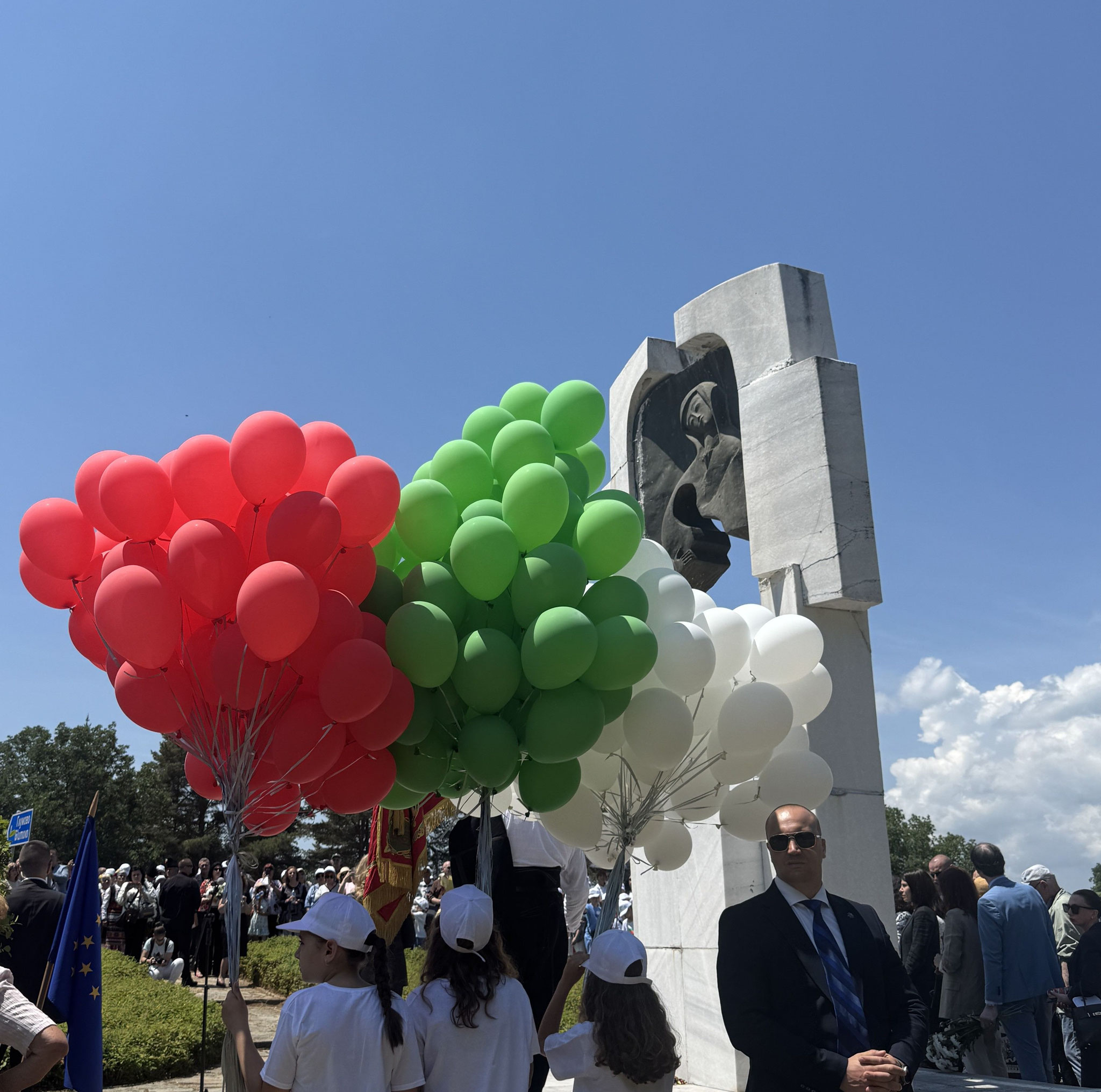
The Iliena niva memorial (Bulgarian: Илиева нива) in the eastern Rhodopes, near the town of Ivaylovgrad, is a place of mourning deeply anchored in Bulgaria's collective memory. It stands symbol for the tragedy of the Thracian Bulgarians during the Balkan Wars of 1913. Following the collapse of the Ottoman Empire, tens of thousands of Bulgarian refugees were pursued by Ottoman troops on their way back to their homeland. At this location, a former meadow (Bulg. niva), hundreds of defenseless children, women, and the elderly were brutally murdered. To commemorate the suffering of the displaced and the victims of these ethnic cleansings, Iliena niva is recognized as a national monument today.
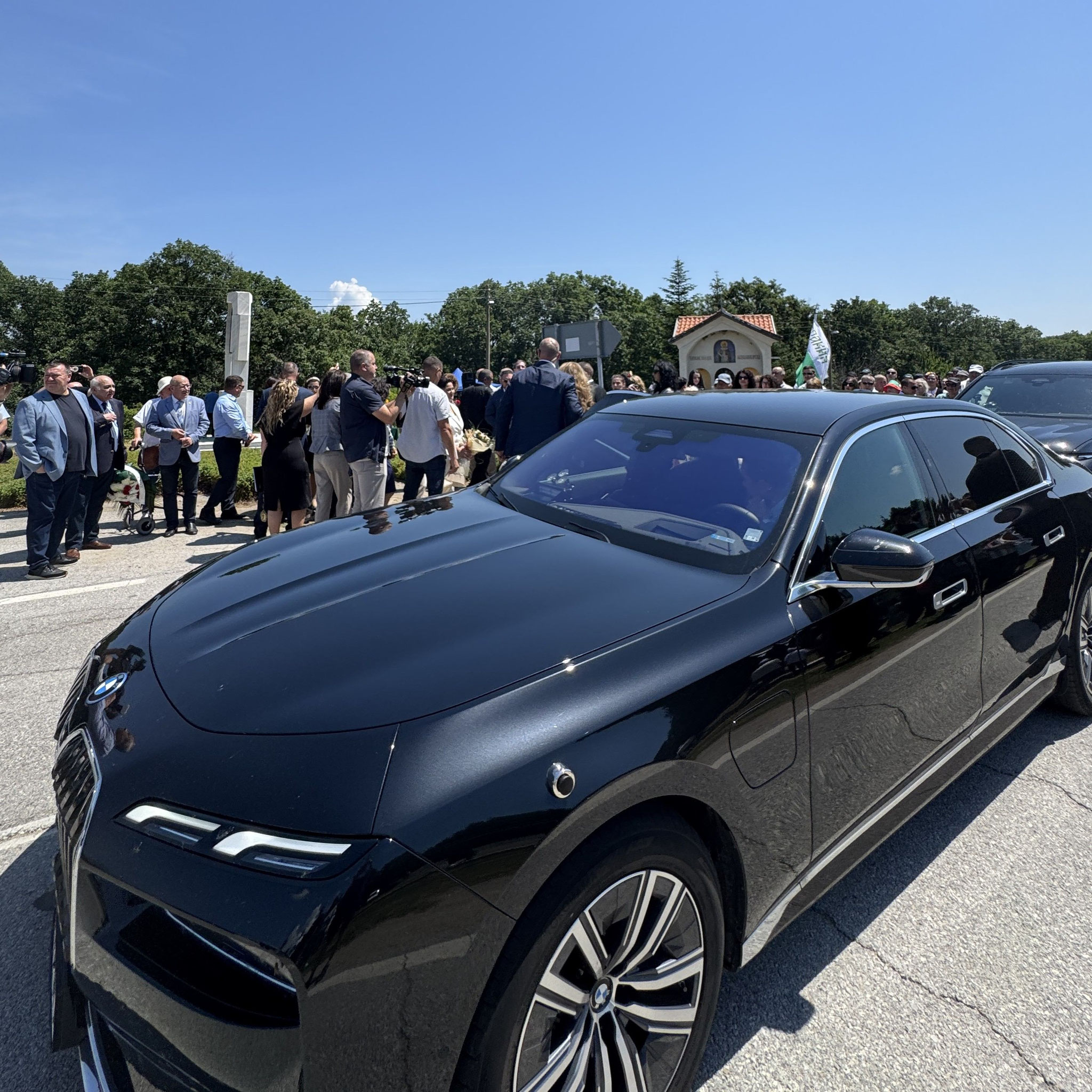
It is Saturday, and I happen to pass by this historic place by bicycle just as the annual ceremony is being prepared. Arriving a few hours before the official start, I can observe the bustling preparations in peace: ground is being raked and swept, chairs are being carried, balloons in the Bulgarian national colors are being inflated, and the sound equipment is being wired up. Gradually, the usually lonely country road begins to fill. Cars and buses arrive; local people, families with children, and members of Thracian cultural associations come together. Finally, the police pull up, followed by a convoy of black limousines, with which the Bulgarian President Ilijana Jotowa arrives.
This year's commemoration marks a special double anniversary: it is the 113th anniversary of the historic massacre and, at the same time, the 30th anniversary of the memorial's establishment. In her solemn address, the President remembers the more than 200 infants and young children who lost their lives back then on the banks of the Arda River. She earnestly emphasizes how elementally important it is to keep the memory of this tragedy alive and to pass the duty of remembrance on to future generations.
While waiting for the ceremony to begin, I strike up a conversation on the sidelines with Mariya Koleva, who is sitting behind the mixing console today, taking care of the sound and audio engineering for the memorial service.


Bulgarian President Ilijana Jotowa