Today, anyone traveling from Bulgaria to Greece usually crosses an inconspicuous line on the map. Since Bulgaria's full accession to the Schengen Area in early 2025, freedom of movement has become a matter of course. Yet for decades, this region on the edge of the Rhodope Mountains was not a European dream destination, but a hermetically sealed death zone. A new art project and the memories of the local population are now attempting to break the decades-long silence surrounding the victims of the Iron Curtain.
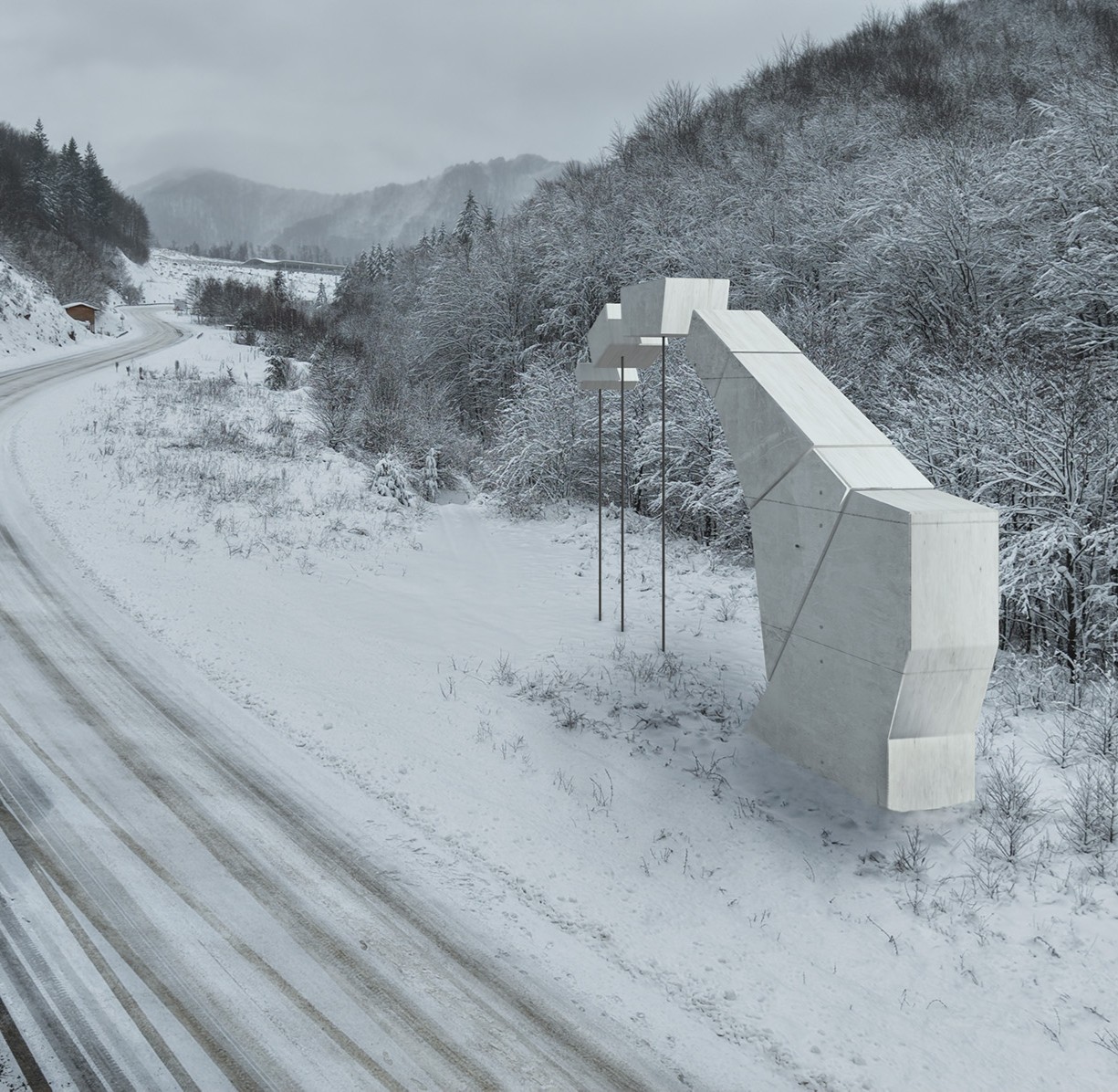
The centerpiece of this historical processing is a sculpture in the border zone – part of the interdisciplinary art project "The Travelling Monument" – which emerged from a close collaboration between the artist duo Boris Misirkov and Georgi Bogdanov and the architect Petar Tornyov.
When the two artists were working in the village a few years ago to capture photos and videos for an exhibition about the former outer border of the Warsaw Pact, they met the dedicated mayor of Chepintsi: Riza Brahimbashev. The 40-year-old was immediately enthusiastic about the idea and has supported the project with full commitment ever since. Thanks to the mayor's backing, the schedule is set: the sculpture is fully planned and is to be erected by the end of the year.
"It is meant to remind those traveling over the Aegean Pass that this natural connection was interrupted for decades," the artists explain.
The visual concept breaks radically with classical, heroic monuments of socialism, relying instead on profound architectural symbolism. The structure will be built as a raw concrete construction. The choice of cold, unvarnished exposed concrete establishes a direct link to the border fortifications and checkpoints of that era. The design evokes a historic stone bridge, typical of the Rhodope Mountains – a centuries-old symbol of connection.
However, the conceptual break is drastic: while the structure is firmly anchored in the ground on the Bulgarian side, the arch rises upward, only to break apart into individual, isolated segments. These concrete elements seem to hang freely in space and never reach the opposite bank. This trajectory, which loses itself in mid-air, recalls the tragically failed attempts to cross the border on the path to freedom.
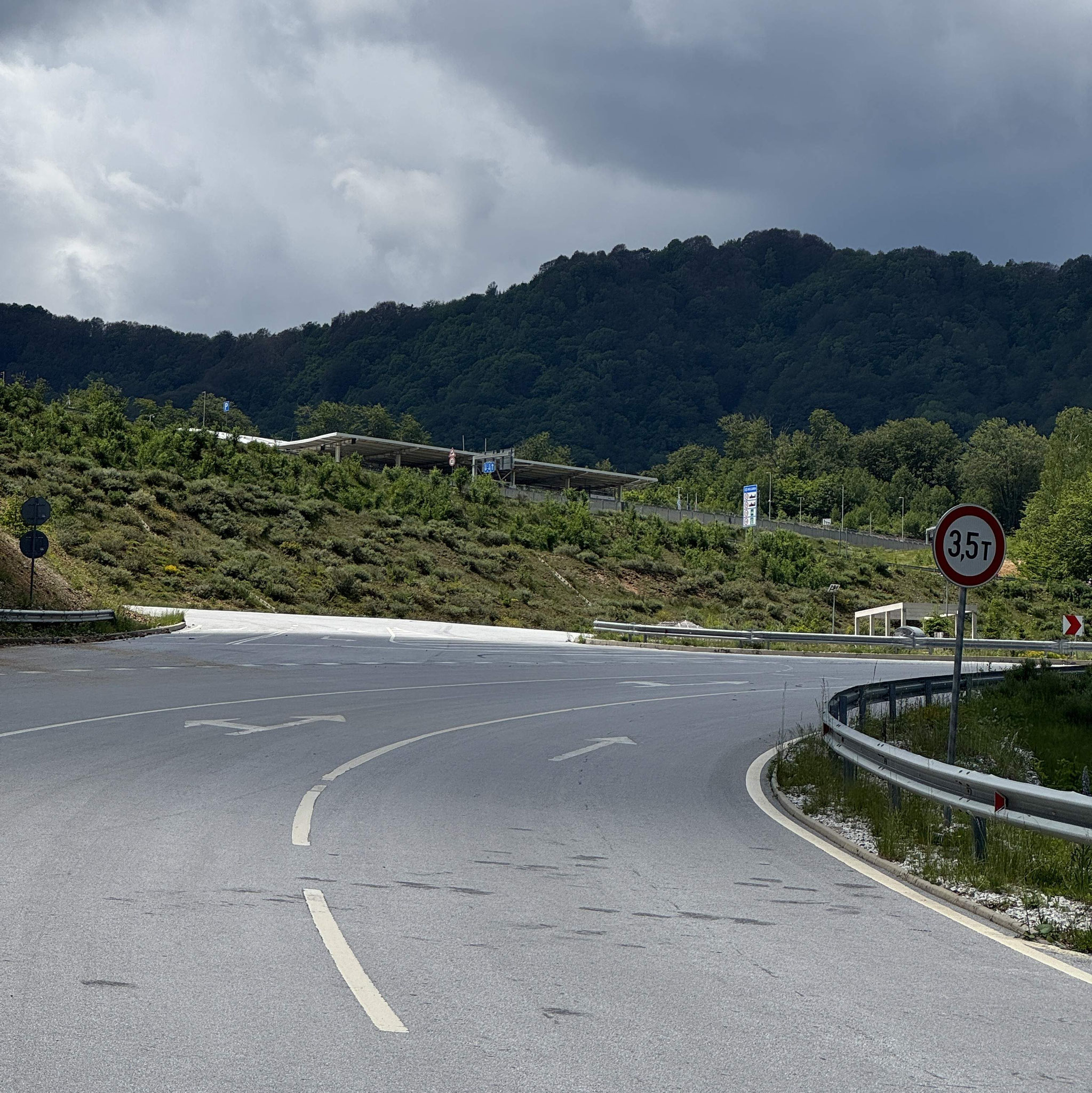
The site chosen for the sculpture is strategically located right on the national road, in the immediate vicinity of the border crossing between Rudozem and Xanthi. For today's travelers, who pass the border effortlessly, "The Travelling Monument" is intended to serve as a reminder of the fates of those who lost their lives here. At the same time, it is meant to be a warning that freedom of travel and open borders are not something to be taken for granted.
The Iron Silence and the Deadly Myth
How many people lost their lives at the Bulgarian outer borders while attempting to flee to freedom remains unknown to this day. Current research estimates the number of victims to be between 375 and nearly two thousand. "Nobody knows. Back then, there was an informational blackout. And still, there is no information," Mayor Riza emphasizes.
The locals doubt that there will ever be a complete appraisal through official documents. A large part of the fatal incidents in the dense forests was simply not documented by the secret service of the time. "If they spotted someone in the border area, they shot," Riza says, describing the brutality of that era. A former border guard, who decided to break his silence, told villagers of about 300 deaths in the immediate border region around Chepintsi alone.
The 30-year-old Rahim, who works as a translator and is involved with an organization that enables young people to spend time abroad through various EU programs, looks deeply into the village's history. He assumes that back then, almost everyone in the village was involved in the repressive border security system in one way or another – whether voluntarily or by force.
For citizens of the GDR in particular, the belief that the green border in southern Bulgaria was easier to overcome than the inner-German border was fatal. The Bulgarian authorities had secured the borders with Greece and Turkey in a similar fashion, featuring miles of restricted zones, signal fences, and minefields. As current research shows, nearly half of all registered border breaches in the final years of the regime involved Germans. One of the last documented casualties was 26-year-old East German Frank Schachtneider, who was shot near Burgas in September 1988 – just one year before the fall of the Berlin Wall.
A Village with a Future?
The young generation in the village refuses to remain trapped in the isolation of the past. Mayor Riza, who was elected in 2023, owes his office primarily to the fact that he succeeded in successfully mobilizing the local youth. "Normally, young people show little interest in politics. I wanted to change that," Riza says. "I wanted to bring fresh air into local politics. I want to move the village and the region forward so that it is worthwhile for the youth to stay." In doing so, it is important to him to involve the people. He proudly points to the attractively designed square in the center of the village: "We created this together." His declared goal is to lead Chepintsi technologically and structurally into the 21st century.
The Transformation of the Border Zone
The road from Rudozem via Chepintsi to Xanthi winds steadily uphill towards the Aegean Pass. Shortly before the highest point, modern border buildings come into view. "These are the border facilities built starting in 2020, back when Bulgaria was not yet a member of the Schengen Area," Rahim explains. Due to delays in road construction on the Greek side, the project dragged on for so long that the border crossing was only opened after the Schengen accession. "Now, the checkpoints are basically useless and deserted," Rahim says. Today, travelers commute between Bulgaria and Greece without controls. Nevertheless, the region noticeably benefits from the long-awaited connection: "On a weekday, it's quiet on this road. On weekends, there's a lot going on here," Rahim comments. "Mainly Bulgarian vacationers heading to the Aegean beaches, and shopping tourists from Greece take advantage of the free passage across the border
Travelers now commute between Bulgaria and Greece without any checks. "On a weekday, it is quiet on this road. On weekends, however, there is a lot of traffic here," Rahim comments. "Bulgarians driving to the sea, and Greeks coming to do their shopping."
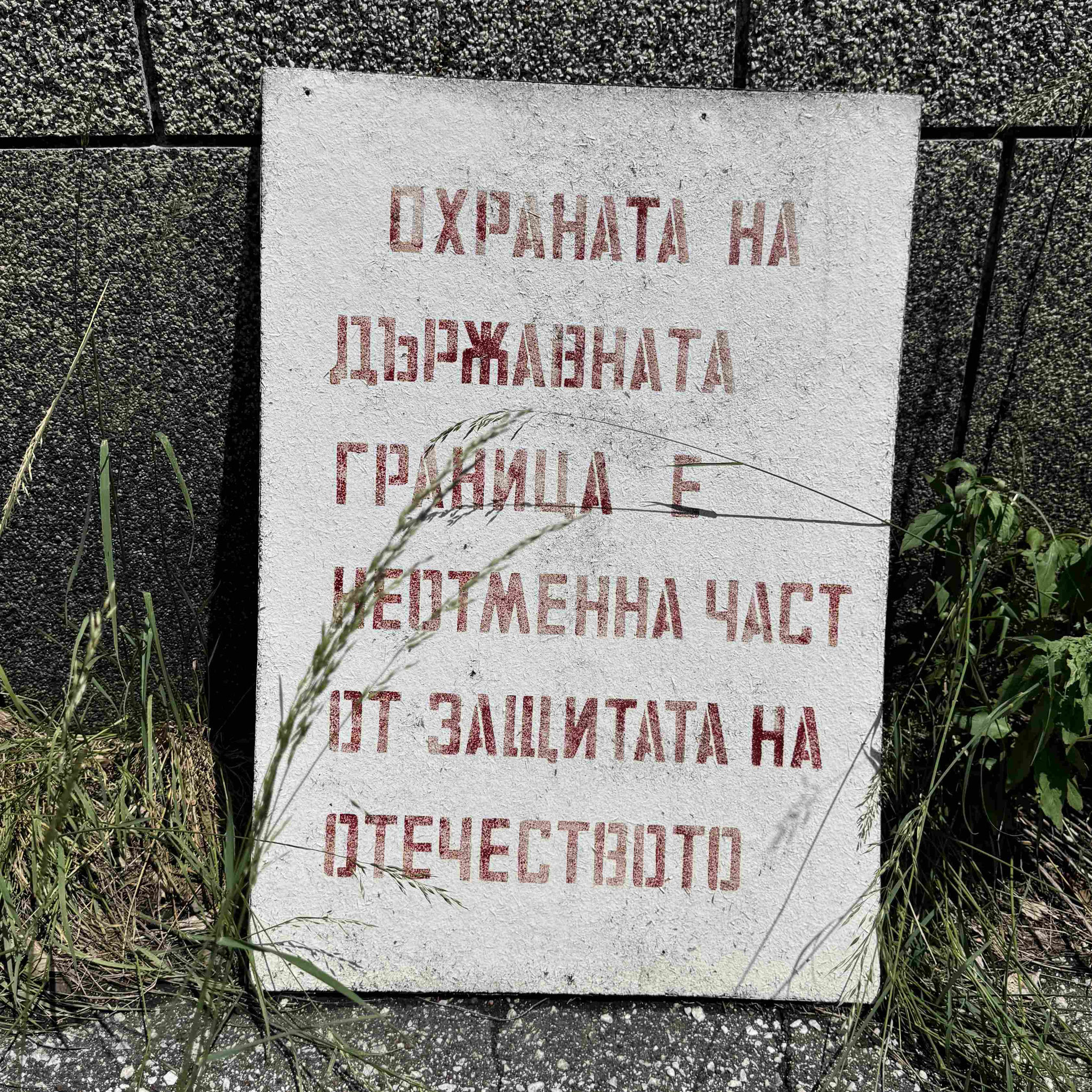
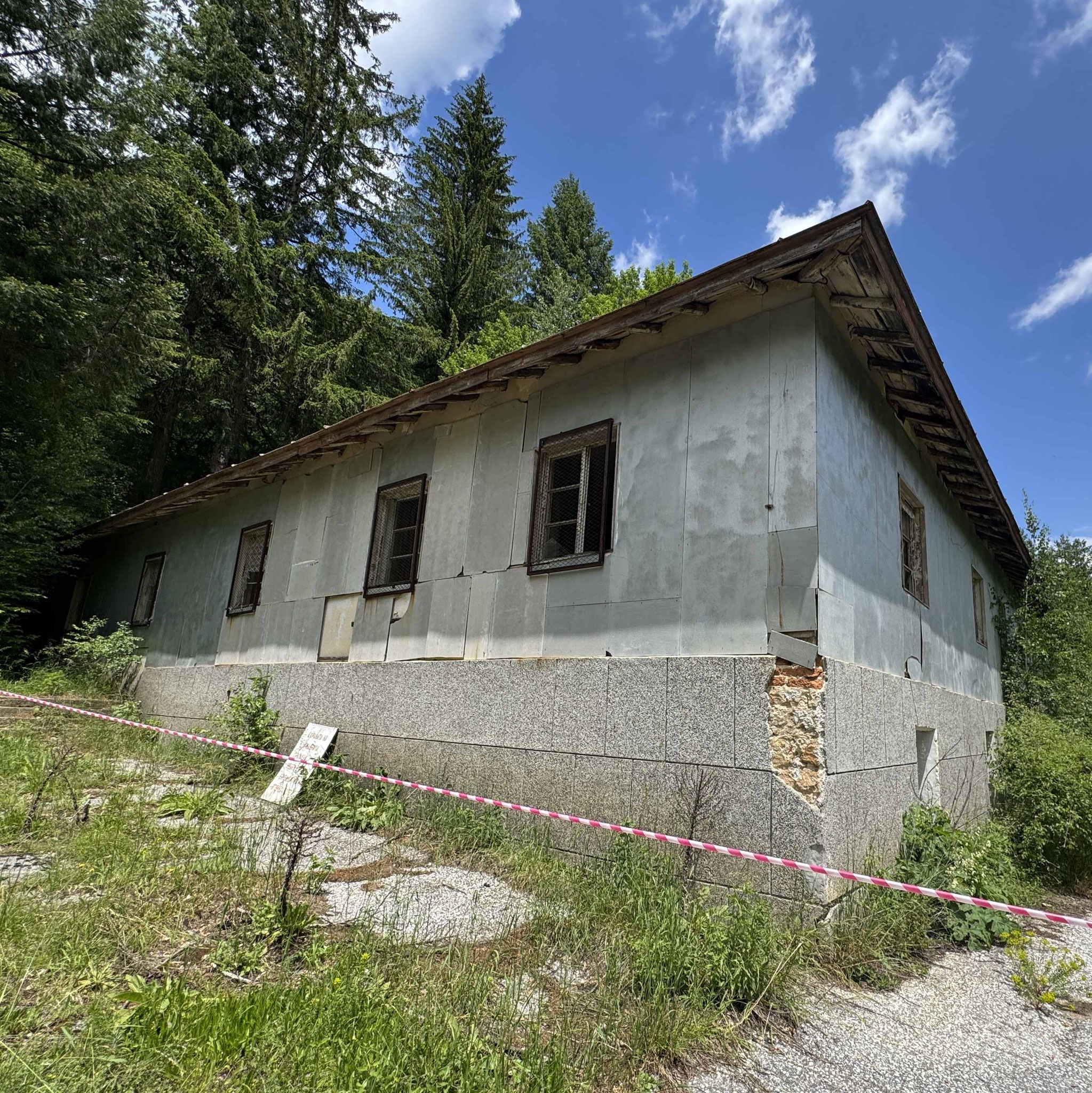
Rahim and Riza point to an old, dilapidated building in the bushes right next to the road, just behind the square where the monument is to be erected: "Those were barracks for the border guards who served here." On the outer facade, the faded lettering is still recognizable: "State Border is State Order". Leaning against another weathered wall is a sign reading: "The Protection of the State Border is an Essential Part of the Defense of the Fatherland". Right next to the barracks building is a simple concrete basin. "That was the swimming pool for the border guards," Rahim explains.
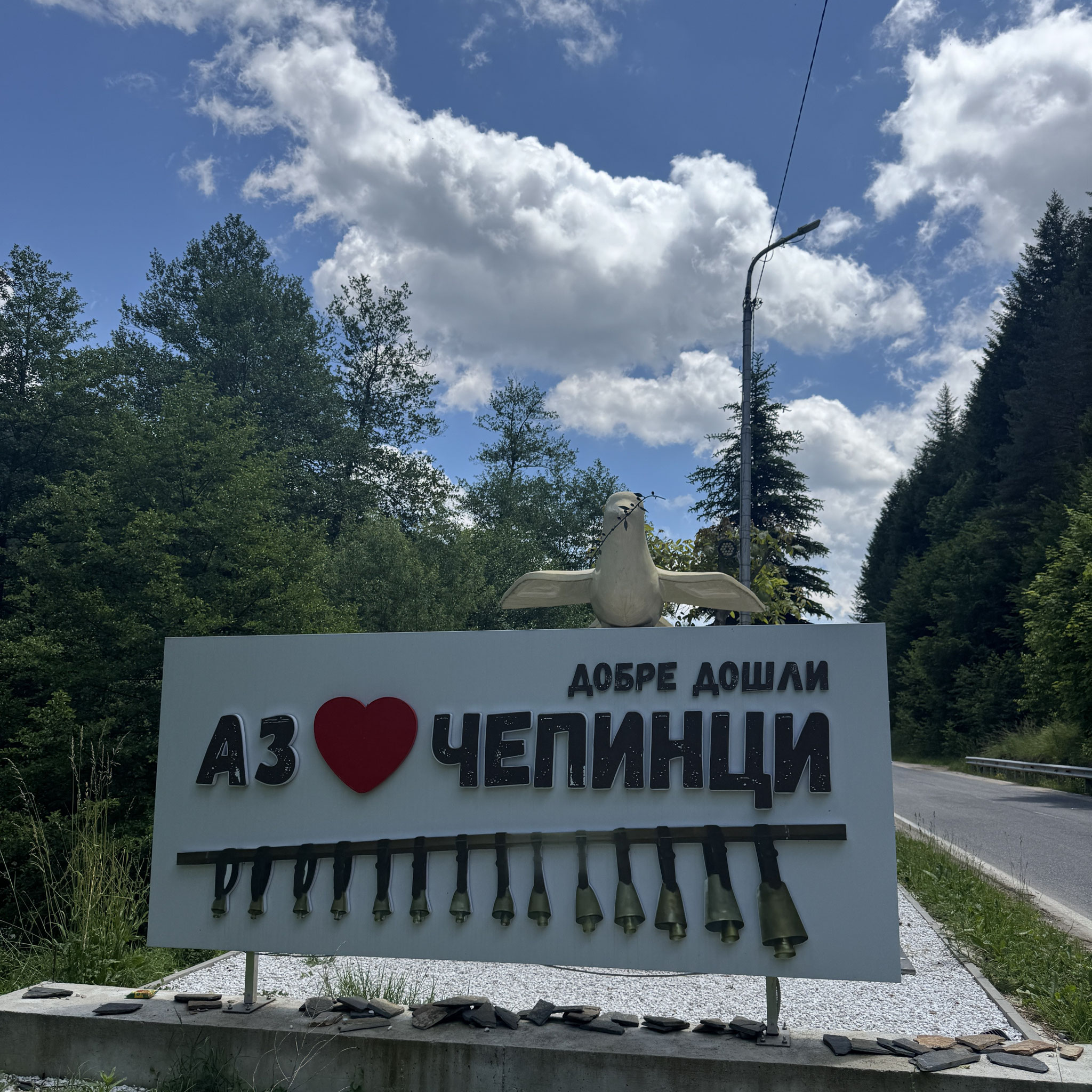
Chepintsi has already made a statement with an art project once before: in the early 1990s, a monument was erected at the entrance to the village. It shows a giant peace dove facing west with a branch in its beak. Beneath it is a row of symbolic bells and the inscription: "I love Chepintsi." The bells represent the herds of sheep that used to roam through the valley; the old name of Chepintsi literally meant "Bells' Valley." While this dove stood for a hopeful new beginning after the fall of the regime back then, the new "Travelling Monument" up on the pass will soon serve as a reminder of those who were brutally shot and killed while trying to flee across this border.
Note from artist Boris Missirkov: "We have half of the money secured by the Bulgarian Ministry of Culture, but we still have to fundraise 36,000 Euros more to make it right. We launched a fundraising campaign on a Bulgarian donation portal: https://platformata.bg/kultura-izkustvo/patuvashtiat-pametnik---skulptura-memorial-na-zaginalite-v-tarsene-na-svobodata.
Every contribution is welcome.