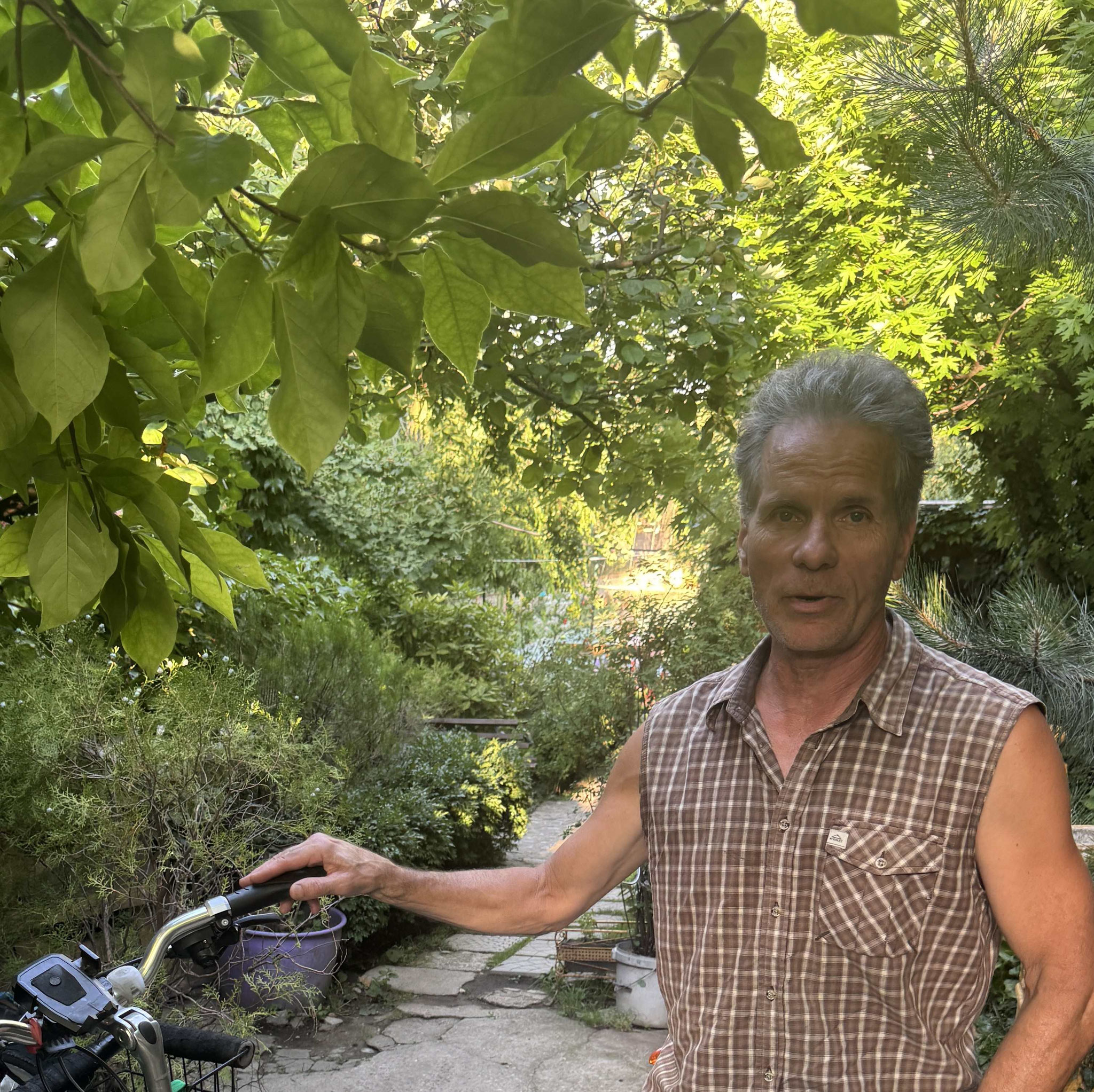
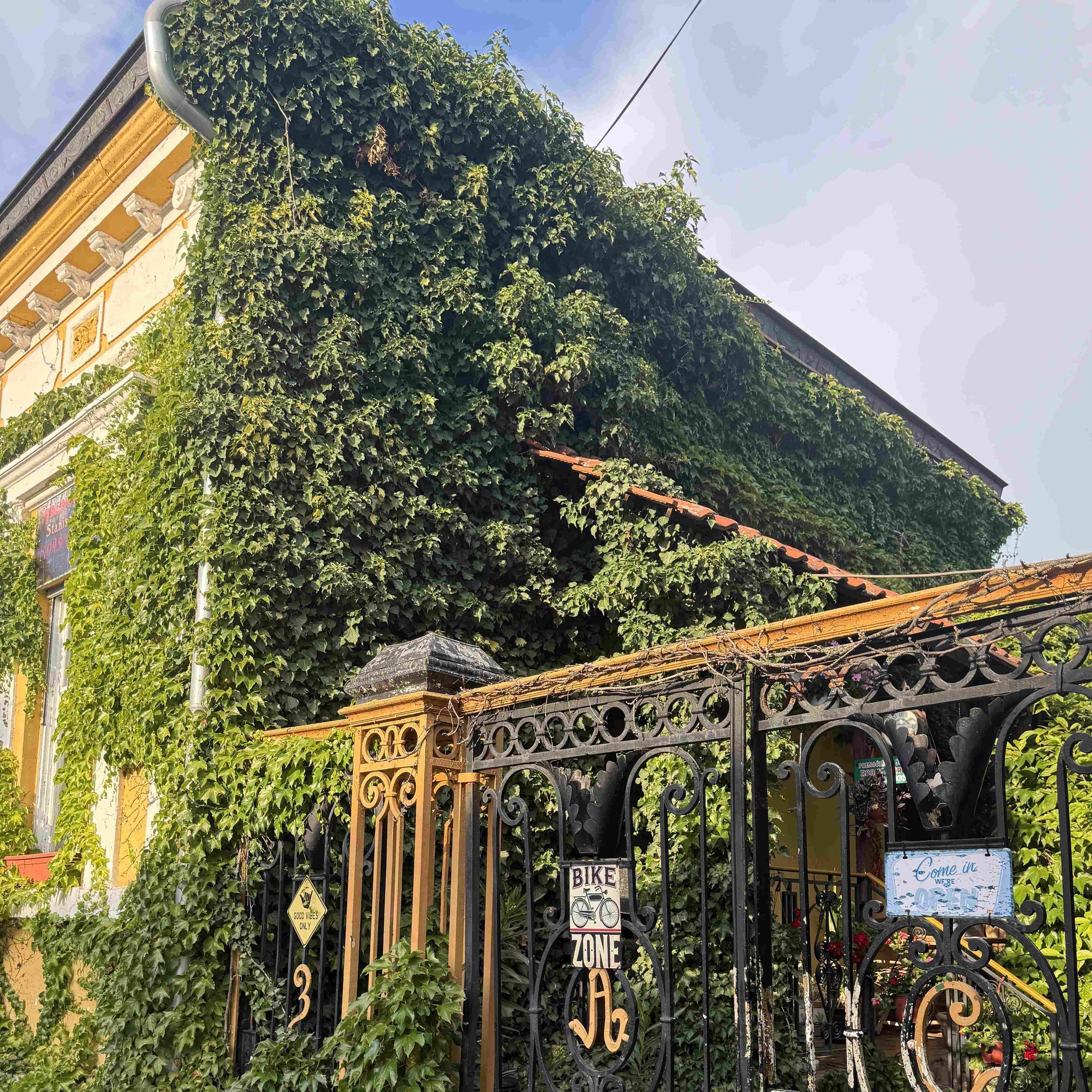
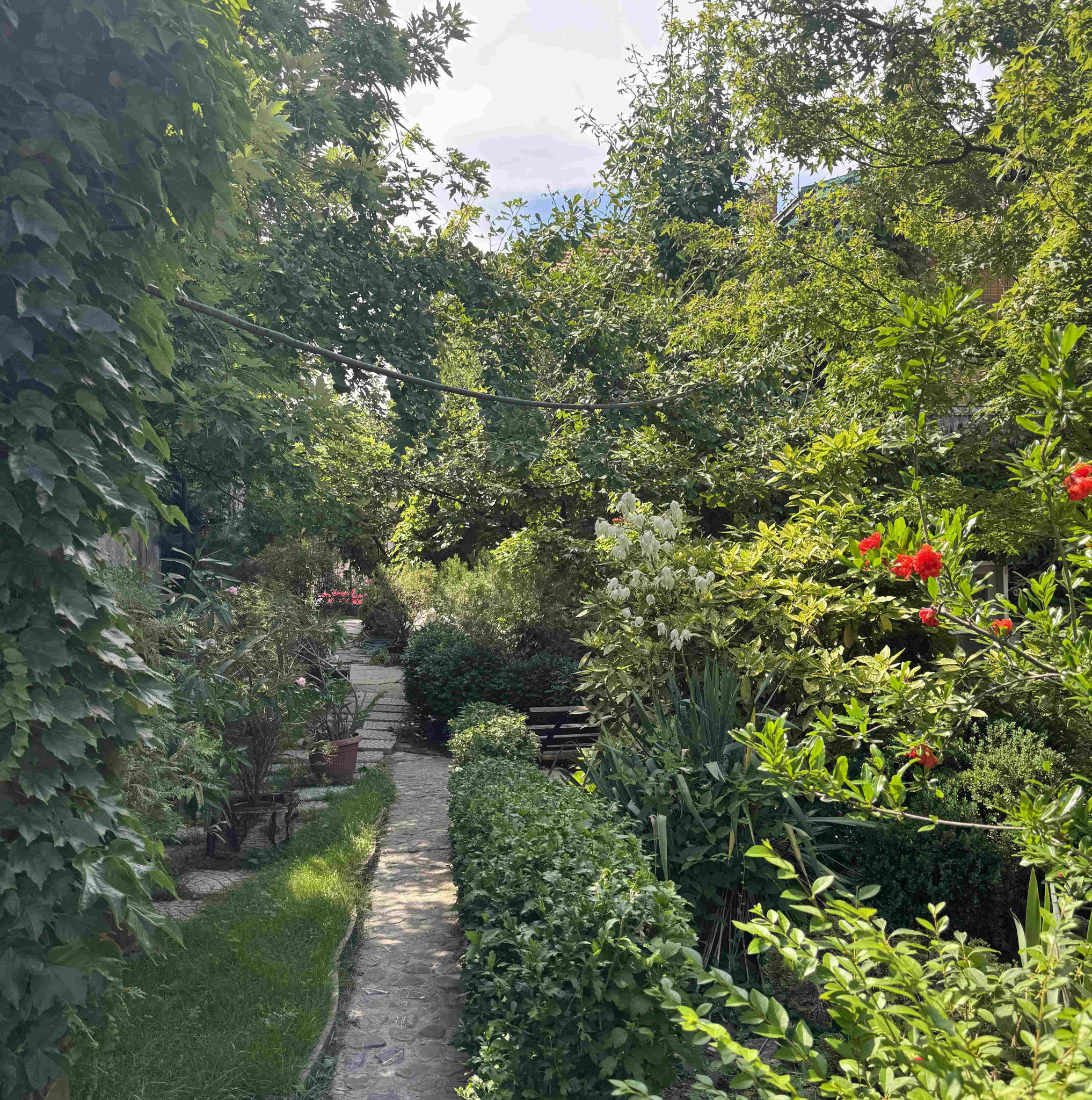
In Negotin, a small town in eastern Serbia, Boyan Stanisavljević runs the "Base Camp Urban Guerilla". His camp is far more than just a rest stop for cyclists on EuroVelo 13 – it is a crossroads of global journeys, a place of lived utopia, and a reflection of the Balkan's shifting history.
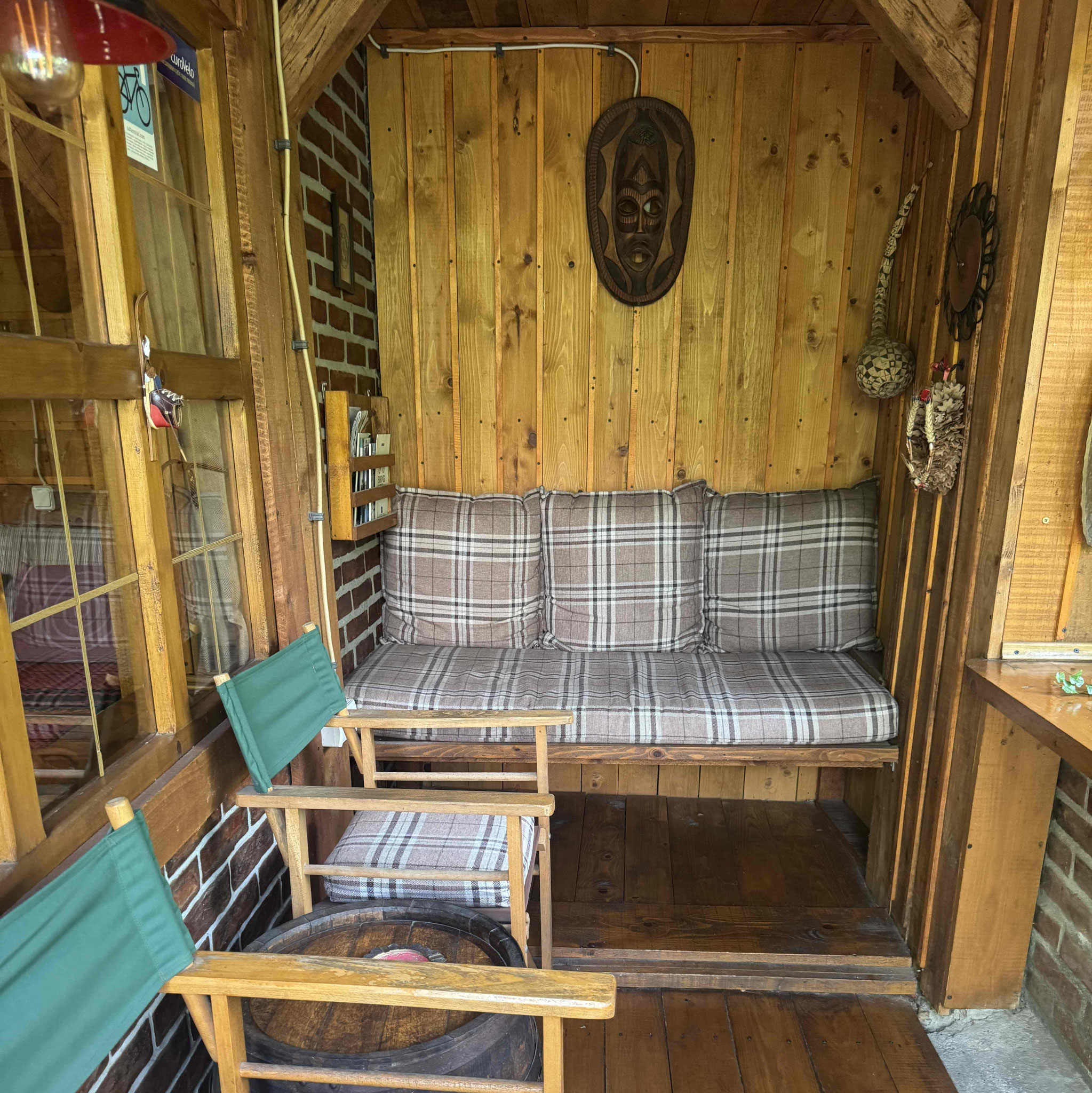
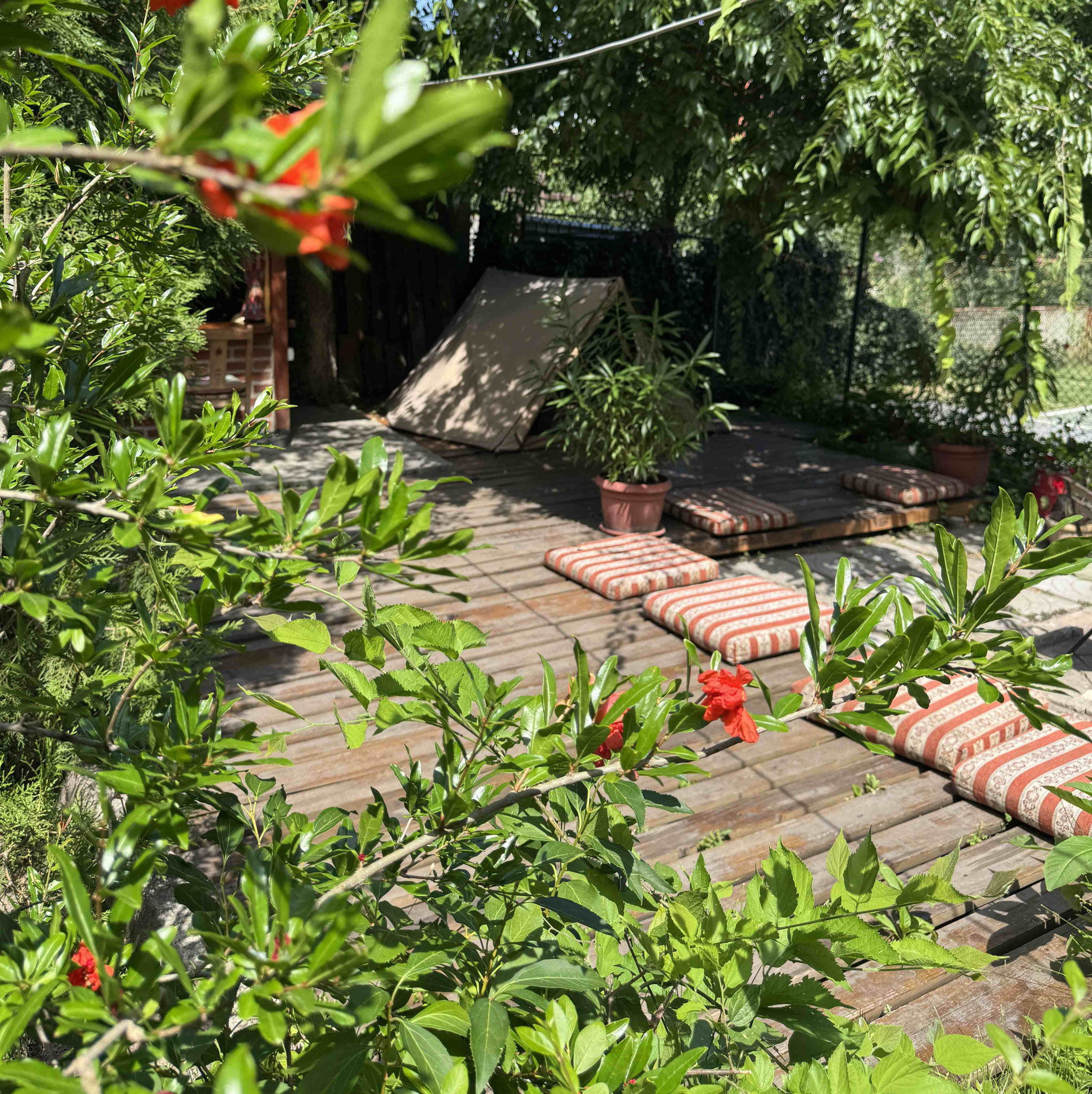
Stepping into the "Base Camp Urban Guerilla" in Negotin, Serbia, means leaving the conventional world of tourism behind and entering Boyan's cosmos. The grounds, where cyclists from all over the world pitch their tents or spend the night in a small wooden bungalow, are steeped in family history. "This property belonged to my grandfather; the house dates back to 1924," says Boyan Stanisavljević. In 2016, he and his brother, who actually lives in Belgrad, began rebuilding the estate. They created a sanctuary that is now marked in red on the maps of long-distance cyclists worldwide.
Boyan, 59 years old, an outdoor sports enthusiast, former tennis teacher, and now a host by deep conviction, embodies a quiet, almost defiant serenity. He does not run his camp as a commercial business, but as a philosophy of life. "If someone has no money, they don’t have to pay," he says simply. "It’s more of a lifestyle than a business. Many people traveling on a larger budget often give me extra money for those who have nothing. The community recognizes what is needed." Money is a secondary concern to him: "If I had enough money, I would do all of this completely for free. For me, it’s about the people."
A Different Iron Curtain
The camp sits right on EuroVelo 13, the "Iron Curtain Trail," which traces the path of the former division across Europe. Yet here, in the border triangle of Serbia, Bulgaria, and Romania, memories of this border are shaped by very distinct historical nuances. While the Iron Curtain presented an insurmountable, often deadly barrier to the West for those living in Eastern European dictatorships, reality looked entirely different for Boyan and the people of the former Yugoslavia. "People in the villages around here often aren’t even that aware of the Iron Curtain because, for us in Yugoslavia, it didn't really exist that way. The Iron Curtain was over there in Bulgaria," Boyan explains. While Bulgaria and Romania were firmly anchored in the Soviet-dominated Eastern Bloc, socialist Yugoslavia under Josip Broz Tito forged a non-aligned path. "We were like the West between two worlds. With a Yugoslav passport back then, you could travel anywhere. Everyone wanted that passport."
Boyan recalls the vast economic disparities of those days: "In Bulgaria back then, you could buy almost nothing. If you traveled from Yugoslavia to the market in Sofia with two packs of chewing gum and five pairs of women’s stockings, you could live in a hotel for a month on the proceeds." From the Yugoslav side, the borders with Bulgaria and Romania were almost always open. However, for East German citizens attempting to flee to the West via Bulgaria, the Danube region frequently became a matter of life and death. Some managed to swim across the river into Yugoslavia. "They would stay here in Negotin in prison for a few days before being flown out to West Germany. The Yugoslav police just did their job," Boyan says with a smile. That the "jail" here was often just the final transit station to freedom is an account he shares with a somewhat romanticized, softening lens in hindsight.
Demographic Change and Vlach Palaces
Today, the Negotin region battles the classic challenges facing the Balkans: depopulation and demographic shift. "Twenty years ago, there were 50 percent more young people here," Boyan notes wistfully. Many now work in Austria, Germany, or Switzerland. Yet anyone driving through the villages surrounding Negotin will unexpectedly encounter massive, palace-like villas standing almost surreallly in the landscape.
Boyan knows the story behind them: "Those are the Vlach villages. They make up about 50 percent of the population in this region." The Vlachs, or Wallachians, are an ethnic minority who speak a language closely related to Romanian, but they do not consider themselves Romanians. "In the 1960s, the Serbian villages were wealthier than the Vlach villages, and the people had no interest in leaving for Europe. Many people from the Vlach villages, however, were very poor and consequently went to Europe as guest workers." Driven by the desire to demonstrate their hard-earned wealth to the neighbors back home, they built these enormous, often vacant palaces, which today mostly come alive only during holiday seasons.
Western money keeps the region afloat. "In Negotin, there are exchange offices on every corner – more than twenty in total," Boyan says. The pensions and savings from Germany and Austria flow directly into the local economy.
Low-Budget Trends Among Globetrotters
Through this contrast-rich landscape roll not only the cyclists of the Iron Curtain Trail, but also those of the Danube Cycle Path. Additionally, the Balkan Green Belt Trail passes through here – a long-distance hiking trail spanning over 3,000 kilometers that brings to life the natural beauty along the former border strip between Serbia, Bulgaria, and North Macedonia.
Boyan observes his guests closely and has noticed a shift since the pandemic and the war in Ukraine: "Budgets are getting smaller and smaller. Before, cyclists would ask for the best restaurant in town; today, almost everyone cooks for themselves or looks for the cheapest accommodation." Gear is suffering too: "Recently, a German traveler arrived whose bike was practically falling apart. We had to take it straight to my buddy's workshop." Everything has become more expensive. Yet Boyan views this not merely as a crisis, but as a lifestyle choices: anyone traveling for months on end to Kyrgyzstan or India simply has to budget strictly.
To help these independent travelers, Boyan successfully applied a few years ago for 12,000 euros in EU funding through a project run by the German Society for International Cooperation (GIZ) to purchase rental bikes and camping gear. He regrets that this funding period for cross-border infrastructure projects has ended, making it difficult at the moment to secure financial grants to boost local tourism.
The "Green Belt" as a Future Opportunity
Despite the political challenges and Boyan's critical view of local environmental issues – he worries about a lack of recycling and a planned incineration plant for medical waste – he remains an optimist. The concept of the "Green Belt," which aims to transform the former death strip into a European nature reserve, fascinates him, even if official organizations are barely visible on the ground. "Over the last 10 to 20 years, fewer and fewer people have been farming. The fields are turning back into forests and flower meadows all by themselves. Nature is simply growing."
For Boyan, his Base Camp is a place where this nature and humanity converge. He speaks warmly of the musicians, free spirits, and globetrotters from different continents who cross his path. "Once, a violinist from the London Philharmonic Orchestra stayed here; another time, a Swiss cabaret artist arrived with a telescopic alphorn in his luggage. He put on a little concert for the children. I always thoroughly enjoy that."
When Boyan talks about his guests, with whom he often sits up late into the evening, it becomes evident that he has turned Negotin into a tiny center of the world. He no longer travels much himself, but the world comes straight to him. "I connect with the world without ever leaving," he says. And out in that wide world, people will surely keep telling stories of Boyan and his "Base Camp Urban Guerilla" in eastern Serbia, tucked near the tripoint where Romania, Bulgaria, and Serbia meet.