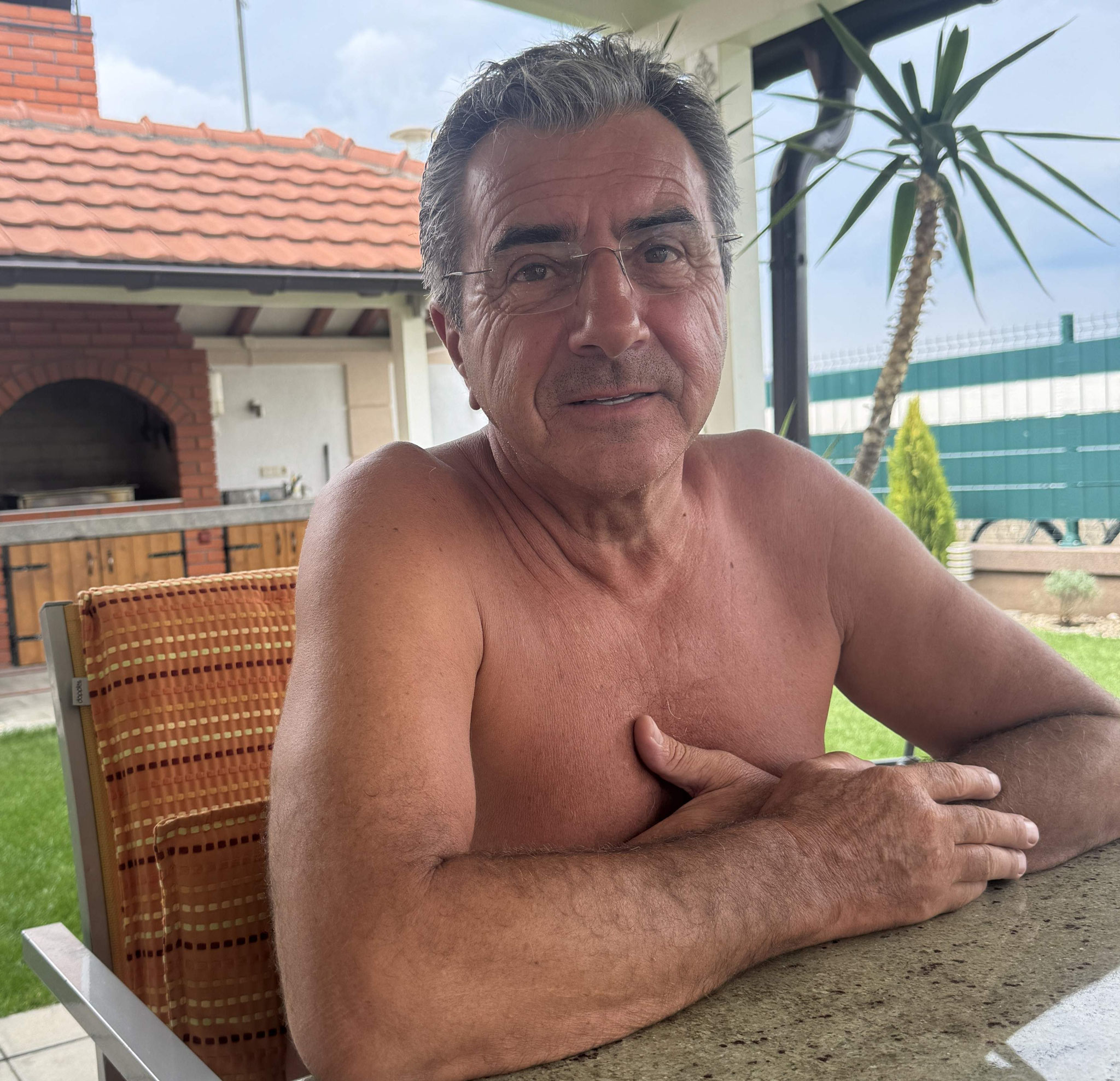
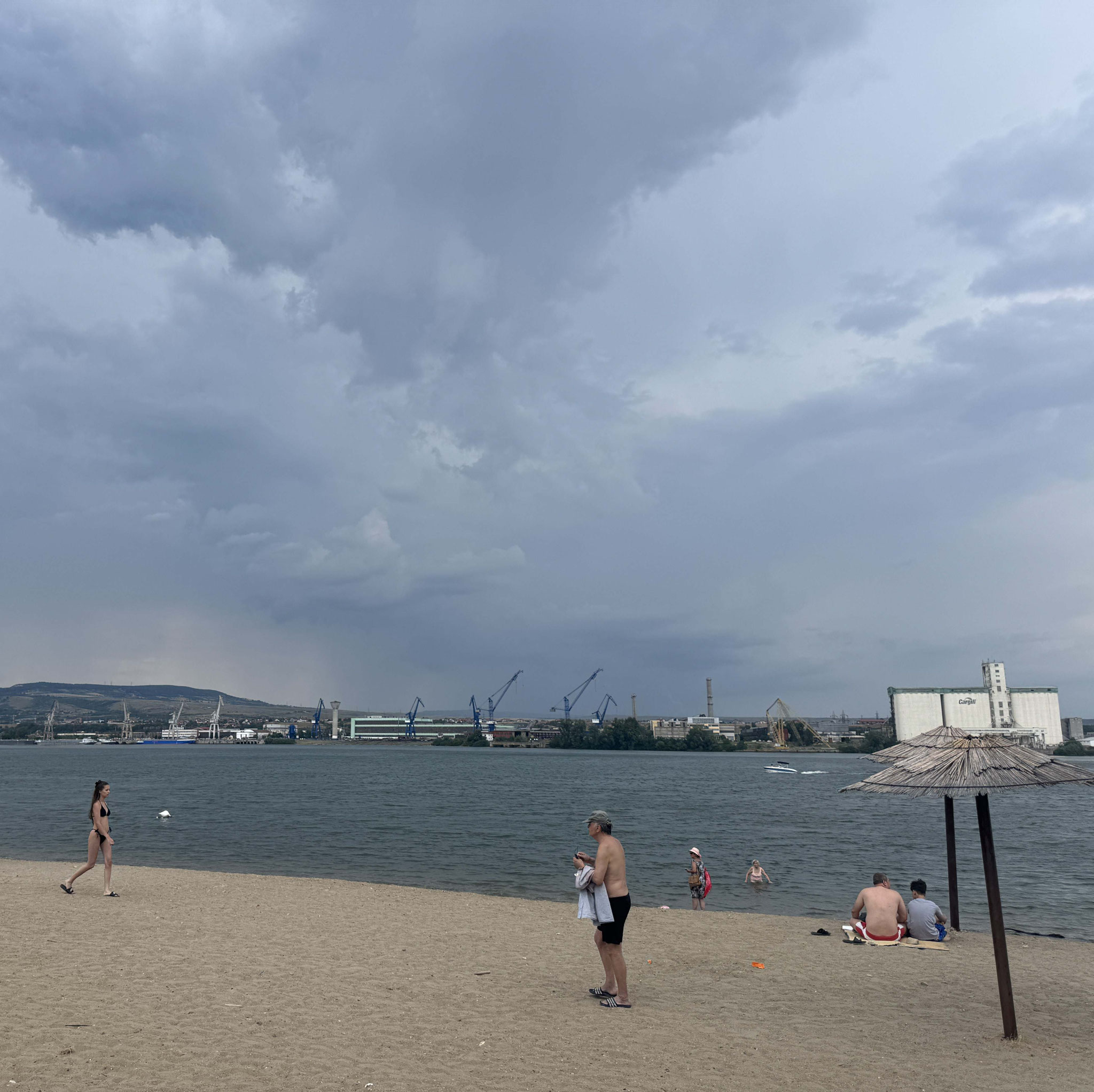
Dragan has just come back from swimming in the Danube. "I do that several times a day," he says happily, glad that he can reach the Danube beach directly through his garden gate. "The water is excellent," he explains. He points to the factories and port facilities directly opposite, on the Romanian side in Drobeta Turnu Severin.
"That was pure symbolism," Dragan explains with a slight Viennese touch to his voice. He was born in 1963 and spent almost his entire professional life as a wholesale merchant in Austria. "Under dictator Ceaușescu, entire villages on the Romanian bank of the Danube were flattened and the people resettled into the hinterland, just to demonstrate a powerful industry to us Yugoslavs directly on the riverbank. Day and night the sirens wailed, as if we were at war. Today the factory stands still, but the backdrop has remained."
For Dragan and the people in the region, the Danube back then was not just a river, but a sharp dividing line between two worlds. On one side, the impoverished, totalitarian Romania of the Warsaw Pact; on the other side, non-aligned Yugoslavia under Tito – a "soft" communism in which the clocks ticked completely differently.
"Life wasn't bad for us," Dragan recalls. While everything in Romania was nationalized and the farmers had to work in collective farms (kolkhozes), Yugoslavia had private agriculture. He talks about his grandparents, who owned a piece of land and grew vegetables and fruit. Money was tight, but people bartered goods for goods: vegetables for fruit, or they repaired a car in return.
Yet Yugoslavia had another safety valve that was strictly denied to Romania: the open borders to the West. Dragan's parents, who were born during the Second World War, had no higher education and could not find work in the local factories. So, in the late 1970s, they went to Austria as so-called Gastarbeiter (guest workers). Initially, they only wanted to stay for three or four months to earn some money. Months turned into years, years into a whole lifetime. Dragan initially stayed with his grandparents in the village and only moved to Vienna as a teenager. There he attended one of the Yugoslav evening schools that existed in Austria at the time due to the large number of immigrants. Apprenticeship and an intense professional life followed. "But we always maintained the connection to our homeland," Dragan emphasizes.
This emigration of labor developed into a real economic stimulus package for the home regions. The "guest workers" did not just spend their vacations at home with friends and family; they also invested a part of their income in their homeland. Everywhere in the villages and towns, new, stately houses sprang up. After all, people wanted to show that they had made something of themselves abroad. The public sector ultimately benefited from this private building boom and the steady flow of money as well: visible investments could be made into local infrastructure, giving the entire region a boost of modernization.
The Iron Curtain only existed in Romania, Dragan clarifies. But he remembers that back then, people on the Yugoslav side looked at the neighboring country with a mixture of pity and horror. Dragan tells of the desperate attempts by Romanians to flee across the frozen or ice-cold Danube into the freer Yugoslavia during the winter. "Many died from the cold," he says. The Romanian border guards shot mercilessly at their own people. Sometimes the brutality went even further: the Romanian Securitate secret police secretly crossed the border to hunt down and kill refugees in the Serbian forests and mountains. However, if a refugee made it to Kladovo alive, the locals helped. They brought the people to reception camps, from where many later emigrated to America.
When the revolution broke out in Romania in 1989, Yugoslav school children collected sweets and other relief supplies to assist their neighbors in need. Today, paradoxically, the tables have turned. Romania is part of the European Union, while Serbia remains on the outside. A circumstance that, according to Dragan's local friends, has led to a new arrogance on the other side of the river. "In the past, the Romanians were very small and were pitied. Since they joined the EU, some carry their noses high in the air. But fundamentally, Serbia is still more developed," he says proudly.
Dragan experienced the breakup of Yugoslavia in the 1990s from the safe distance of Vienna. Even during wartime, he spent his vacations in Serbia. "Here in the east, we felt little of the war." As a Vlach – a Romanian-speaking minority in eastern Serbia – he always had a complex identity anyway. Historically, the Vlach identity was hardly visible in official life during the Tito era; out of pragmatism, people usually passed themselves off as Serbs. In any case, Dragan's grandparents spoke exclusively Romanian at home, while he himself speaks fluent Serbian and German.
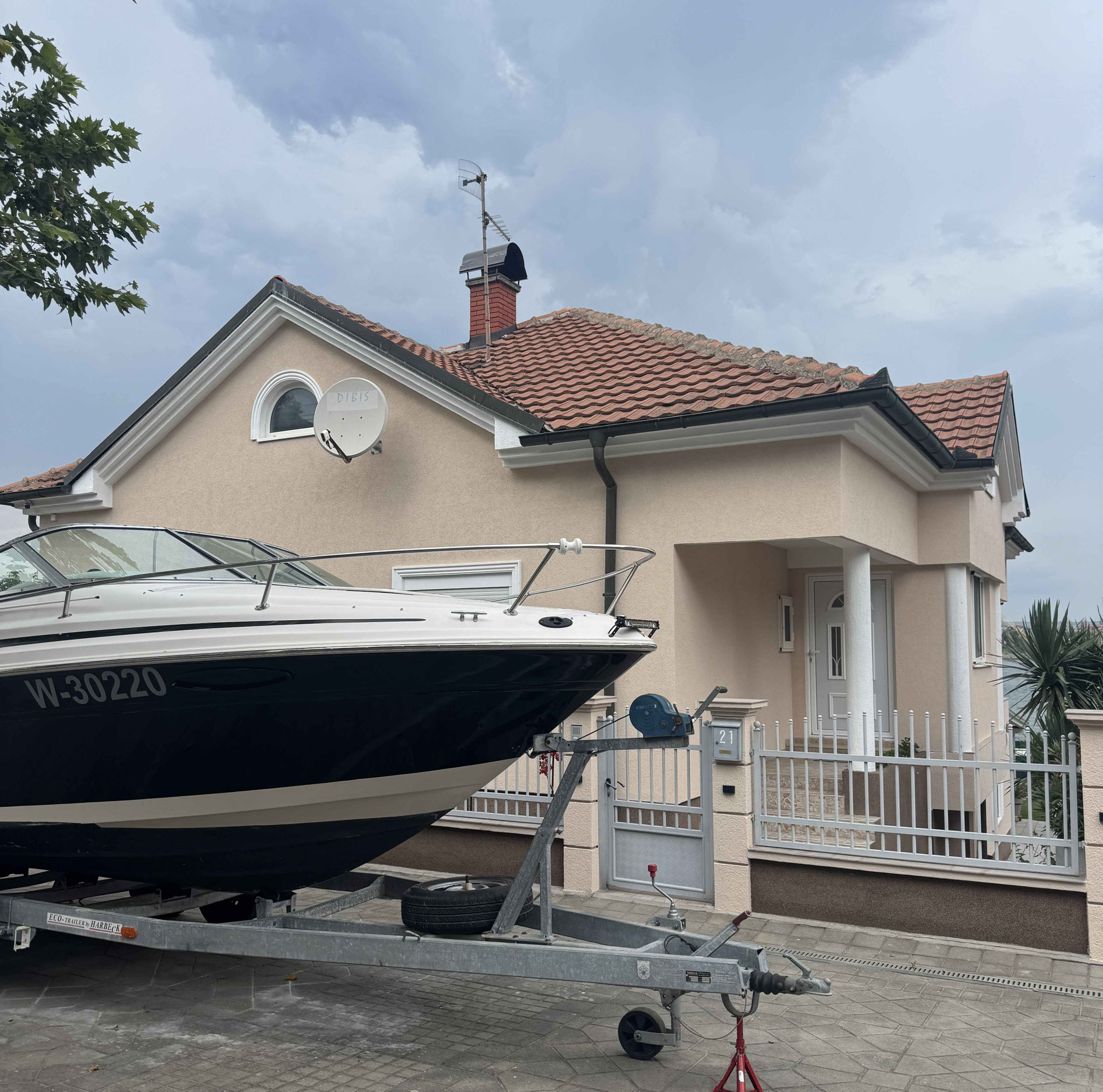
Dragan also acquired a plot of land in Kladovo and built himself a prestigious villa directly on the Danube beach a good 20 years ago. His motorboat, with which he explores the Danube, is moored nearby in a harbor. Today Dragan, who is now retired, makes the best of both worlds. He spends the summer in Kladovo, enjoying the hot summers and the relaxed life in the Balkans. In the winter, he returns to Vienna because of the grandchildren and the Austrian pension.
What he appreciates about Serbia is the unshakeable solidarity of families, which has often been lost in the West. His very elderly parents still live in the old village, cared for by his brother and a paid caregiver in the same house. "In Austria, children move out at 18, and you see each other on Sundays for an hour. With us, you live together, stick together, throw everything into one pot. That is what life here is all about."