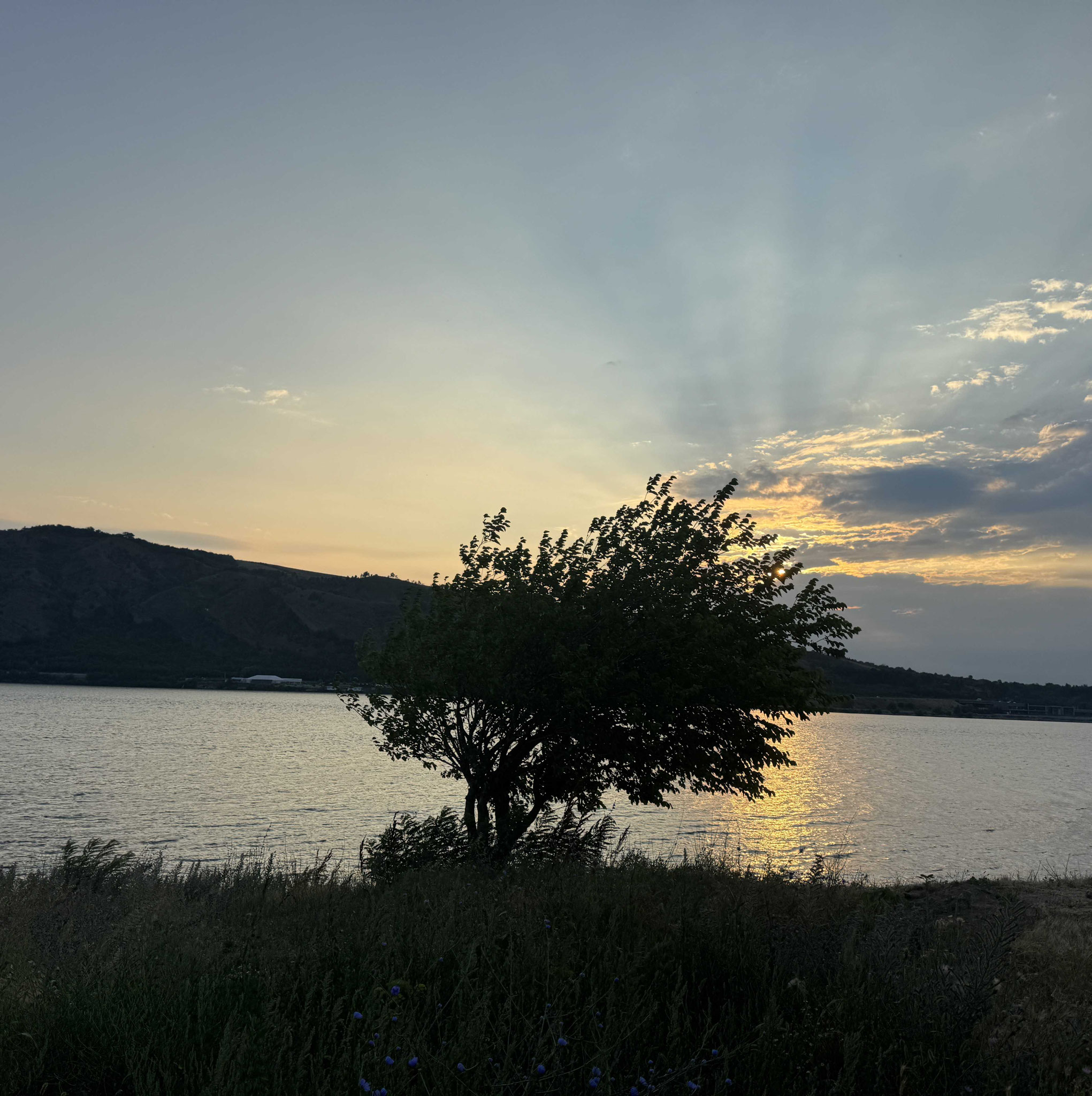
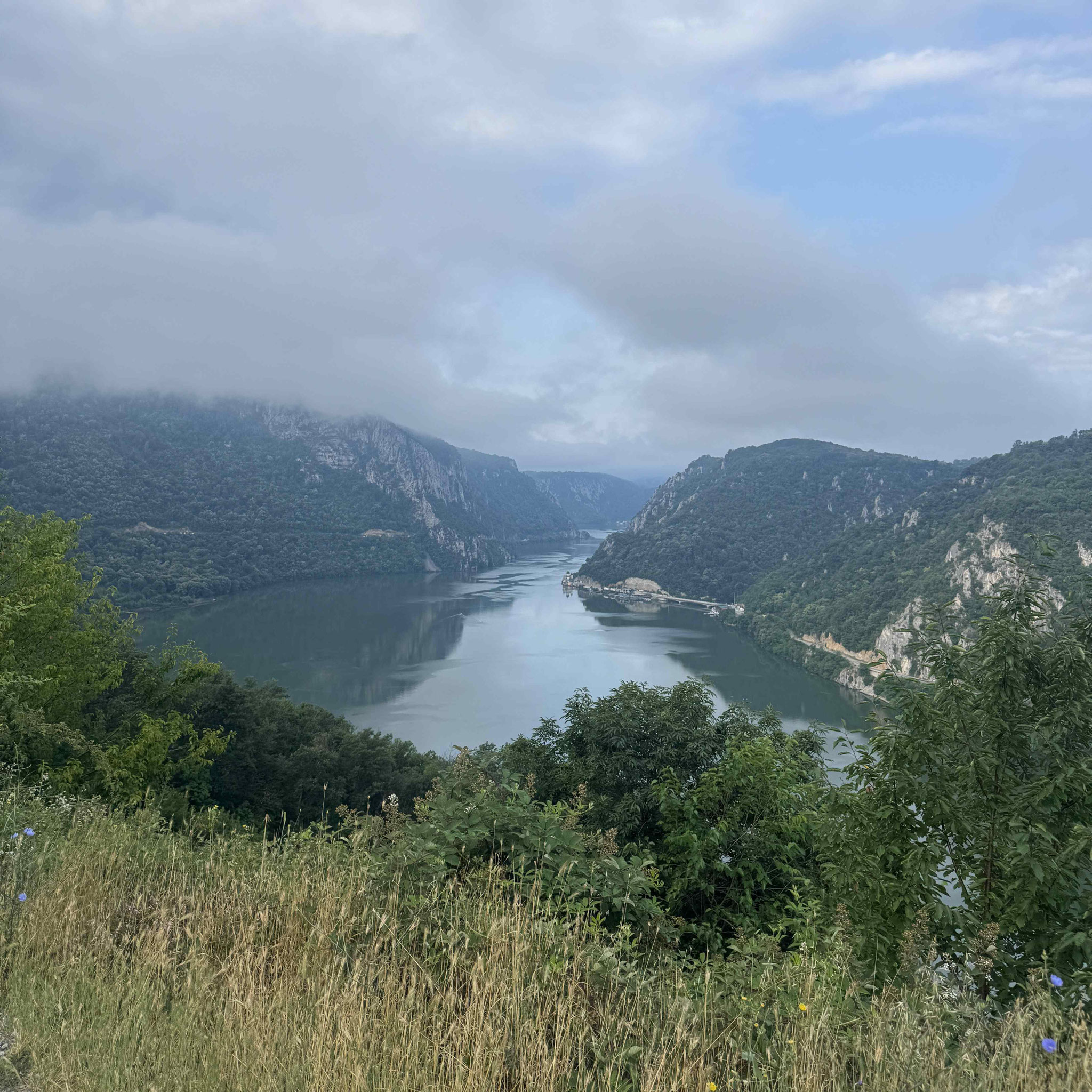
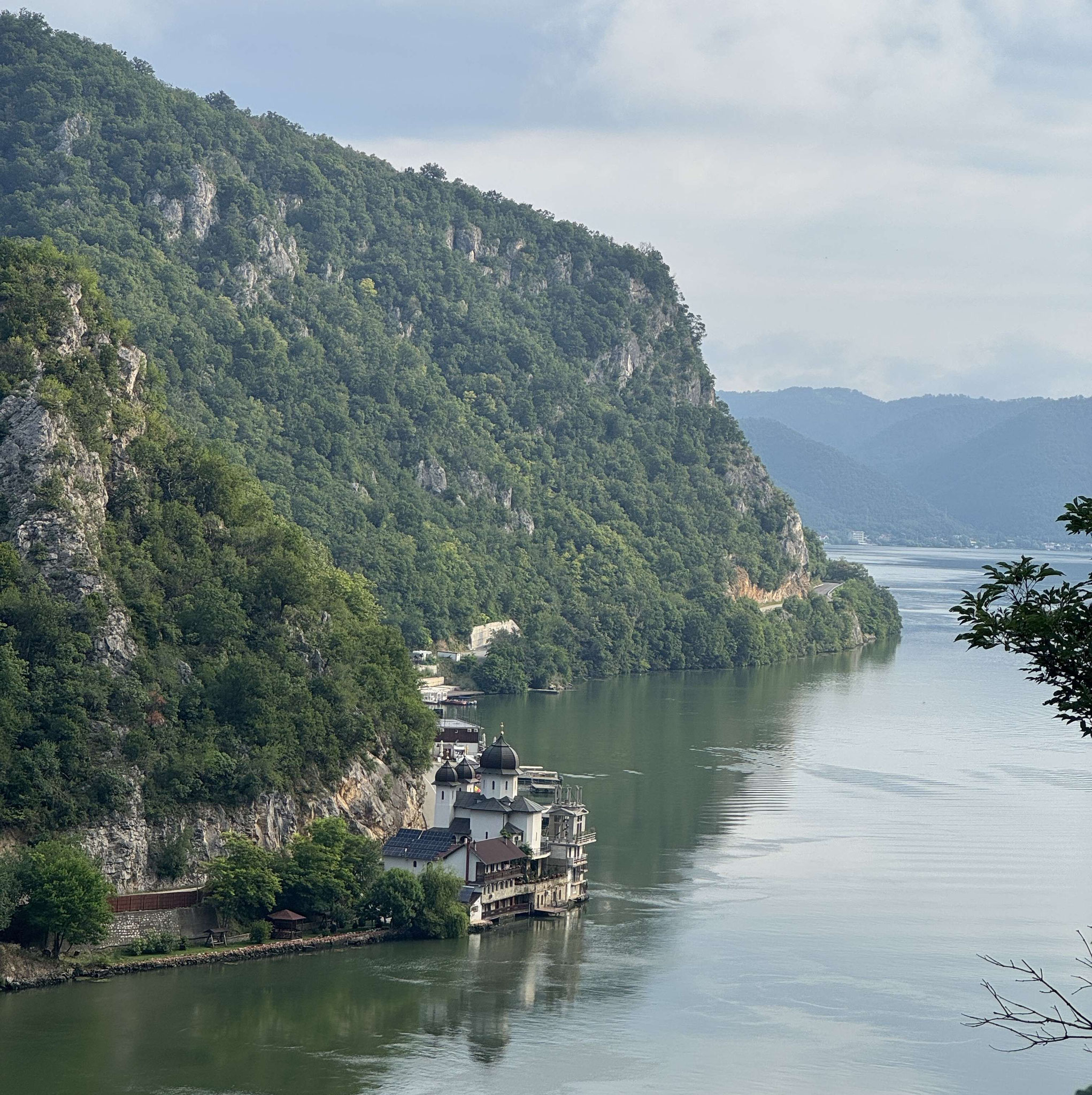
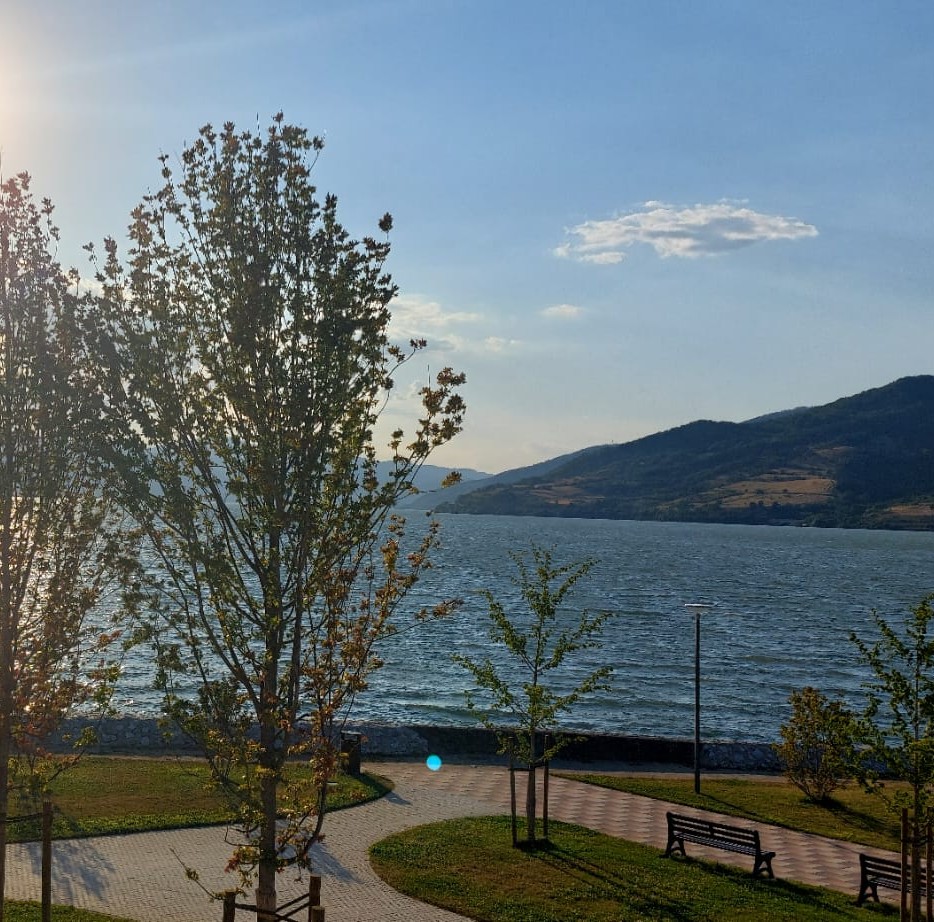
Anyone traveling along the Danube through Đerdap National Park gazes upon a landscape of monumental beauty. The river gorge, stretching over 100 kilometers – the famous "Iron Gate" – forms the largest and longest river-cliff landscape in Europe. Here, the Danube has carved its path deep between the steep rock faces of the Southern Carpathians and the Balkan Mountains.
Yet, while the river here once strictly separated East from West as part of the Iron Curtain, today this protected corridor forms a centerpiece of the European Green Belt, an international nature conservation network that connects valuable habitats along former borders.
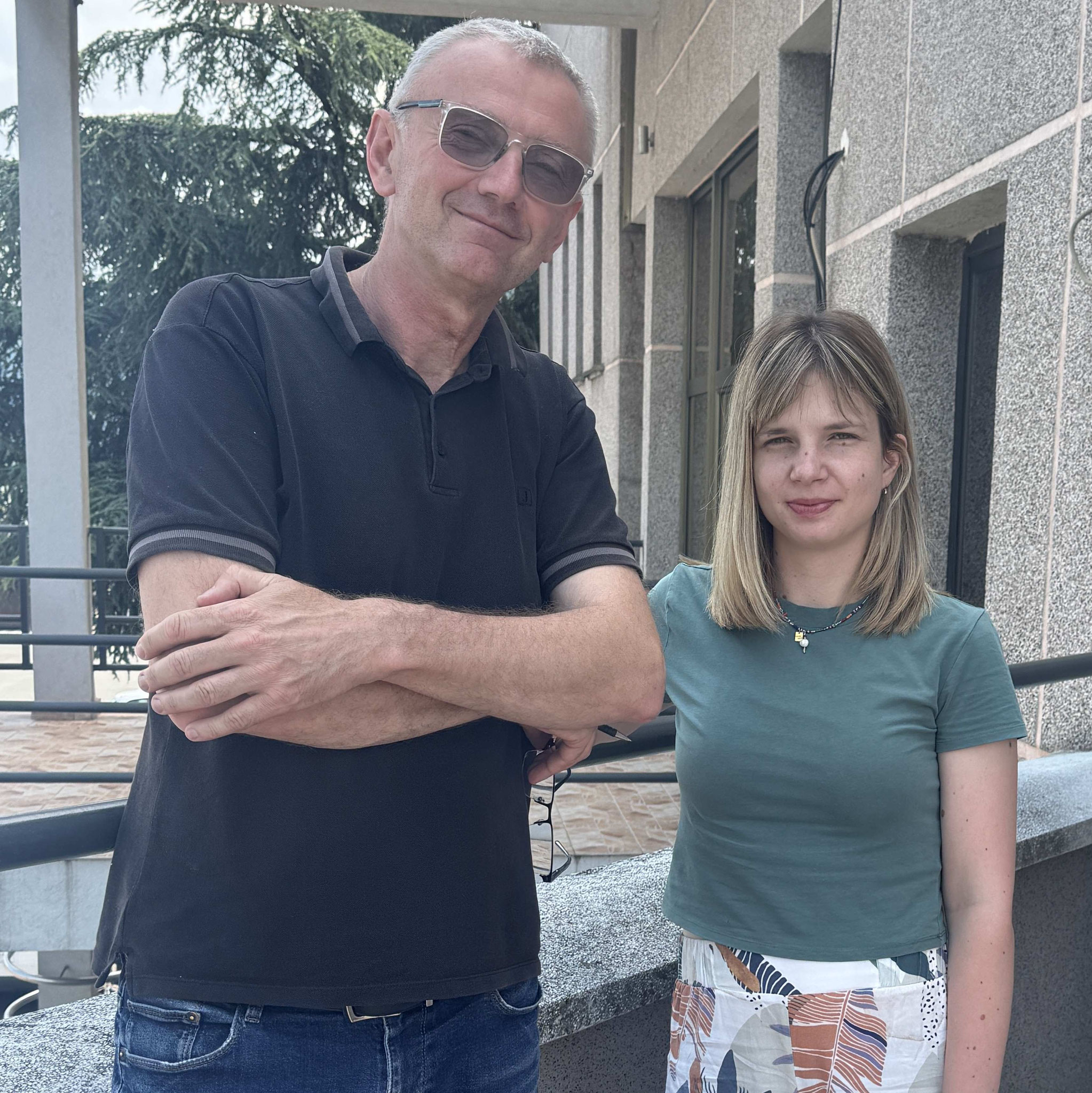
Still, the balancing act between protecting a millennia-old natural environment and the economic development of the region remains a daily challenge. How this feat is accomplished in practice is explained by Sara Stankovic (biologist) and Sasa Nestorovic (forestry engineer), who are part of the permanent team at the national park administration.
Nature Conservation as a Commercial Enterprise
Although the protection of flora and fauna is inherently a state responsibility, the reality in Đerdap National Park is quite different from that of German national parks, such as the Bavarian Forest. Sasa Nestorovic knows what he is talking about: he has visited Germany's oldest national park himself and is well-integrated into European conservation efforts through many international committees.
A total of 95 people work in Đerdap National Park, which was established in 1974 and has been part of Serbia's first UNESCO Global Geopark since 2020. "However, we have to finance ourselves," the forestry engineer notes. "Financial support from the state is only available for specific projects." To secure the budget for nature conservation, the national park operates like a regular business with various divisions such as hunting, forestry, and fisheries. The park is roughly 80 percent forest. "Forestry is therefore an important source of income for us," Nestorovic explains.
To manage this split between economic use and nature conservation, the vast area, which spans around 130,000 hectares including the Geopark, is divided into three protection zones. While controlled forestry takes place under strict regulations in Zones 2 and 3 in the mountains, Zone 1, directly by the water, is reserved for absolute wilderness – no economic activity or construction is permitted here. Additionally, the park administration relies on admission fees and guided tours.
Although explaining ecological interconnections to visitors and providing nature experiences are core responsibilities, the tourism revenues fall far short of what is needed. "This makes it all the more important to consistently back up the regional and international value of the national park with hard facts," adds biologist Sara Stankovic. "We focus intensively on recording rare flora and fauna. Currently, for instance, we are closely monitoring the lynx and researching rare plant species so that we have reliable data."
Ecological Wounds and the Return of Species
The Danube has been heavily altered by human intervention. The greatest local ecological issue is the hydroelectric power plant, which was jointly built by Yugoslavia and Romania in the late 1960s. "A fish ladder planned at the time to assist fish migrating from the Black Sea was never built," Sasa Nestorovic explains. The consequences for the ecosystem are devastating: "The hydroelectric plant has completely stopped certain fish species. The sturgeon, for example, which normally travels up from the Black Sea to spawn here, barely makes it up to us anymore. It is rare for a fish to accidentally wander through the ship locks," the expert states. Also endangered are tench (Tinca tinca), pike (Esox lucius), rudd (Scardinius erythrophthalmus), and sterlet (Huso ruthenus).
Fortunately, populations of other species, such as catfish and pike, remain stable. Threatened Danube fish are now strictly protected and cannot be caught. Because there is virtually no industry in the immediate vicinity, local pollution is minimal. "The problem lies further upstream," the two national park employees say. All the waste from major metropolitan areas – from Vienna to Budapest, Belgrade, and Novi Sad – accumulates in the mud at the bottom due to the dammed reservoir.
Because of the slow flow velocity, these sediments sink to the bottom, turning the reservoir into a kind of massive settling tank. This has a paradoxical consequence: "Behind the power plant, the water is significantly cleaner because the dam acts like a giant filter," the forestry scientist explains. Yet, the contaminated sludge remains at the bottom, permanently altering the local ecosystem.
No Mass Tourism
Tourism in the region is growing rapidly – in recent years, the park has seen an annual visitor increase of 10 to 15 percent. Promotion works primarily through word-of-mouth and social media. While the medieval fortress in Golubac, located about 60 kilometers away, draws around 200,000 people annually, and the Lepenski Vir archaeological site, featuring the remains of a roughly 10,000-year-old Stone Age settlement, counts around 60,000 visitors, another 60,000 tourists arrive directly via the waterway by cruise ship.
At the moment, the park does not see a conflict between conservation and tourism. On the contrary: "The potential is far from exhausted, and the region hopes that even more people will experience this unique landscape," says Sasa Nestorovic. However, he also makes one thing clear: "We do not want mass tourism here like in the Postojna Cave in Slovenia, where a million people are funneled through. Our target group consists of individual tourists – hikers, nature enthusiasts, and cyclists who are willing to walk five kilometers to a viewpoint. That is how nature stays protected."
Cooperation Along the Danube
What makes Đerdap National Park unique is the symbiosis of nature and millennia-old culture. On the Serbian side, the strict protection status of the national park extends to the middle of the river. Directly opposite, on the Romanian side, lies another nature park—though with significantly less stringent regulations and noticeably denser development along the riverbank.
The concept of a shared Green Belt still lags behind reality here. Sasa Nestorovic recalls that the first conferences and initiatives regarding the Green Belt took place on-site about 20 years ago. Yet, to this day, cross-border cooperation has room for improvement: it consists mainly of official meetings and mutual invitations, with no deep, joint projects to protect the river. A major goal of the park administration therefore remains to more closely integrate cooperation among all ten Danube riparian states—from Germany to the Black Sea – in order to seamlessly share tourist and ecological information.
A massive catalyst for the entire region could be the EXPO 2027 world exposition in Belgrade. Travel agencies are already working at full speed to bundle the various highlights along the river into multi-day excursion packages. The park officials hope this momentum will trigger a sustainable, gentle tourism boom that will benefit both the region and the national park in the long run.