Anyone cycling through the gentle, seemingly endless flatlands of the Banat will see wide fields reaching to the horizon and villages that were systematically designed on the drawing board by Habsburg architects in the 18th century. Their straight, rectangular layouts and strikingly wide streets shape the scenery: broad, grassy verges extend in front of the typical, elongated houses, giving the villages a unique sense of spaciousness.
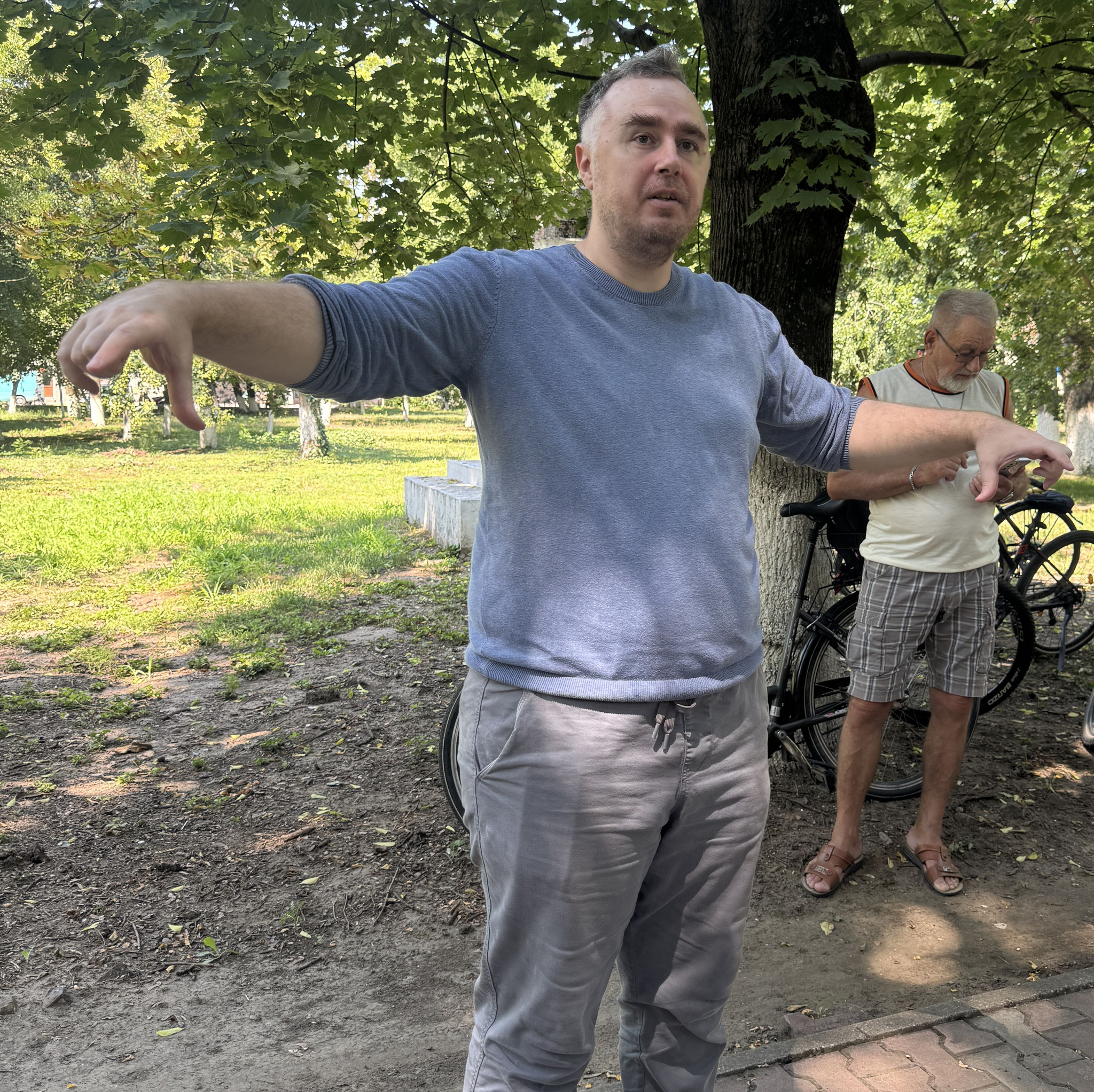
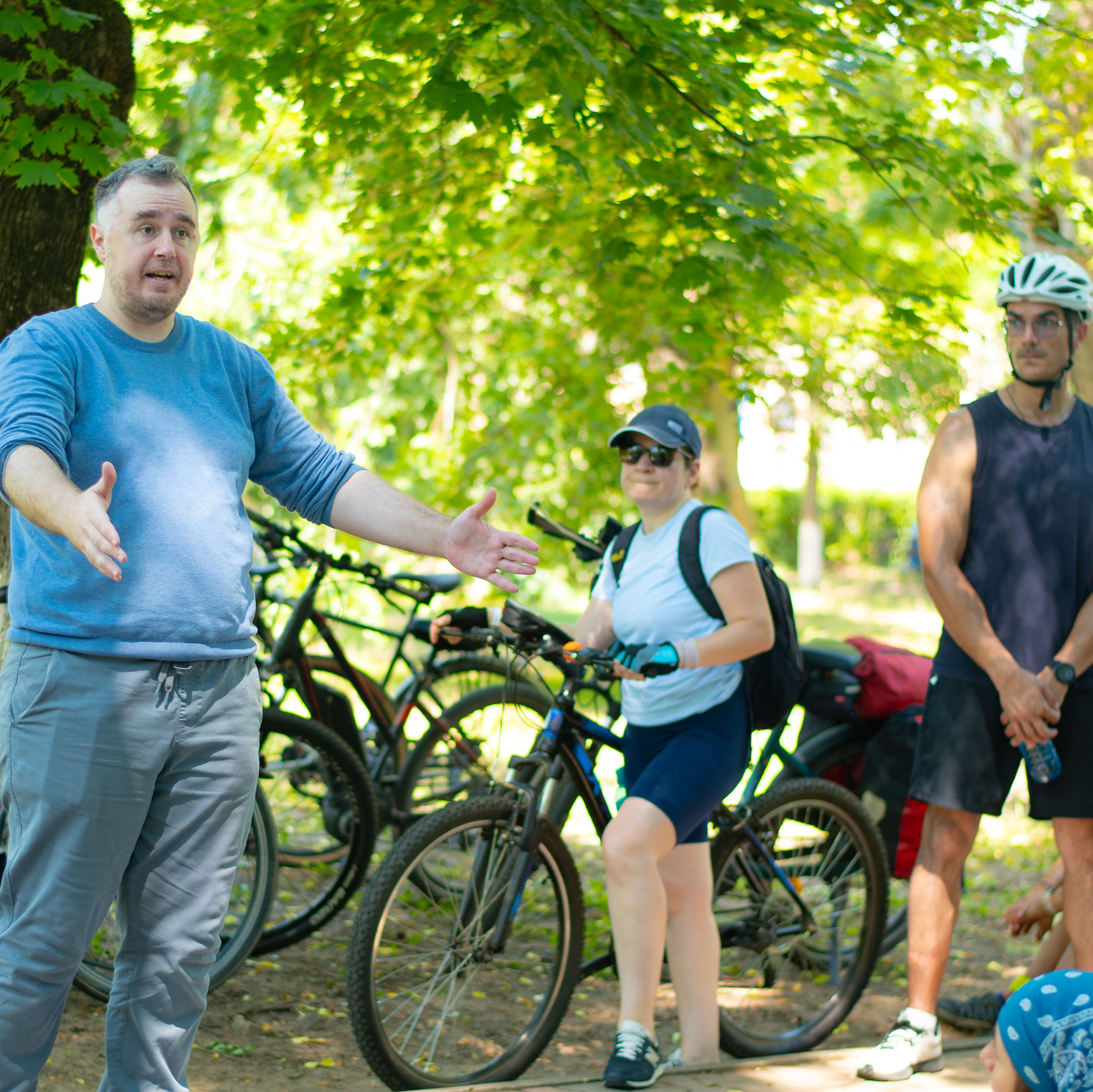
Yet, behind this rural idyll lie the deep, often painful ruptures of the recent past. Sergiu Dema, director of the Cultural House in Jimbolia, stands in the shade of old trees and watches the cyclists participating in a cross-border cycling event. " We need to learn from the experiences of the past," says the theologian and storyteller. "Only then can we make the right choices today for a better tomorrow.”
Dema is not a traditional historian; he became one, as he says himself, through his professional work. For regional cultural projects and exhibitions on local history, he conducted years of research, retracing the biographies of former residents of the Banat. The Press Museum in Jimbolia serves as an important source and a close cooperating partner in this endeavor. His goal is to bring the historical heritage of the Banat to life and preserve it for future generations. For Dema, history is not a rigid construct for museum shelves, but a living compass. Particularly in a region where the centuries-long coexistence of Romanians, Hungarians, and Germans was brutally torn apart by the events of the 20th century, he views his work as an urgent mission for peace.
In this day and age, his work gains a new, unsettling relevance: while European funding and shared cycling paths dismantle physical borders, Dema senses new, metaphorical fences growing in people's minds. Driven by a noticeable nostalgia for the Eastern Bloc and modern disinformation, nationalist and anti-European narratives are gaining ground once again in both Serbia and Romania. This is precisely where the theologian steps in: he wants to counter the manipulative mechanisms of both past and present with the naked, unvarnished truth. When leading young people and international audiences through exhibitions, he deliberately confronts romanticized memories with the historical facts of expropriation, oppression, and suffering during the communist era.
Dema therefore uses the stops along the cross-border bike tour as an open-air stage to make the traumatic and often suppressed history of the border region around Jimbolia in the Romanian Banat tangible. His narratives are not dry lectures, but warnings; they are historical events dealing with hatred, propaganda, and the desperate urge for freedom, as well as the hope that what connects us is ultimately stronger than any division.
To the Soviet Labor Camp (1945)
The first story takes place at the end of the Second World War. In January 1945, the Soviet army and Romanian authorities marched from house to house to collectively punish the German population of the Banat for the crimes of Nazi Germany. "Not all Germans were Nazis," Dema emphasizes, pointing to a monument in Jimbolia dedicated to six local Germans who were executed by the Wehrmacht because they resisted Hitler.
Nevertheless, Stalin ordered the deportation of around 70,000 Germans from Romania to Soviet labor camps. Dema shares the memories of two different children from that time. One eyewitness was a young boy, Josef Koch, who had to watch his mother being taken away. She did not survive the labor camp in Dnipropetrowsk, located in today's Ukraine, but she managed to throw out a farewell letter to her sister that remained: "Please take care of my two boys..."
The second account belongs to 11-year-old Annemarie Wetzler. At the Jimbolia railway station, as desperate crowds pressed against the cattle wagons with locked doors, she was the one who managed to push some soup through the makeshift toilet hole to give it to her father.
Deportation to the Bărăgan Steppe (1951)
Only six years later, the next group was targeted. In 1951, the conflict between Stalin and the Yugoslav head of state Tito escalated. A bizarre propaganda campaign ran in Romanian newspapers, depicting Tito as a "neo-Nazi" with dollar signs and swastikas on his military cap.
Fearing a war, the Romanian regime deported more than 40,000 people overnight from the 25-kilometer border strip next to the former Yugoslavia. Dema estimates that it could have been ten percent of the population. Those affected included Serbs, Romanians, the remaining Germans and other ethnicities. They were displaced to the barren, scorching hot Bărăgan Steppe, a vast nothingness suitable only for some types of crops. They were abandoned in the middle of nowhere. Those who were lucky built a first roof out of their few belongings, such as four brought-along chairs and a tarp; others dug into the earth like animals to seek shelter. Eventually, everybody dug into the earth after which they started to build clay houses.
The Deadly Border (1970s/1980s)
The final story describes the years in which Romania, under Ceaușescu, became a hermetically sealed prison for its own citizens. Anyone who wanted a taste of freedom, even if it was just the taste of a Coca-Cola in nearby Yugoslavia, had to risk their life.
"People tried everything to escape," Dema reports. Some hid inside the grain bunkers of harvesting machines, waiting until the machinery got close to the border line to jump out and run toward Yugoslavia. Ten workers from the brick factory in Jimbolia even hijacked the company's own locomotive and rammed their way across the border. Many border crossers were shot in cold blood by Romanian soldiers, while others were detained in Yugoslav camps and extradited back to Romania. There, brutal torture awaited them: Dema reports of prisoners who were locked naked in boxes with mice so that the terrified animals would bite them.
At the end of the tour, Sergiu Dema delivers an earnest appeal to the group. He connects the past directly to the present: "We must face the question: Who are we, why are we here today, and how is it that we can gather so peacefully? We must know the reasons that connect us."
He calls on the participants to continue this dialogue and to speak openly about their own history in both Romania and Serbia. Finally, he tells a story about Spanish guests who showed him photos of traditional sausage-making in their homeland: "It was exactly the same way we make sausages in the Banat. Of course there are differences. I am Romanian and do not understand everything a Spaniard says, but there are so many similarities. We must focus on what connects us, because if we do not reach out to one another, we give hatred another chance to take root. And I do not think anyone here wants that."