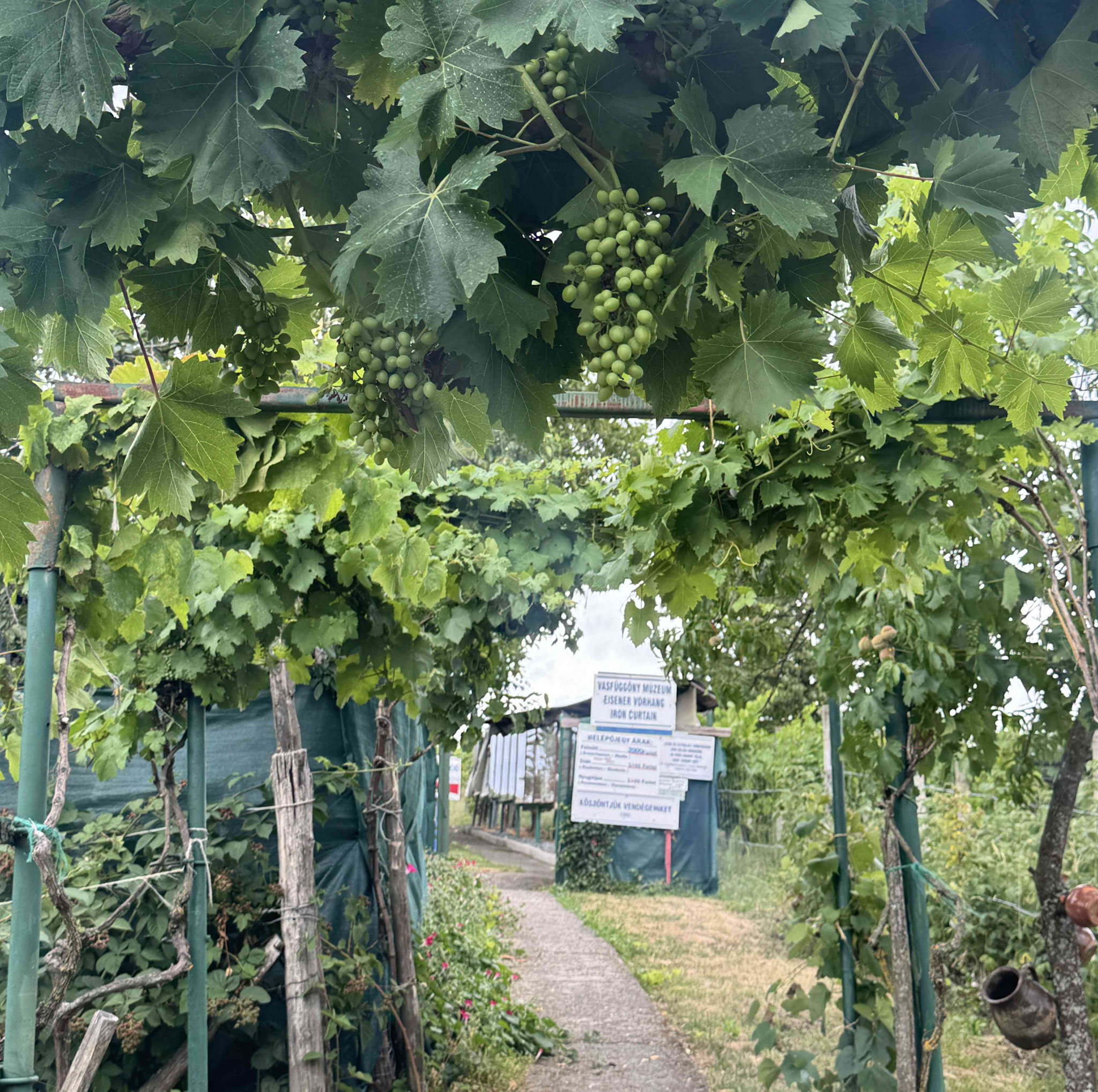
Those who venture up the steep path to the Vashegy on the Hungarian-Austrian border have no idea what awaits them. On this idyllic vineyard, where today the famous Vashegyi wines such as Kékfrankos, Merlot, and Cabernet are ripening once again, Sándor Goják has created the private "Iron Curtain" museum among the vines as a place of remembrance.
A Life in the Shadow of the Border Fortifications
Sándor Goják does not only know the border from history books. He guarded it. Between 1965 and 1968, he served here as a conscript in the Hungarian border guard - a total of 27 months. Because the communist regime mistrusted locals, young men from the interior of the country were deployed to the western border; Sándor Goják himself came from Southern Hungary area. "I rose to the rank of a three-time decorated border guard corporal," he says matter-of-factly.
"I only did my duty back then," recalls the now 80-year-old, who also met his Croatian-speaking wife during his service in the nearby border village of Felsőcsatár. "At that time, the entire region was an absolute restricted zone," he explains. "Until 1989, no one was allowed to enter the mountain without a special permit. As far as 35 to 50 kilometers ahead of the actual border, security forces checked every passenger on the trains to Szombathely. Anyone without a permit was detained or put on trial."
It was a time when live ammunition was shot at the border. Sándor Goják speaks vividly during our conversation about the law of that era: "First the shout, then a warning shot into the air, then a shot at the feet - and as a last resort, the fatal shot. A brutal order that plunged young soldiers into traumatic conflicts of conscience."
Private Commitment to World History
After his service, Sándor Goják worked as a foreman in a locomotive repair workshop in nearby Szombathely. In 1981, he took over the family's vineyard close to the Austrian border area to build a weekend house there. After the fall of the regime, when the restricted area no longer existed and people were allowed to move freely, he opened a small tavern on his vineyard. Its curious guests, with their questions about the history of the border, provided the initial spark for the museum.
Sándor Goják realized that the younger generation could quickly forget the horrors of the division. He made a far-reaching decision: he "sacrificed" his private land, where vines once grew, to reconstruct the inhumane border system between Hungary and Austria true to the original.
Today, the site offers a walkable journey through 41 years of border history. The various stages of development of the Hungarian border system are vividly reconstructed: from the first simple barbed-wire barriers to the installation of minefields and the later electronic signaling system. Visitors can walk through the evolution of the entire border installation, seeing not only wooden and metal watchtowers but also the control tracks - the so-called "death strip" - and the heavily guarded exclusion zone often colloquially referred to as the notorious "no-man's-land."
The outdoor exhibition is complemented by Sándor Goják's immense private collection, which has grown over decades. Showcases with countless historical photographs, original artifacts, and faded newspaper articles document the era down to the smallest detail. The dense wealth of finds and the partially handwritten, detailed explanations lend the rooms the unique charm of a historical archive in which time has been preserved in a deeply personal way. Four-language information boards and an app accessible via QR code guide guests through this living history lesson.
Sándor Goják is pleased that his decades of dedication to his museum have paid off. The response is overwhelming. School classes, retiree groups, and individual tourists from all over the world pilgrimage to the vineyard. He reports proudly: "The museum is internationally known and attracts a lot of attention."
Border Fences Yesterday and Today
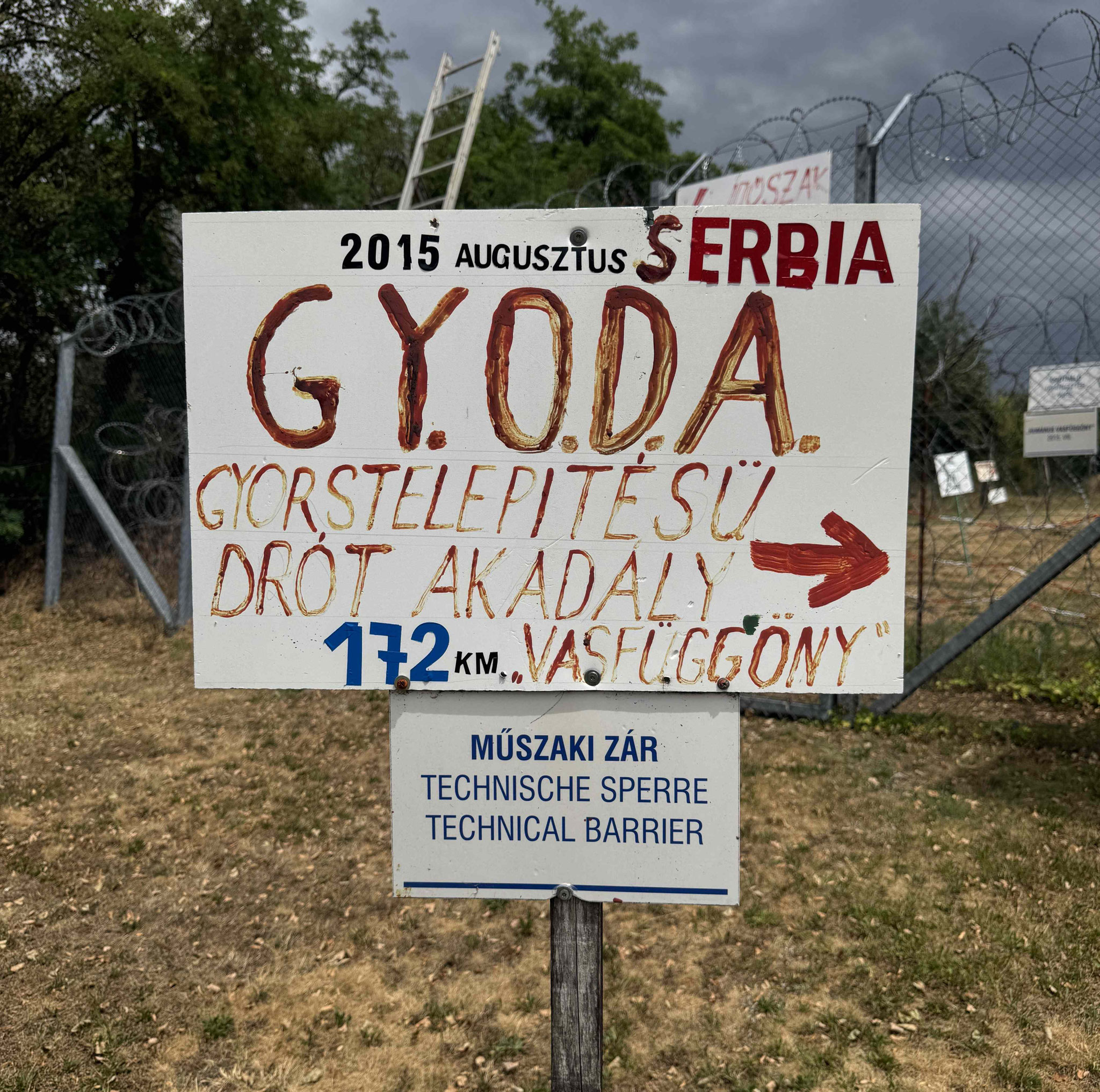
A newer exhibit makes the museum particularly gripping - and highly topical. Sándor Goják personally contacted the Prime Minister at the time, Viktor Orbán, to obtain an original piece of the modern border fence that Hungary has erected along its 175-kilometer border with Serbia.
What the military terms a sober "technical barrier," Sándor Goják displays over a few meters in all its harshness: razor-sharp barbed wire, electronics, and surveillance cameras. Sándor Goják draws a deliberate, yet nuanced parallel here. While the old Iron Curtain was built to lock in its own citizens, denying any freedom of movement and stopping the exchange of ideas, the new fence is intended to keep migrants out. However, his private stance on this is critical: "The construction and maintenance cost Hungary over a thousand billion forints. Migration should not be regulated with fences, but through clear laws," says the 80-year-old.
An Uncertain Future
Despite the international success, the museum operator looks to the future with concern. "I am 80 years old now, I am sick, and my legs hurt. The work on the steep hillside is slowly becoming too much for me," he admits, visibly exhausted.
Sándor Goják runs the museum almost entirely out of his own pocket and with his own physical labor. His two daughters, two sons-in-law, and three grandchildren all have highly demanding careers, making it impossible for them to run the museum on the side. As a result, his life's work - a globally appreciated monument against forgetting - faces an uncertain future. However, he remains hopeful that a solution for the museum will still be found and that an organization will step in to take it over.
Anyone exploring the vineyards along the Austrian-Hungarian border on the Vashegy today can feel the peaceful tranquility of this idyllic wine region, which was able to flourish once again in the former death strip. The steep hillsides and characteristic vineyard houses - the traditional Kellerstöckel - shape the landscape on both the Hungarian and Austrian sides alike. The border no longer divides this region; it connects it into a single cultural landscape. As long as Sándor Goják can find the strength, his museum stands as a reminder that this freedom and openness are not self-evident - they had to be hard-won.