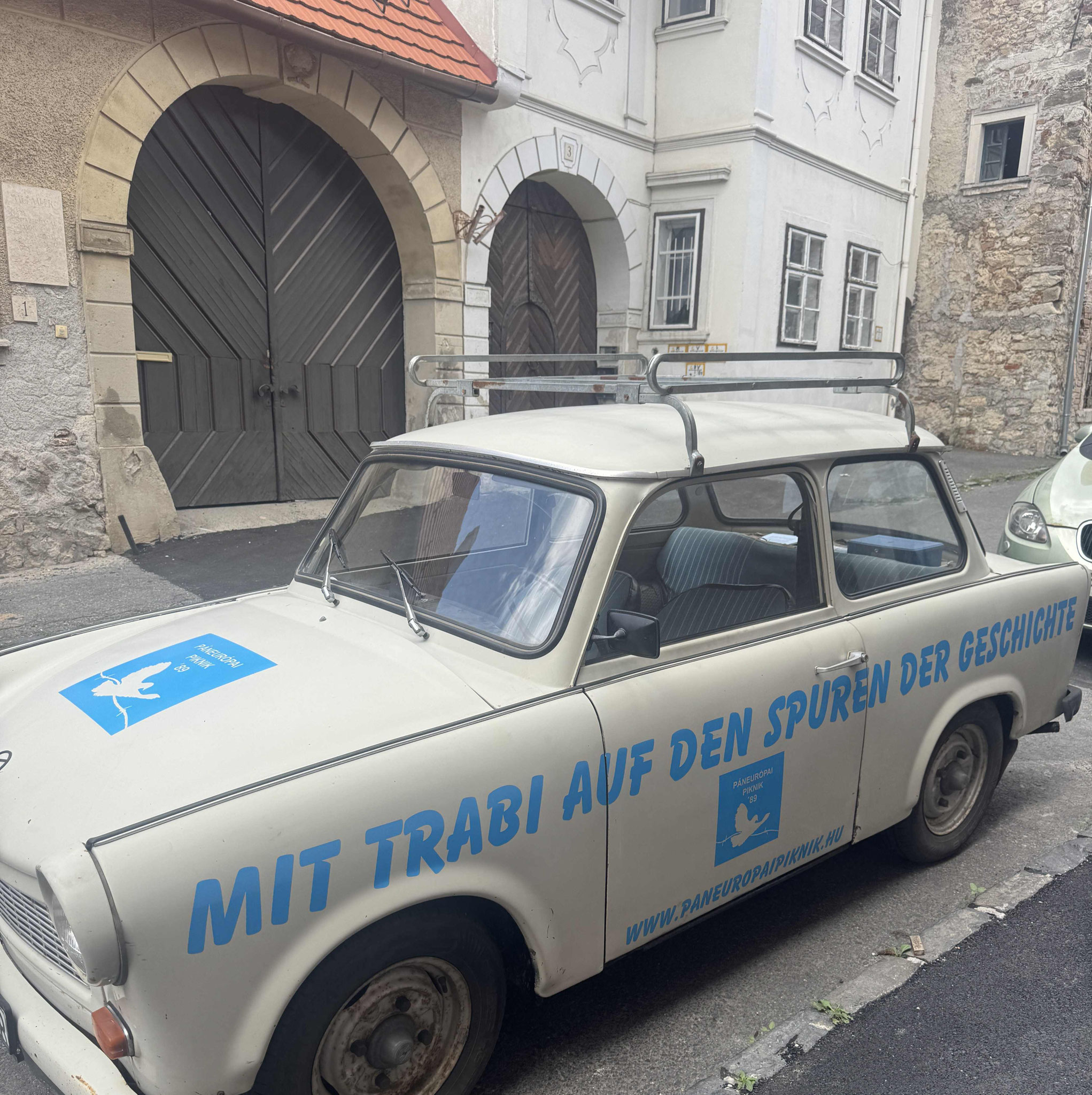
Tamás pulls up in a true piece of “Ostalgie”: an original GDR Trabant from the 1980s. Together, we rattle from Sopron heading north, straight to the exact spot where, on the afternoon of August 19, 1989, the border opened for a few hours and the wheels of world history were set in motion.
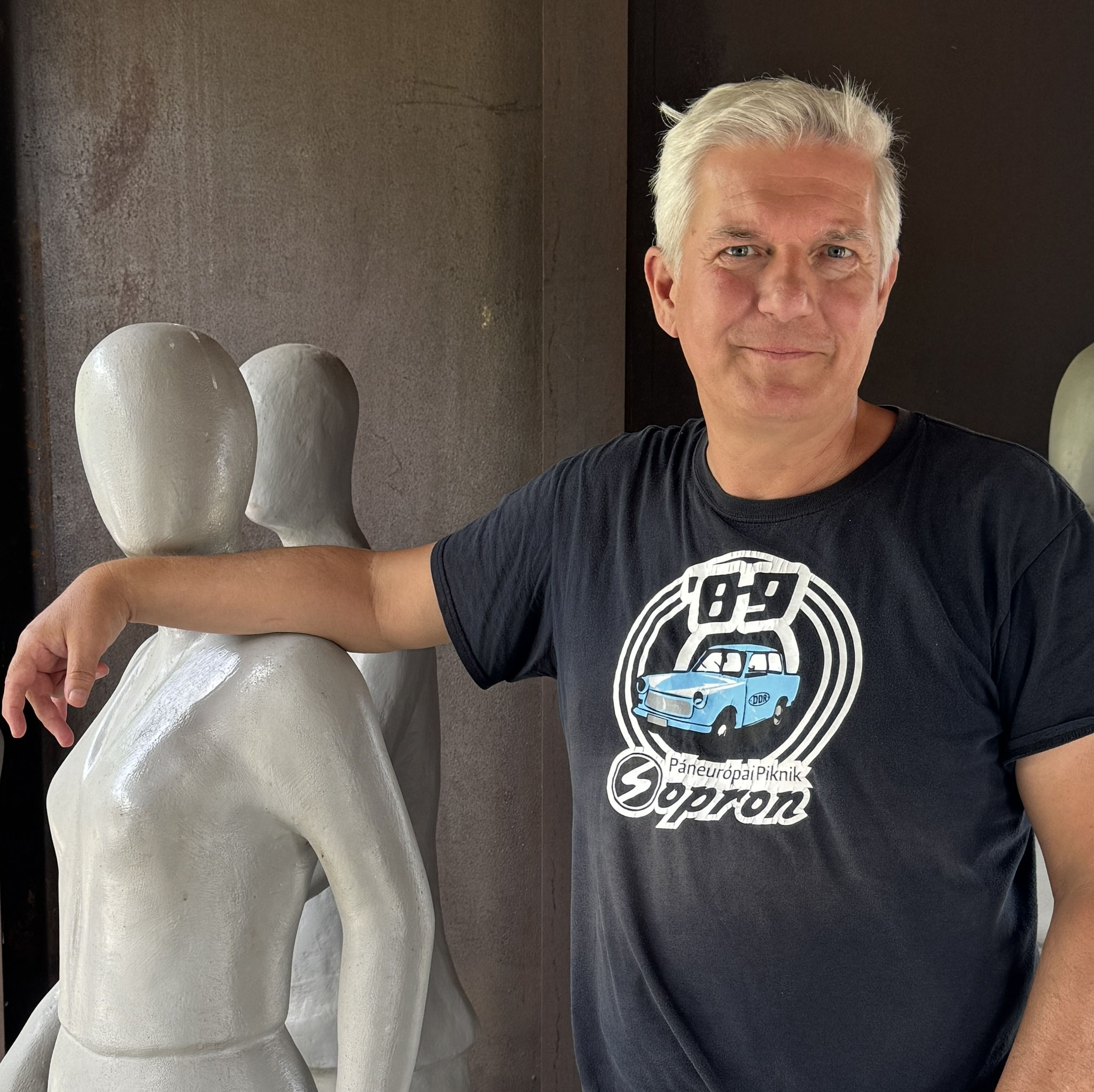
Today, this site is home to the "Pan-European Picnic" Memorial Park. Tamás is a contemporary witness. Back then, he was a student, politically engaged, and simply curious. In the morning, he flocked with the other visitors to the picnic meadow near the border. "But in the afternoon, when the border gate opened, I was no longer there," he says. "I missed the historic moment. No one could have guessed what would happen that day."
A Symbolic Festival with Unexpected Momentum
The Pan-European Picnic was planned as a peace demonstration and a symbolic meeting to send a signal against the division of Europe. Part of the event was a three-hour, purely symbolic border opening, strictly limited to citizens of Austria and Hungary. The idea for this peace festival originated far from the border in Debrecen, in eastern Hungary. Otto von Habsburg, the president of the Paneuropean Union, and Hungarian opposition groups wanted to show solidarity and bring Europe a little closer together.
"On a meadow near the border fence, there was a real folk-festival atmosphere in the morning with a field kitchen, music, and many speeches on a stage in front of the beer tent," Tamás recalls. No one knew that morning that a highly dramatic scenario would unfold here in the afternoon. Tamás himself had no interest in leaving his country at the time. Compared to other Eastern Bloc states, the situation in late-1980s Hungary was already noticeably more relaxed under the reform-communist Imre Pozsgay. As early as May 1989, the country had begun dismantling its border fortifications, and in June, Foreign Ministers Alois Mock and Gyula Horn symbolically cut through the fence. The Hungarian leadership was testing things out step-by-step to see how far they could go without provoking a reaction from the Soviet Union.
Escape in the Shadow of the Field Kitchen
Yet, the momentum of the day caught all planning by surprise. Hundreds of GDR citizens had traveled to Sopron from Lake Balaton, around 120 kilometers away, where they were spending their summer vacations. Tamás is convinced that this mass escape was no mere coincidence but had been prepared behind the scenes.
"Many GDR citizens found out about the picnic through flyers. They brought maps with them just to find this remote location on the border," he reports. He speaks of black limousines that had supposedly been spotted beforehand at Lake Balaton. He assumes they were informants from West Germany who purposefully mobilized the vacationers.
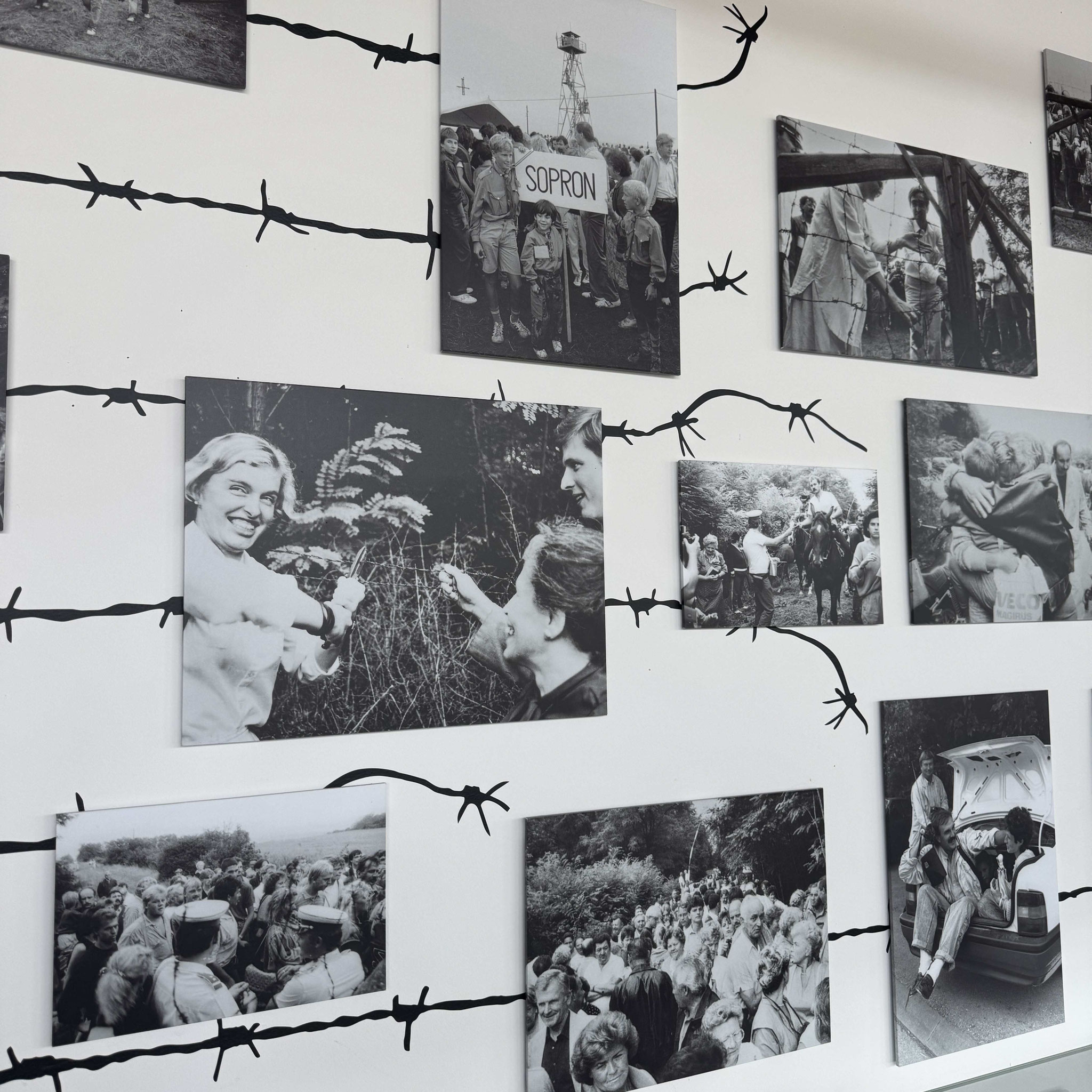
When the crowds reached the provisional wooden gate, the situation escalated peacefully. Tamás points to a historic photograph: it shows a calm, by no means unsettled Hungarian border official. "Normally, six armed border guards stood here to control the section. They stuck to the bureaucratic guidelines of the day, stubbornly checked the Hungarian-Austrian delegation, and deliberately ignored the onslaught of GDR citizens behind them to prevent bloodshed." Around 600 to 700 GDR citizens made it safely to Austria that afternoon - the largest mass escape since the construction of the Berlin Wall. It was the moment the foundation of the Eastern Bloc irrevocably cracked. The picnic paved the way for September 11, 1989, when Hungary officially opened its borders completely to GDR citizens.
From an Iron Forbidden Zone to a Monument
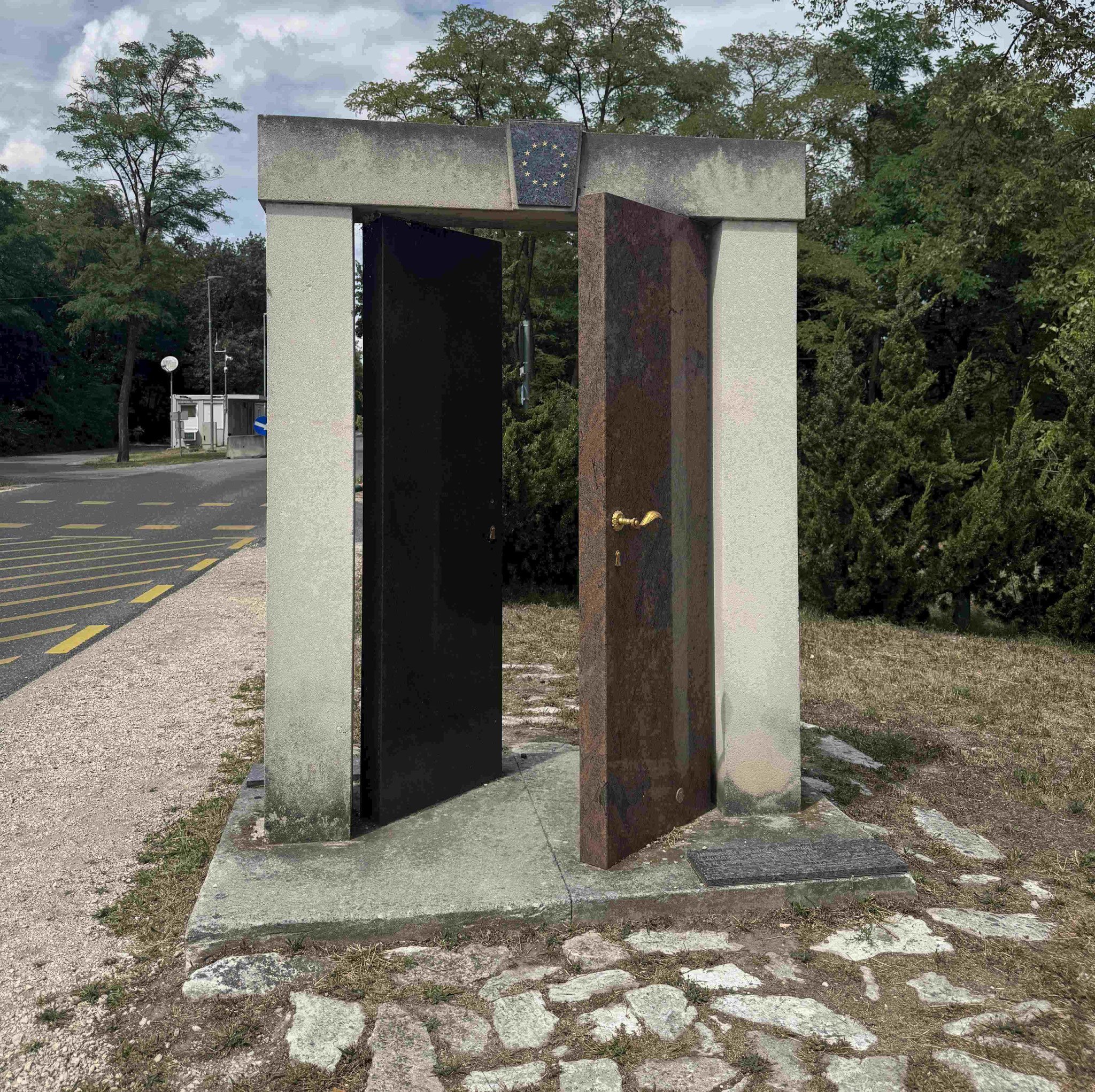
Today, an impressive memorial commemorates those historic events. The artwork by Hungarian artist Miklós Melocco shows people pushing upward from underground into freedom, while in the background, socialism symbolically collapses.
Where the deadly barbed wire once ran, visitors today look through a half-open gate. "In the summer of 1989, there was only a simple, rather symbolic fence here," Tamás notes. He adds a bizarre anecdote: paradoxically, the quality of the original barbed wire of the Iron Curtain was so high that Hungary and the Soviet Union could not produce it themselves. It had to be imported from Sweden using precious foreign currency. Today, the curtain has completely disappeared along the former "Bratislava Field Path".
Tamás and the History of a Border Town
The changing identity of the town of Sopron - historically known as Ödenburg - is directly reflected in Tamás's own heritage. His family has been rooted here for 200 years. Although the town remained with Hungary after the 1921 referendum and has since borne the proud title Civitas Fidelissima (Most Loyal Town), the Hungarian-German "Schwaben" remained a defining presence. Today, Tamás is the chairman of their local self-government.
This family history is deeply intertwined with the fractures of European borders: while his great-grandmother was expelled to Germany with four children in 1946, his grandmother remained behind as the only daughter. "Why that was remained a family secret for a long time," Tamás says. "Today I know: the family bribed a communist back then with wine and money." To maintain contact, the relatives from Germany later came to visit regularly. In 1984, Tamás was finally allowed to travel to West Germany for the first time himself to visit his scattered family in the West.
Freedom is Not Something to Take for Granted
Looking back from a distance of nearly four decades, the spirit of 1989 has noticeably shifted. The Pan-European Picnic is undisputed as a decisive milestone on the path toward German reunification and the eastern enlargement of the EU. Yet, today's Central Europe faces new trials.
Tamás, who now works as a geography teacher at the German school in Sopron, watches current developments with concern. In local political debates, the EU is often reduced to a mere economic organization. "Yet, many people here have understood that our future does not lie with Putin, but in Europe," he emphasizes. The idealistic values of 1989 - boundless freedom and deep democratic transformation - must be defended anew today in times of geopolitical tension and populist currents. Tamás has no understanding for people who long for the old communist times and question democracy.
As a contemporary witness, Tamás has made it both his hobby and his life's mission to pass his memories on to the younger generation. His old Trabi is more than just a piece of charming Ostalgie. It is a rolling monument to how gray everyday life was and how broken the economies of the Eastern Bloc states were in the 1980s. "People finally wanted freedom," Tamás says. "And this freedom is like the air we breathe: you only realize how important it is when it's gone."