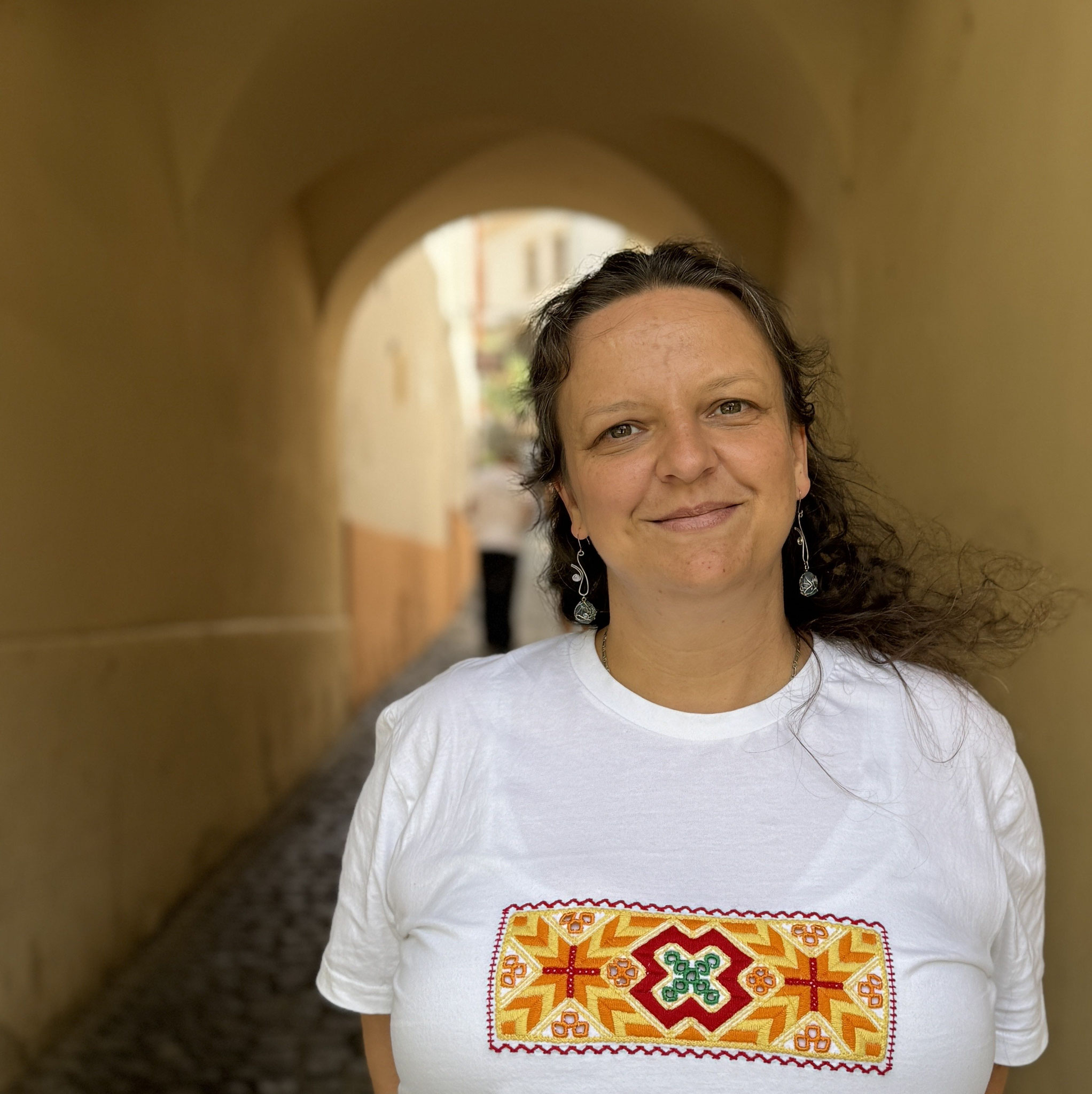
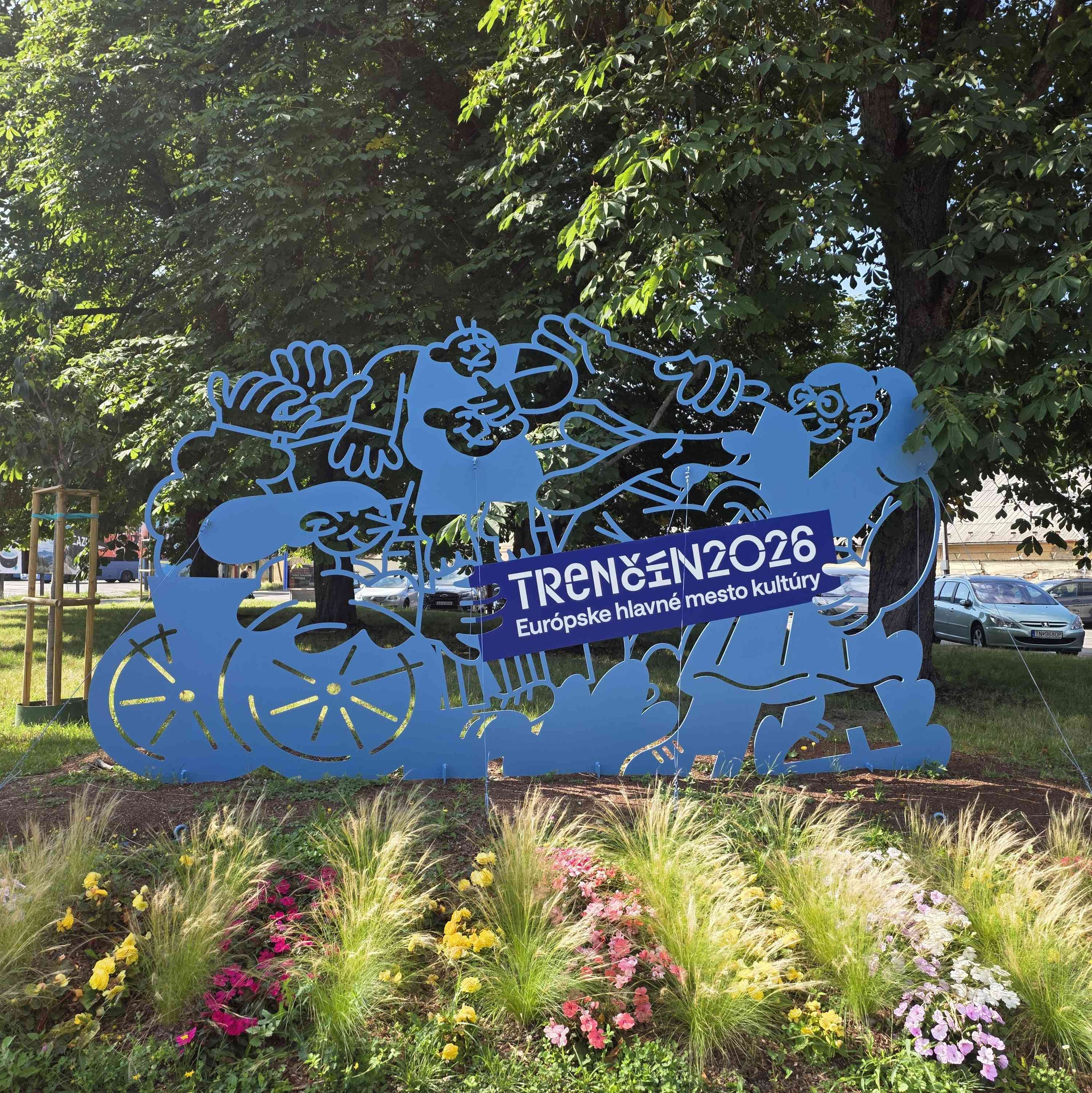
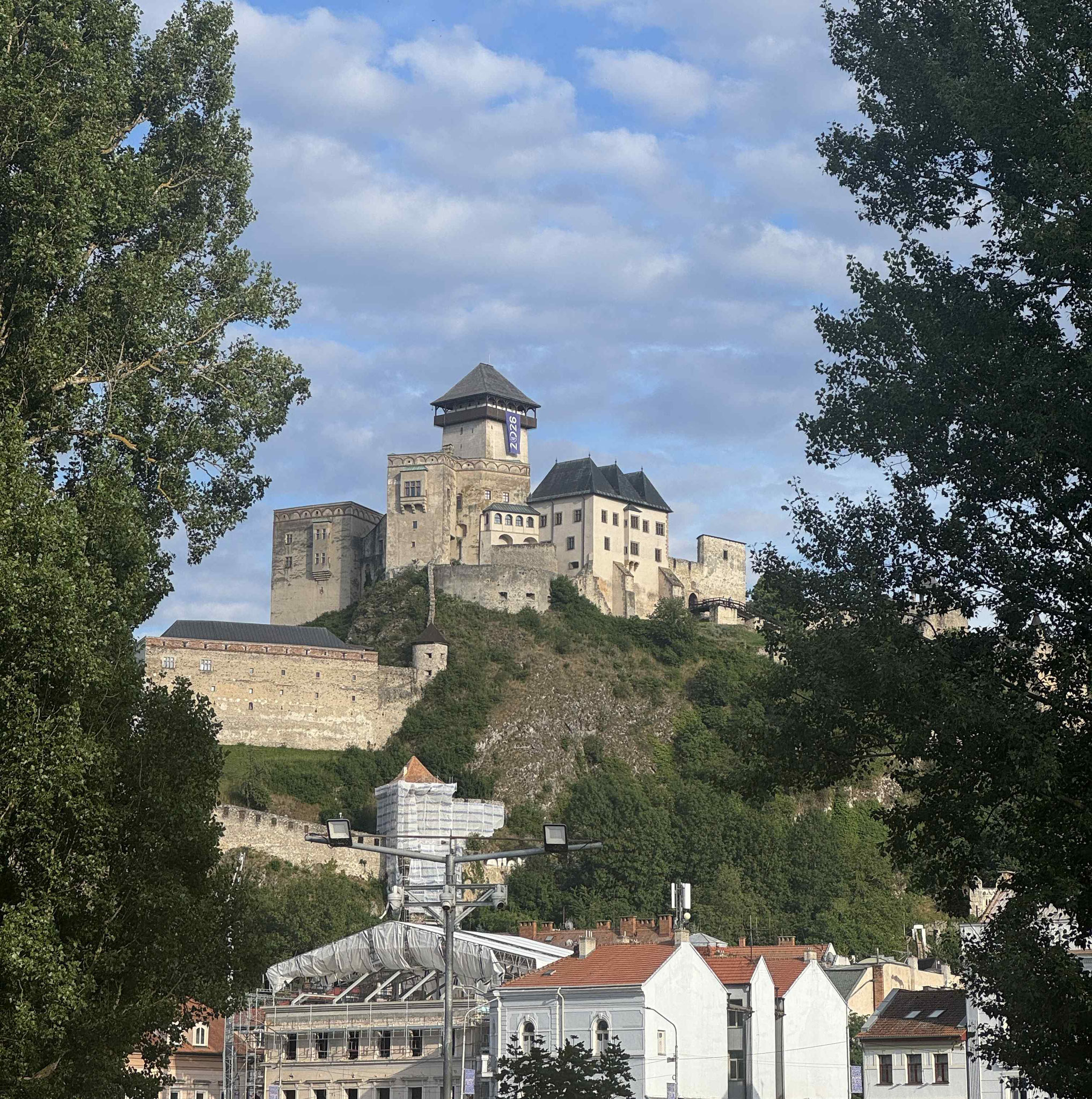
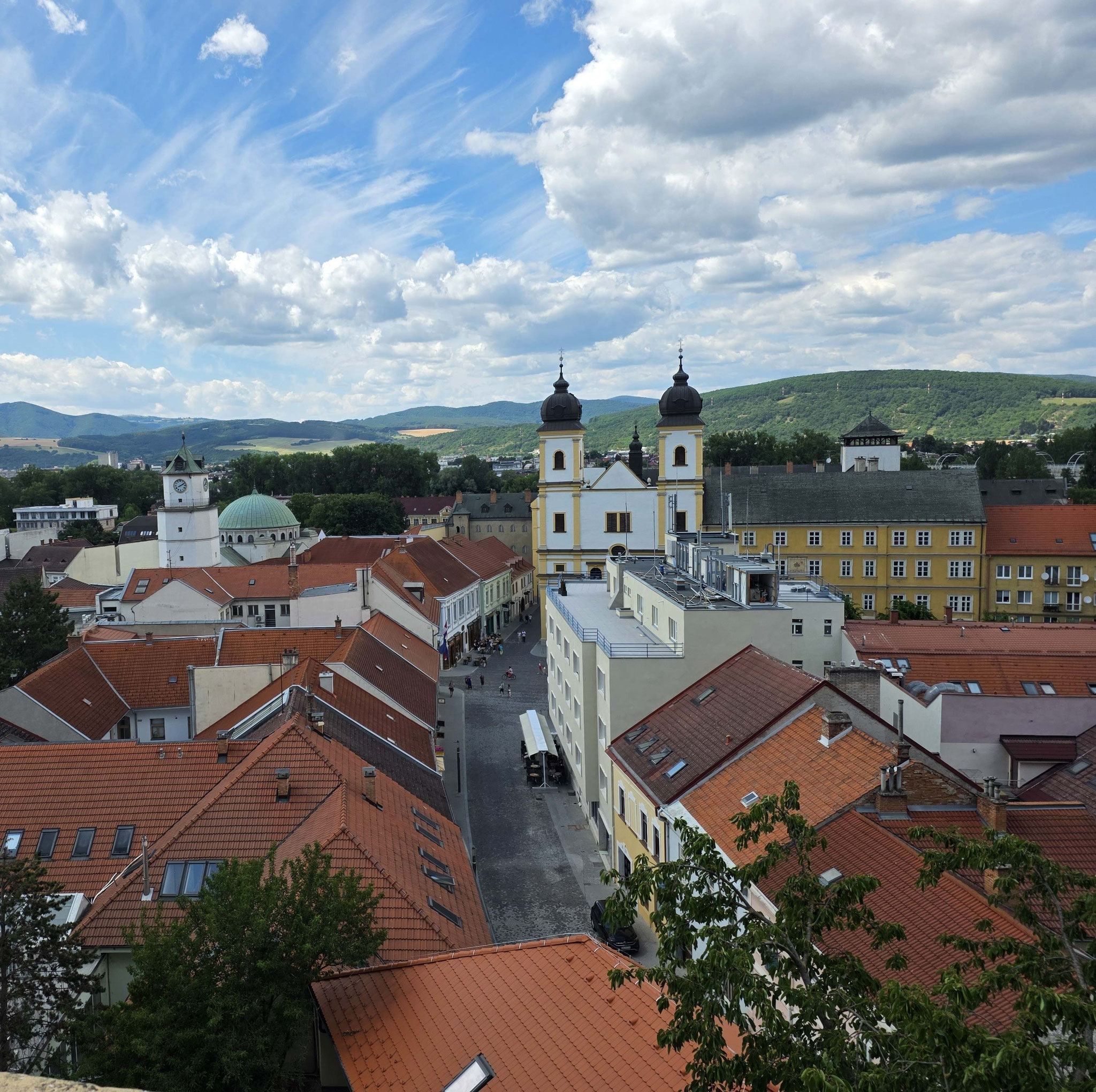
Anyone wishing to meet Stefanie Bose in Trenčín (south-western Slovakia) these days will probably find her on her bicycle, on her way from one cultural event to the next, or in one of the city's many lively cafés. Since May 1st, the Leipzig resident - who studied West Slavic studies (Czech, Slovak, and Polish) and now works as a translator and interpreter - has been living in Trenčín for five months. Her stay was made possible by a scholarship from the German Culture Forum for Eastern Europe. Her mission as writer-in-residence: to explore the current European Capital of Culture, connect with local residents, trace the cultural heritage of the (Carpathian) Germans living in regions such as Hauerland east of Trenčín, and share her impressions with the public.
For Bose, this also brings her journey full circle: immediately after graduating from high school, she went to Slovakia for a voluntary social year. With absolutely no knowledge of the language or family connections, she ended up in the far east of the country – a region that, shortly after the turn of the millennium, felt quite a bit "wilder" than it does today. There, she learned the language by being thrown into the deep end of everyday life, living with a host family and working with children. She still carries this deep connection to the country with her today.
Cultural Mediation on Constant Duty
The daily life of a writer-in-residence is intense. Stefanie Bose's main task is to maintain a digital diary in the form of a blog as well as an Instagram channel. "I am discovering Trenčín here, seeing what is going on, what projects exist, and writing about it," Bose says in an interview.
But the workflow is demanding: in addition to the actual research work, the texts often have to go through editorial loops at the Culture Forum, being proofread, supplemented with photos, and translated. Along the way, Bose runs the risk of falling behind with her writing because there is simply "so much going on" in the city. Since she is also pursuing her regular translation work at the same time, she uses Instagram for faster, unfiltered updates.
The Vital "Cultural Island" by the River
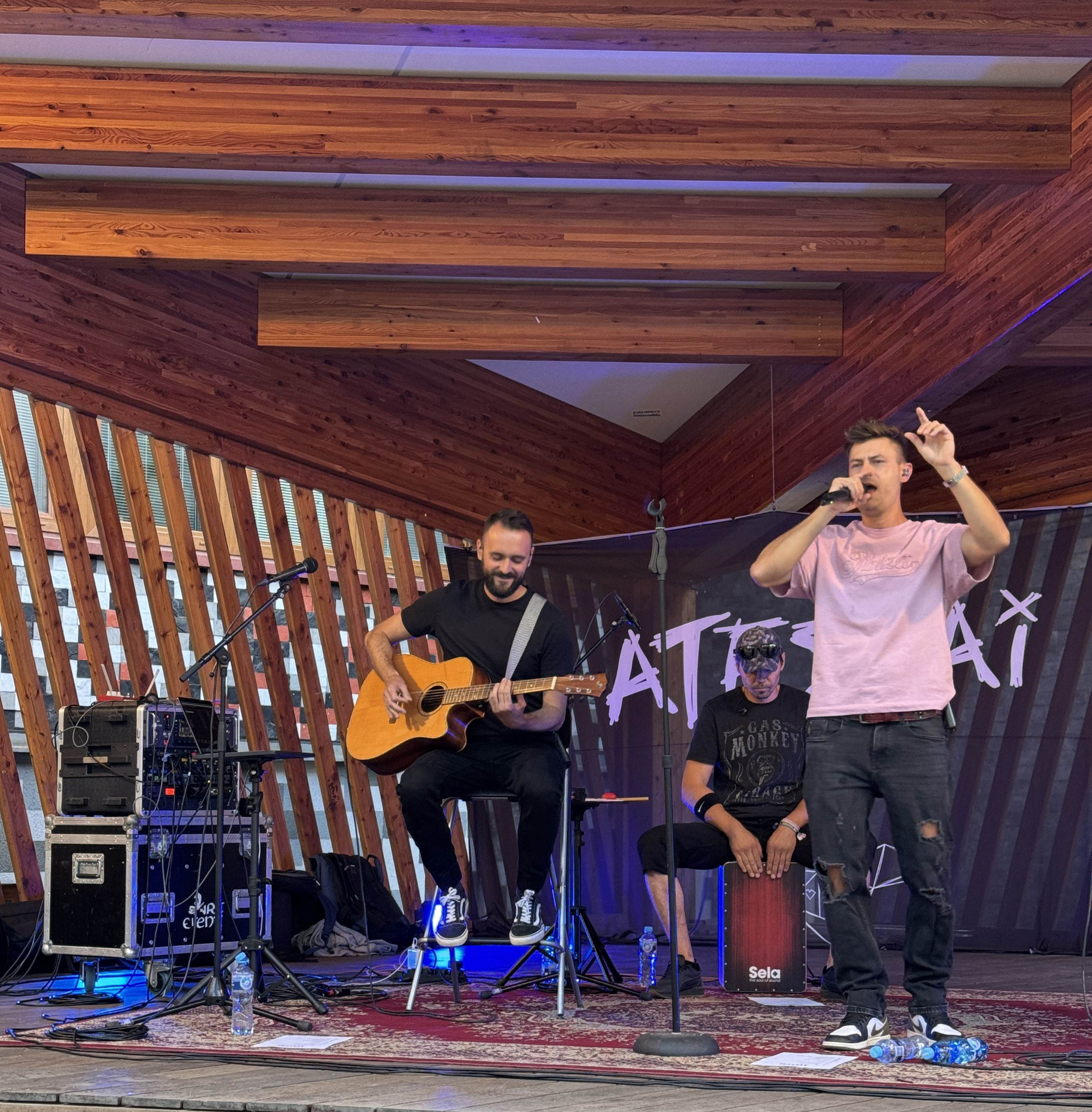
Trenčín, located near the Czech border, presents itself as a dynamic and surprisingly open city in its year as Capital of Culture. The cultural summer fills the squares of this city of around 54,000 inhabitants: concerts on various stages, children's theater, panel discussions, art exhibitions, workshops - the program is rich and diverse. Even the legendary "Pohoda Festival", the largest music festival in Slovakia, takes place at the nearby military airfield, doubling the city's population for a weekend.
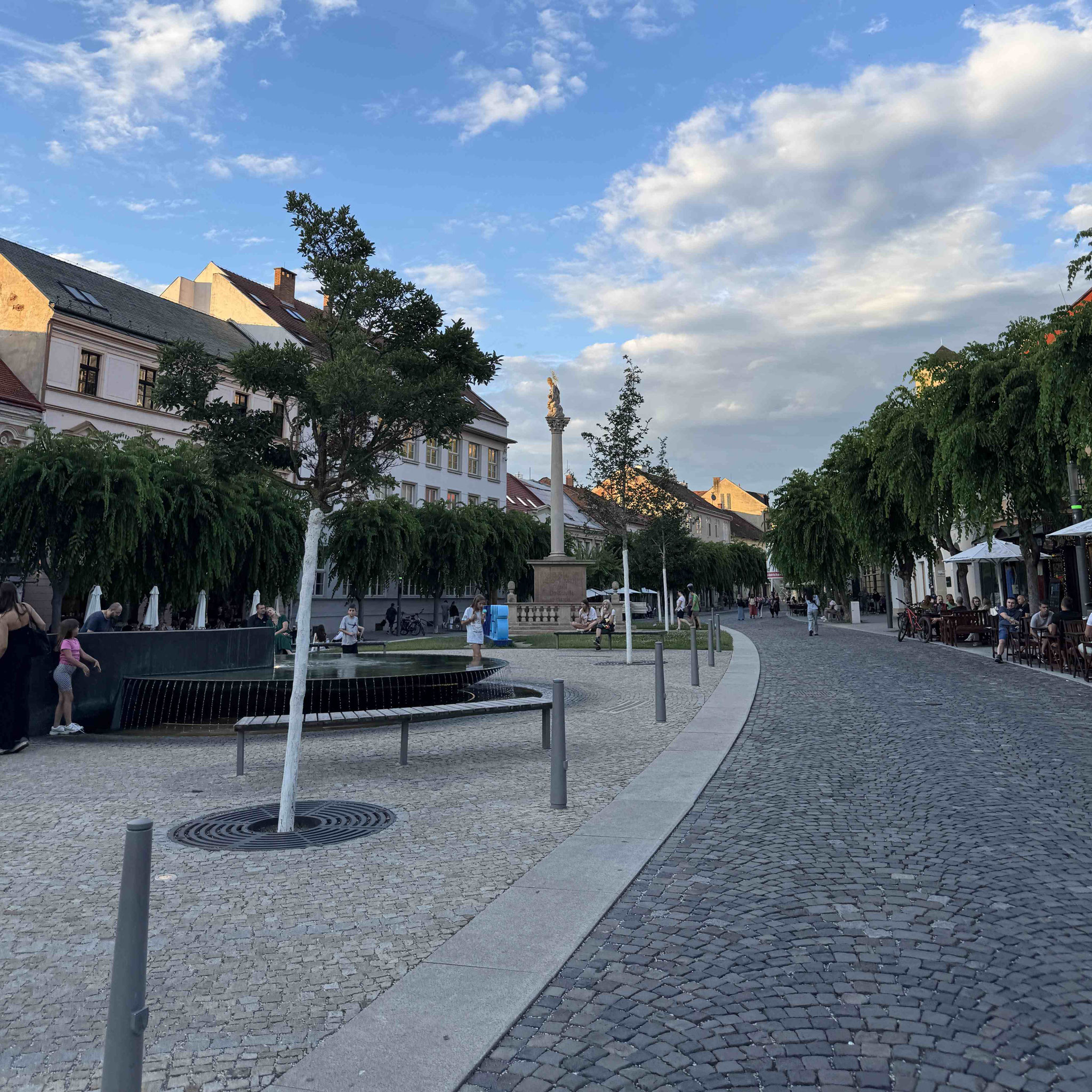
The Capital of Culture year is particularly visible in the cityscape, which has seen massive investment. The city center has been redesigned - with greenery, water features, and modern seating. The bus station has been modernized, and the renovation of the main train station is underway. A spectacular urban development highlight is the "Fiesta Bridge" project: an old, two-lane railway bridge over the River Váh is to be converted into a two-story cultural and meeting place with cafés, shops, sports facilities, and plenty of greenery.
"Not everything was finished in time," comments Stefanie Bose. "But the Capital of Culture is meant to have a sustainable impact and permanently liven up the city."
"The city relies heavily on participation. Trained volunteers from local society are involved everywhere," says the temporary writer-in-residence, enthusiastic about the concept. In the plenary hall of the town hall, an interactive art installation by an Indian artist reminds local decision-makers daily with questions about human rights and social justice.
Between European Openness and Political Headwinds
Stefanie Bose's views of the city are thoroughly positive: she experiences the people as curious and tolerant. Even older people recently sat fascinated during an experimental, modern organ concert featuring the "fujara" - a traditional Slovak shepherd's instrument. "Trenčín feels a bit like an island where, thanks to the liberal city leadership, things are very open and friendly," Bose reflects.
At the same time, she looks at the broader social context of Slovakia with a nuanced and critical eye. The country finds itself in a deep tension between nationalism and Euroscepticism on one hand, and the obvious benefits of European integration on the other. Many of the architectural milestones would have been unthinkable without EU funding. Nevertheless, the current, nationalist-oriented government is dividing the country.
Bose observes this division in everyday life. The Pohoda Festival, for example, includes socially critical discussions - a circumstance that is a thorn in the side of the national government and almost led to a rental block of the state-controlled airfield in the run-up to the event.
The East-West divide in the country, the economic ruptures following the separation from the Czech Republic, and the influence of populist movements from neighboring countries also shape Slovakia. "In my everyday cultural bubble, almost everyone is pro-European," Bose admits, "but the fundamental distrust of Brussels' rules remains palpable in rural areas."
The Writer-in-residence as a Bridge Builder
Stefanie Bose does not just observe Trenčín with the cool distance of a chronicler; she also brings new impulses to the city during these five months. "I try to get actively involved and build bridges," explains the networker.
For instance, she has already established contacts with the city administration of Brno, Leipzig’s twin city, organized translation workshops for students from Bratislava, and arranged a professional translators' meeting in the local municipal library. A bilingual high school also benefits from her commitment, where she offers workshops for students. She even reads bilingual stories to children on a voluntary basis at upcoming street festivals - an idea she brought with her from her association work in Leipzig.
Through these close, personal connections, she experiences an enormous openness and truly becomes part of the community for a time. She receives visits from colleagues and friends from home, makes valuable professional contacts with Slovak publishers as well as cultural figures, and ensures that her stay leaves lasting traces - far beyond the Capital of Culture year itself.
Stefanie Bose sees the Capital of Culture year as a huge opportunity to build sustainable bridges. It is the local city society that carries the project, curiously embraces what is on offer, and fills Trenčín with new life. The fact that an increasing number of international tourists - even from countries like Spain and Mexico - are finding their way to the small town on the River Váh this year gives the city additional momentum and brings the European dimension to life.
For Stefanie Bose, the adventure in Trenčín continues - with her notepad in hand, her bicycle key in her pocket, and always ready to capture the small and big stories of this Slovak cultural island.