When Birgit Gruber, responsible for public relations at the Thayatal National Park surrounding the small town of Hardegg in the Waldviertel region, talks about “her” valley, enthusiasm resonates in every sentence. She explains an area that demonstrates like few others in Europe how a former death strip can transform into a vibrant corridor of life.
Two Countries, One Natural Area: Podyjí and the Thaya Valley
The history of the national park is inextricably linked with the fall of the Iron Curtain. “Without this Iron Curtain and the strict closure of the border strip, which was sometimes several kilometers wide, the area would certainly have developed differently,” Gruber explains. “Where dense forest stands today, industrial plants or highways might otherwise have been built.” But while people migrated away or were expelled from the border areas on the Czech side, nature reclaimed the territory.
The timeline of the park foundations on both sides of the border is interesting: The Czech side reacted extremely quickly and established the Národní park Podyjí as early as 1991 – right after the opening of the border. Because the land had been nationalized under the communist regime, it was easy for the Czech state to establish a large protected area.
On the Austrian side, the project was only completed in the year 2000. “Our Czech colleagues helped us a lot with the implementation. But on our side, it simply took time – for setting up management structures, extensive reviews, and the necessary legislative changes,” Gruber recalls. Because much of the land was privately owned, the Austrian state had to painstakingly lease the areas for 100 years or purchase them.
The Unequal Proportions
The different historical ownership conditions are still reflected today in the dimensions of the two parks: The Austrian Thayatal National Park is Austria’s smallest national park at just 1,360 hectares. The Czech Národní park Podyjí, at 6,260 hectares, is almost five times as large. Together, however, they form a cross-border protected area of around 7,700 hectares where nature plays the leading role.
Today, farmers also work hand in hand with the national park. They mow the meadows according to strict ecological guidelines only from the end of June onwards and always leave a third of the grass standing for biodiversity – for which funding can be applied for.
A Geological and Climatic Bottleneck
The fact that the Thaya Valley harbors an almost unbelievable biodiversity in a very tight space is due to its unique physical conditions. 40 percent of all plant species found in Austria can be discovered in this relatively small area. Birgit Gruber explains the phenomenon: “The secret lies in the interplay of geology and climate: Here, we have the most varied subsoils, north- and south-facing slopes in very close proximity, and the meeting of two climate zones – the cooler Atlantic climate and the warm, Pannonian climate.” The valley functions like a climatic meeting zone: From west to east, the wetter Atlantic climate flows in, while from the east, the dry, warm Pannonian climate reaches into it.
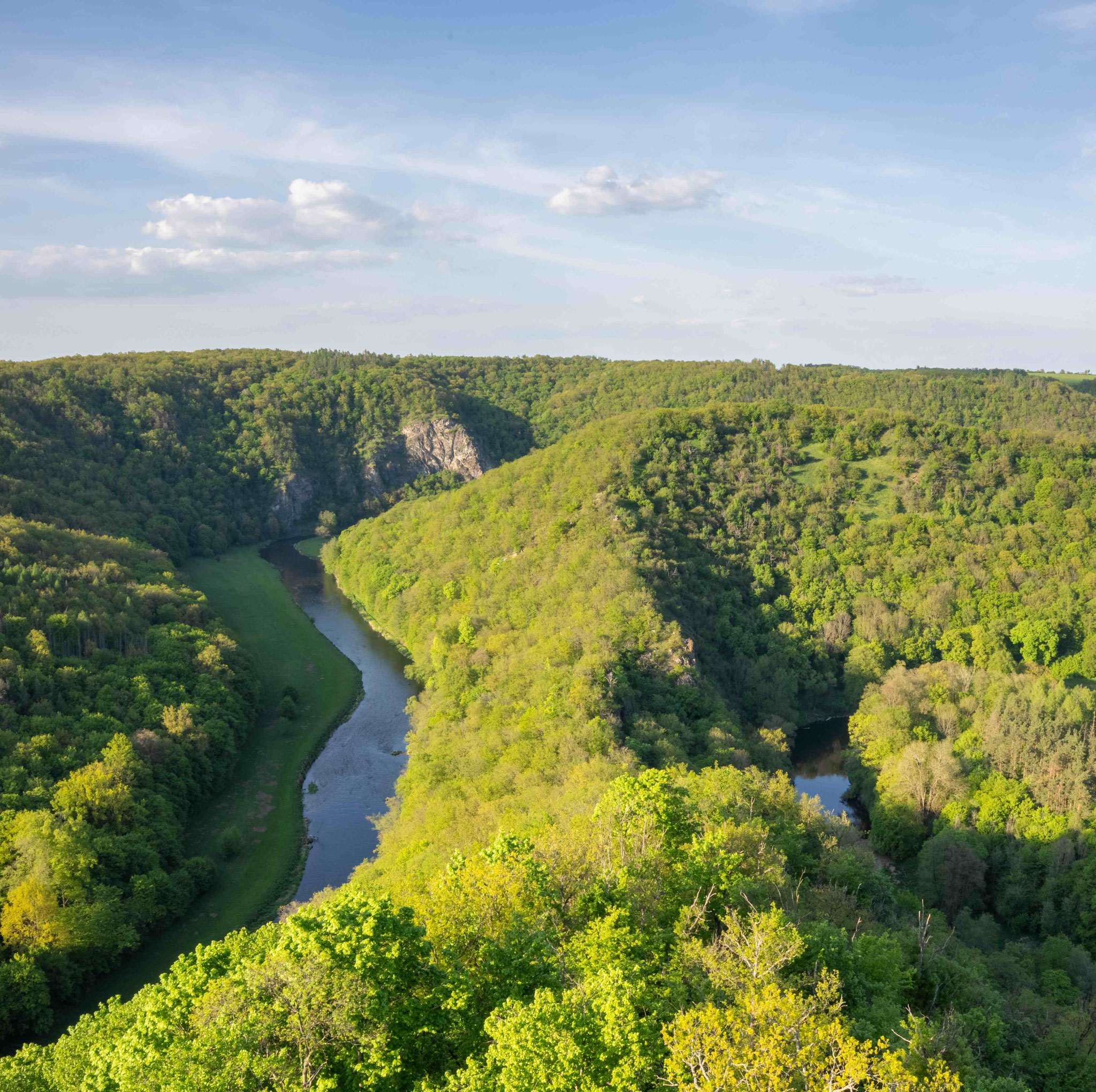
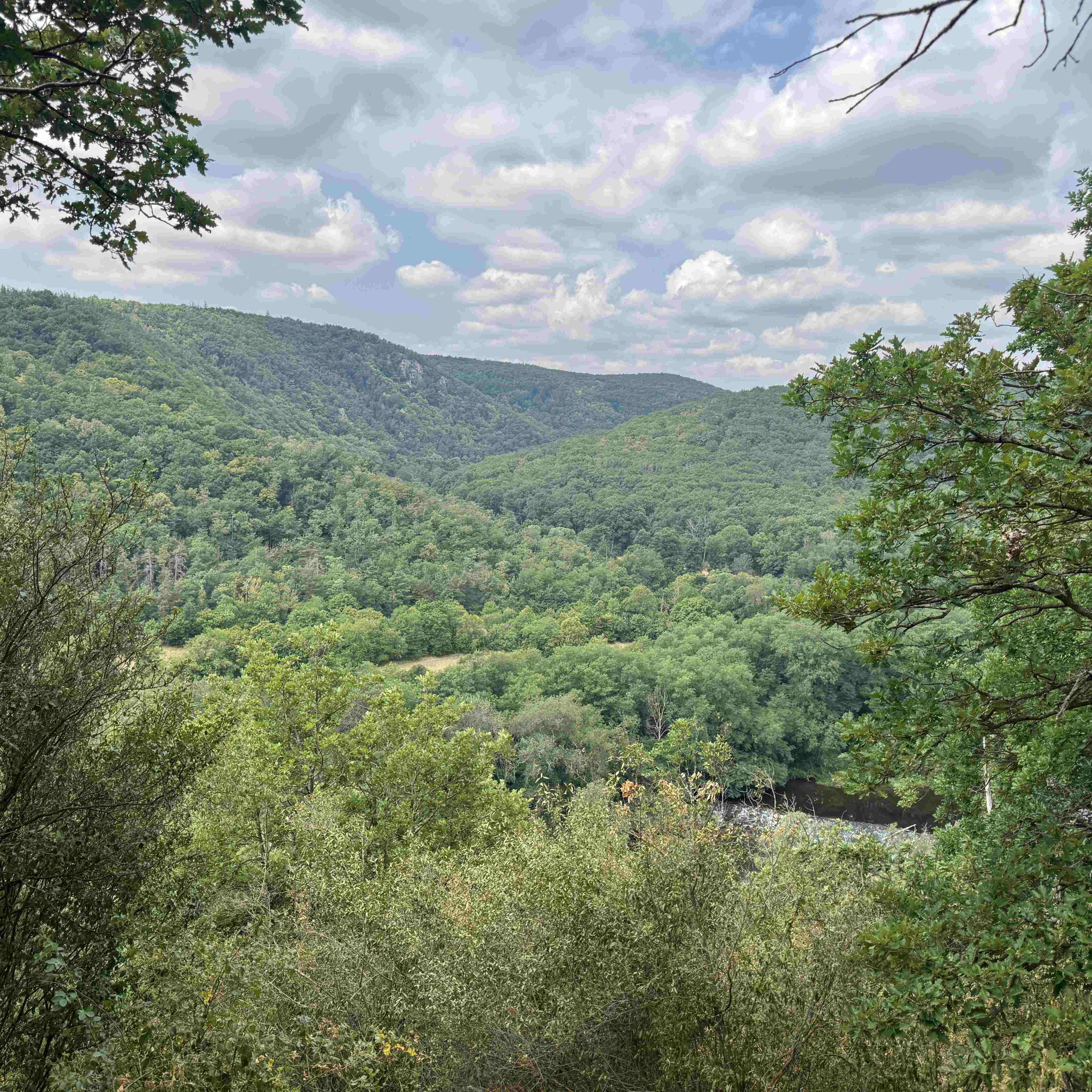
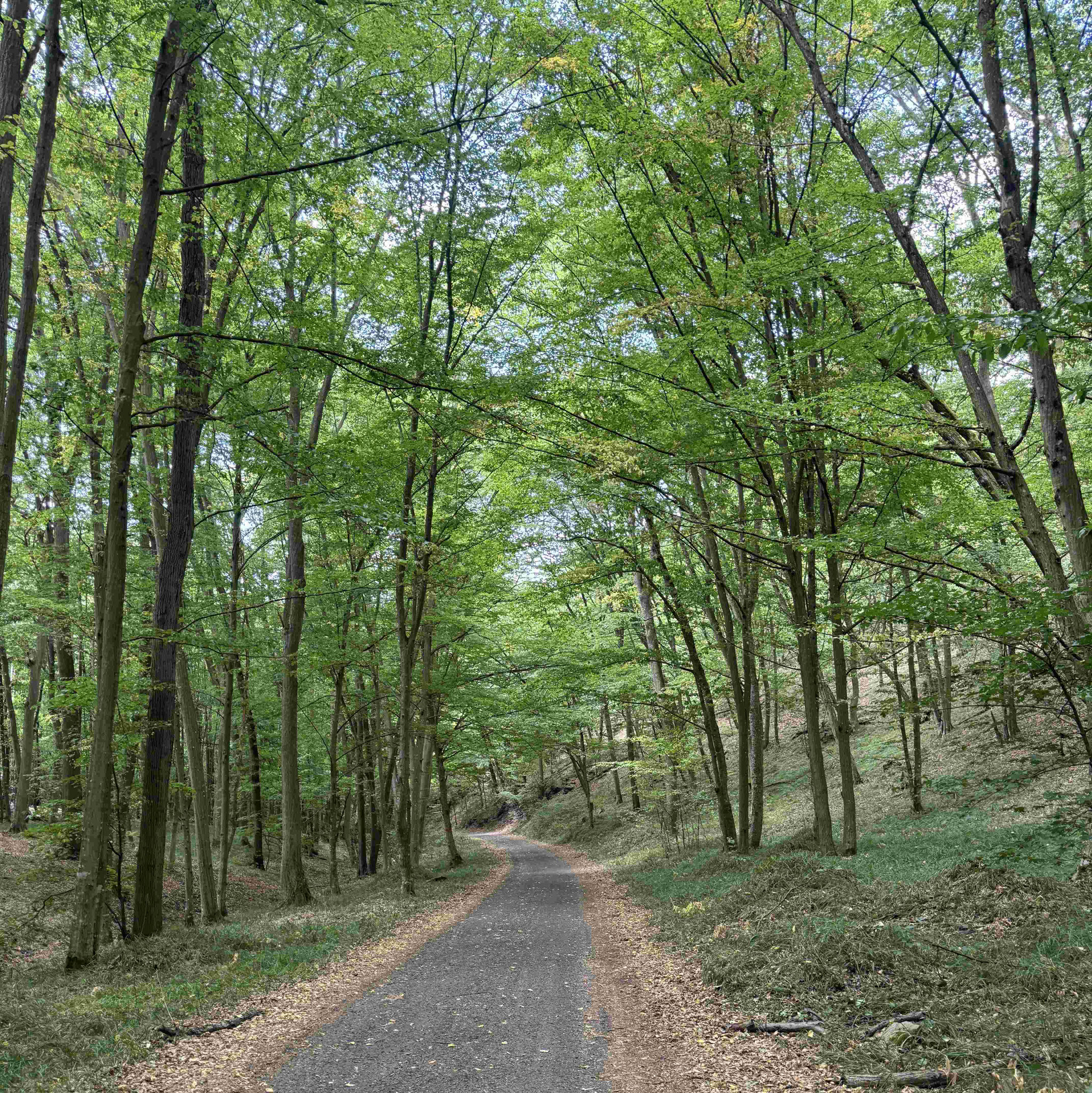
At this junction, the Thaya River has carved its way roughly 150 meters deep into the hard rock of granite, gneiss, and marble over thousands of years. The river’s deep meanders create extremely varied microclimates in a very tight space: Shady north-facing slopes alternate within just a few meters with sun-drenched south-facing slopes. When hiking, you cross entirely different worlds over the shortest distance – from the damp riverbank to cool European beech forests, all the way to sunny oak forests and sparse dry grasslands on the ridges. It is precisely this convergence of contrasting climate zones and subsoils that drives the region’s extreme wealth of species.
The Dam Paradox
As untouched as nature appears, it is nonetheless strongly influenced by human activity. The national park is, in a sense, imprisoned by two large hydroelectric power plants. Built in 1930, these dams dramatically altered the ecology of the Thaya.
The water rushing out at the bottom of the 50-meter-high dam wall comes from the deep, cold layers of the reservoir. As a result, even in the middle of summer, the Thaya in the national park reaches a maximum temperature of only 12 degrees Celsius and carries almost no natural bedload (gravel). Before the power plant was built, the Thaya featured comfortably warm swimming temperatures in summer.
This cooling led to a shift in the fish fauna: In what is actually a lowland valley, cold-loving mountain fish such as trout, grayling, and bullhead live today. Above the dam, on the other hand, up to 30 different fish species – including catfish and carp – throng in the warmer lake area.
Ironically, it was precisely this threat that saved the park in the end: When another power plant was planned on the Czech side in the 1980s, massive resistance arose in Austria. As a result, the area was placed under nature conservation – laying the foundation for today’s national park.
Bark Beetles and the Courage to Leave Gaps: Two Paths in Forest Management
Extreme, dry summers are taking a toll on the region’s forests. While native oaks are well adapted to the drought, artificially planted spruce monocultures collapsed across large areas in recent years. Without sufficient water, the spruces could no longer produce protective resin, giving the bark beetle free rein.
Here, a fascinating difference in the management systems of the two neighboring countries becomes apparent: In the Thayatal National Park, the dying spruces were allowed to be removed to prevent the outbreak from spreading to neighboring forests. After that, the forest was left to its own devices. Without a single tree being planted, the forest regenerated all by itself. First, hornbeam grew, under whose protection oaks are now slowly following. The Czech colleagues in Národní park Podyjí chose the active approach and specifically replanted various tree species typical for the site. “We will see what is right or wrong. I assume that both paths will ultimately reach the goal,” Gruber speculates.
Active Neighborliness: A Model for Europe
The collaboration between the Austrian and Czech teams is intensive and goes far beyond mere agreements. “We really meet regularly and work together a lot – not just at the director level, but employees also exchange ideas regularly,” Gruber emphasizes proudly. “We are a role model throughout Austria for this cross-border cooperation.”
This commitment is not limited to their own park area, but radiates internationally: Both protected areas are actively engaged in the European “Green Belt” network along the former Iron Curtain. As part of this project, wetland habitats were created for amphibians and trees were planted for wildlife corridors to improve habitat connectivity for animals and plants.
While the Thayatal National Park is a pioneer in environmental education with over 30 rangers and the popular “Wildcat Camp,” the Czech side is also catching up strongly with guided tours and educational initiatives. To break down barriers for visitors, exhibitions and guided tours are increasingly offered bilingually, and Czech employees are also integrated into the team.
The Return of the Wildcat and a Look into the Future
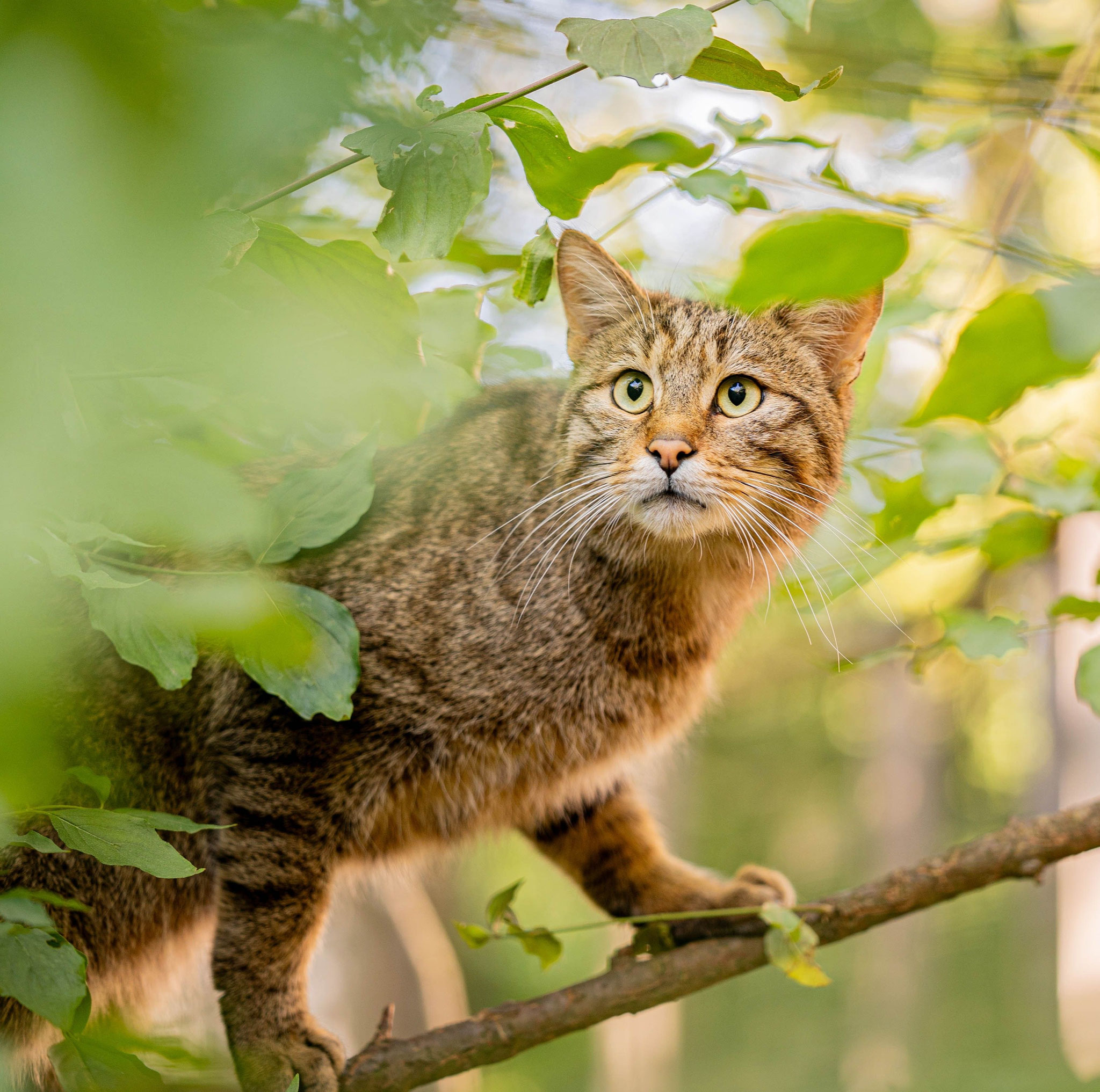
The undisputed flagship species of the national park is the European wildcat. In 2007, the first proof of a living specimen of this elusive hunter in Austria was achieved. Since they are extremely difficult to spot in the wild, the National Park Center, opened in 2003, displays two wildcats in a natural enclosure. Here, interested visitors – especially school classes in the “Wildcat Camp” – can experience hands-on environmental education.
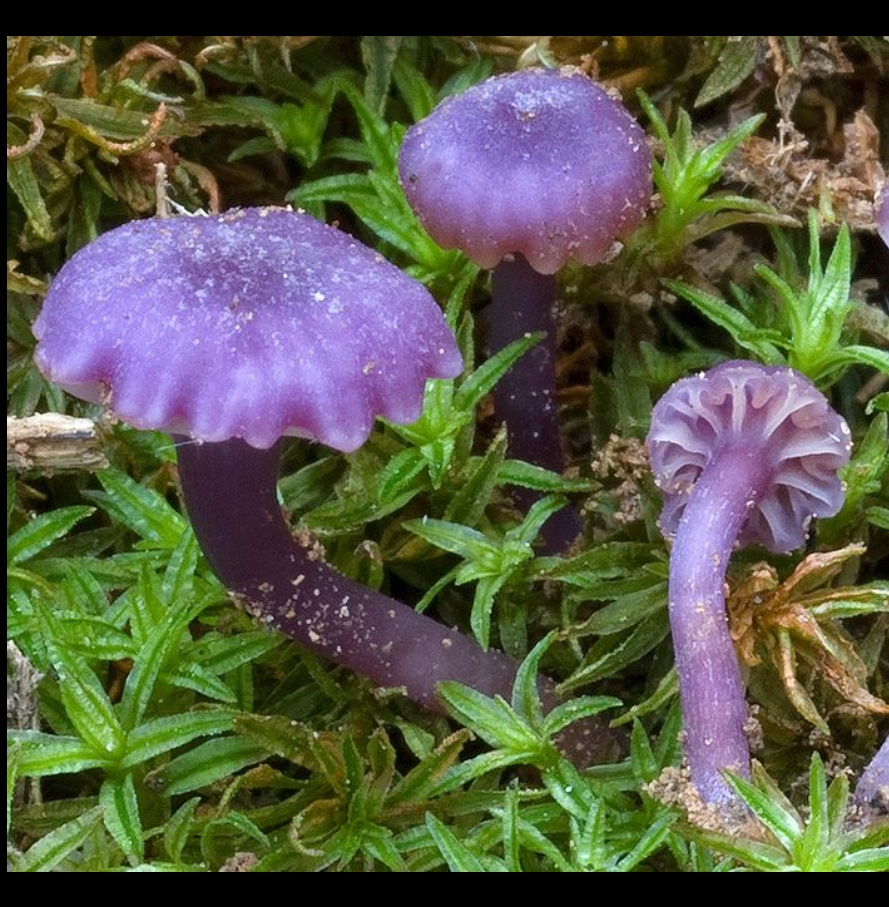
Although the park has already celebrated its 25th anniversary, Gruber feels it is still in a dynamic pioneer phase. “Half of our staff is funded through projects. We really do a vast number of projects,” she reports proudly. From international mushroom research and bat monitoring to the culture of remembrance (such as preserving old border signs and customs houses) – the eight permanent employees and the freelance rangers never run out of work.
The Thayatal National Park and Národní park Podyjí are thus far more than just beautiful excursion destinations with breathtaking viewpoints over the tight river bends. They are a living symbol of how borders can be overcome – in the minds of people as well as in the wilderness of nature.
Photo 2: NP Thayatal / T. Nunner
Photo 3: NP Thayatal / C. Übl
Photo 4: NP Thayatal / T. Nunner
Photo 5: GBIF / Federico Calledda